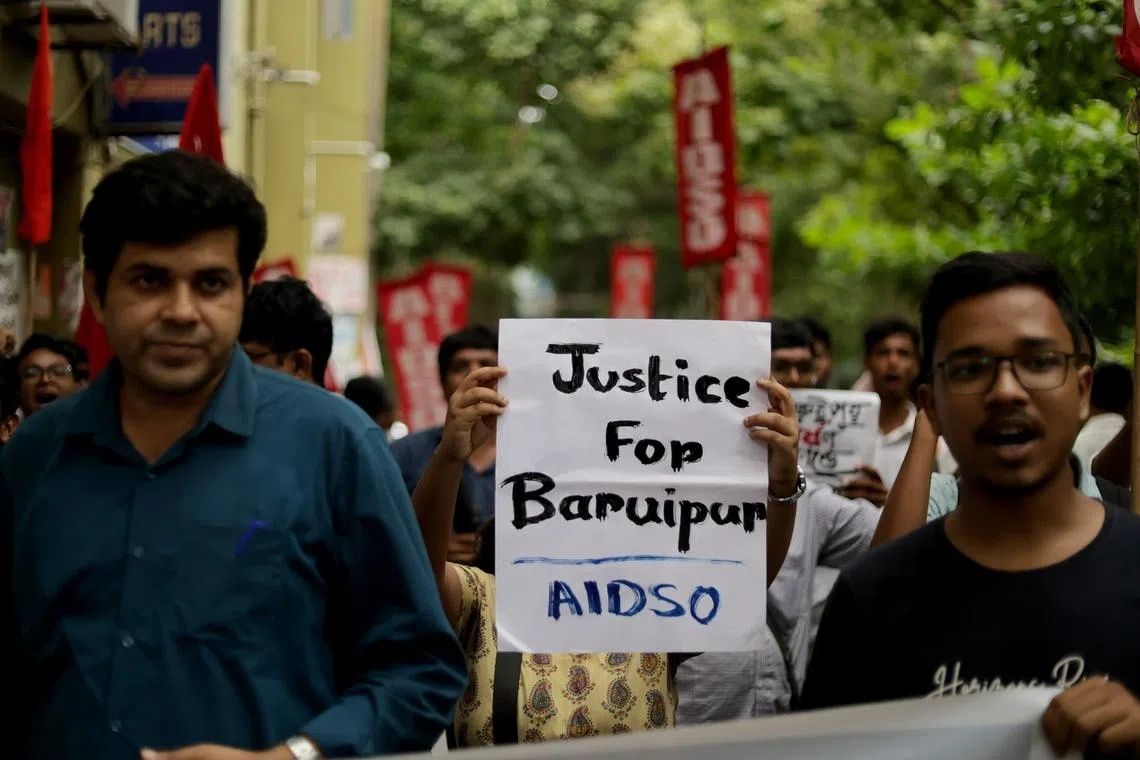
Indian law enforcement authorities have moved to contain escalating violence stemming from public fury over the rape and murder of an 11-year-old girl whose body was discovered in a pond in West Bengal's Baruipur city, approximately 30 kilometres south of Kolkata. Police arrested 35 individuals for destructive conduct and property damage during demonstrations that erupted this week, with senior state police officer Arvind Kumar Anand indicating that investigators are reviewing multiple viral videos to identify additional perpetrators involved in the unrest.
The discovery of the child's remains on July 5, a day after her disappearance, triggered immediate and intense public anger that manifested in roadblocks and arson attacks targeting vehicles across the region. The fury reflects deep anxieties within Indian society regarding the vulnerability of women and children, particularly in contexts where systemic safeguards appear inadequate. Authorities documented a particularly disturbing incident in which an individual was beaten to death by enraged crowds, underscoring how such cases can spiral into cycles of mob violence that claims innocent victims.
Four men were arrested in connection with the girl's death, though the police response to one suspect proved remarkably controversial. Prabhas Mondal, one of the accused, was fatally shot by officers in the early hours of July 8 under circumstances that police described as an escape attempt while being escorted to the crime scene as part of investigative procedures. The shooting raises troubling questions about extrajudicial action by law enforcement, a persistent concern in Indian policing despite legal frameworks intended to govern such situations.
Mondal's mother delivered a striking statement to media outlets, refusing to accept her son's body and declaring that he had reaped the consequences of his actions. Her words captured the profound rupture that such crimes create within families and communities, illustrating how even relatives of the accused may view the perpetrator's fate as justified retribution. The statement also reflects the immense social stigma attached to violent crimes against children in Indian society, where public condemnation often overwhelms other considerations.
The circumstances surrounding the other three suspects remain murkier. One family has publicly contended that their relative was arrested due to mistaken identity, raising serious concerns about investigative accuracy and the potential for wrongful conviction. The lack of statement from the families of the remaining two defendants suggests either their unwillingness to engage publicly or possible fear of community backlash in an environment where passions remain extremely elevated.
West Bengal's newly installed Chief Minister Suvendu Adhikari, who assumed office following his Bharatiya Janata Party's victory in state elections held in May, seized upon the case to reinforce his administration's commitment to stringent law enforcement. His public statements pledged uncompromising pursuit of perpetrators and elimination of leniency for sexual violence or vigilante killings, attempting to position his government as responsive to public concerns while simultaneously legitimising zero-tolerance approaches that may not always align with due process protections.
This incident situates itself within a broader historical context that has shaped India's legal and social landscape regarding violence against women and girls. The 2012 rape and murder of a 22-year-old in New Delhi catalysed unprecedented nationwide mobilisation demanding legal reform, ultimately resulting in legislative amendments and the eventual execution of four men convicted in that case. Despite these measures and the passage of more than a decade, incidents continue at alarming frequency, suggesting that statutory modification alone proves insufficient without parallel shifts in investigative capacity, prosecutorial efficacy, and cultural attitudes.
More recently, West Bengal itself became the focus of international attention in 2024 when the sexual assault and murder of a trainee physician at Kolkata's prestigious RG Kar Medical College and Hospital triggered nationwide protests highlighting systemic failures in institutional protection and workplace safety for women in professional settings. That tragedy catalysed broader examination of conditions across India's medical sector and generated momentum for institutional accountability measures.
For Malaysian observers, these developments underscore persistent challenges facing South Asian societies in establishing effective gender protection frameworks. While Malaysia has implemented its own legislative protections and institutional mechanisms addressing violence against women and children, the Indian case demonstrates how legal enactment without concurrent investment in investigation quality, prosecutorial training, and judicial independence can create gaps between statutory intent and practical outcomes. The prevalence of extrajudicial police action in India, as exemplified by Mondal's shooting, contrasts with judicial oversight mechanisms in Malaysia, though neither system entirely eliminates wrongful conviction risks.
The vigilante violence component of this incident carries particular relevance for regional security analysts. When public confidence in formal justice systems erodes, communities increasingly resort to mob enforcement, creating cycles of violence that claim innocent lives and destabilise rule of law foundations. West Bengal's experience demonstrates how child safety cases generate extraordinarily charged emotional environments where distinctions between perpetrator and bystander can collapse, placing vulnerable individuals at mortal risk.
Moving forward, the trajectory of investigations into the remaining suspects and the broader institutional response will provide indicators of whether India's criminal justice system can simultaneously satisfy public demands for accountability while maintaining safeguards against wrongful conviction and extrajudicial action. The case also underscores the necessity for cross-sector approaches addressing poverty, education, social services, and gender relations alongside enforcement mechanisms. Without such comprehensive strategies, India's legal system will likely continue confronting periodic explosions of public violence as traumas accumulate and institutional trust deteriorates.

