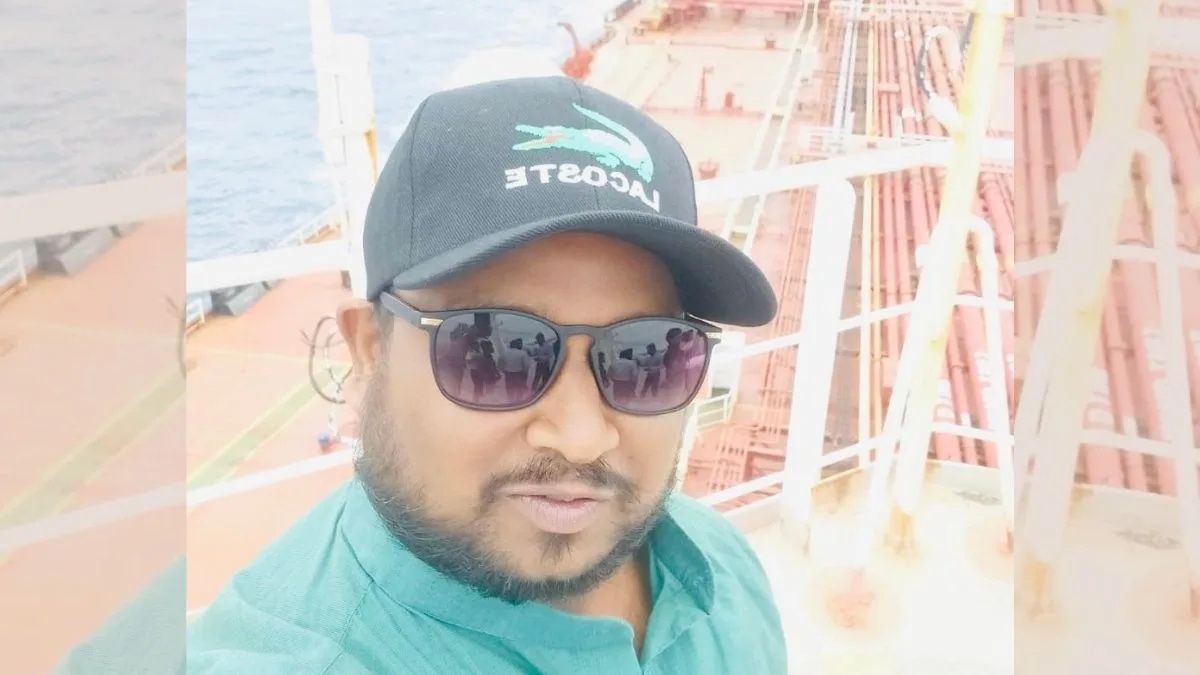
A maritime tragedy unfolding across two continents has thrust a troubling case into the spotlight, exposing what appears to be serious irregularities in the handling of a crew member's death in Venezuelan waters. Rakesh Chauhan, a 33-year-old from Deoria district in Uttar Pradesh, travelled to Venezuela in November 2025 to work aboard a merchant vessel. By early June, his body was being returned to India under circumstances that would soon spark allegations far more serious than an ordinary maritime mishap—raising questions about organ removal, documentation fraud, and possible criminal negligence.
The timeline of events reveals troubling gaps in communication and transparency. When Chauhan's family was first contacted by his shipping company, they were informed that their son had sustained injuries from a fall while working onboard. Within hours, the narrative escalated dramatically: company officials stated there was merely a five percent chance of survival, and by that same day, Chauhan was declared dead. The family was given minimal detail about what had transpired, told only that he had succumbed to injuries from the fall. What makes this account particularly suspicious is the company's vague explanations and the family's complete exclusion from any detailed briefing about the circumstances or medical treatment their relative had received.
The extended delay in repatriating Chauhan's body compounds these concerns. The family had been assured the remains would arrive within a week of his death in early May, yet the body did not reach India until June 4—nearly a month later. During this extended period, there was no official Venezuelan autopsy report provided, no medical documentation explaining the cause of death, and no clear explanation for the delay. For a family grieving the loss of a young breadwinner, this absence of communication and transparency would have been deeply distressing, suggesting either bureaucratic indifference or something far more deliberate.
When the body finally arrived in India, medical professionals immediately recognised something was catastrophically wrong. Doctors in Deoria initially declined to perform a second autopsy, noting that the corpse bore clear evidence of having already been subjected to post-mortem examination. Incisions ran from the neck down to the pubic symphysis, and another series of stitches extended across the occipital region from ear to ear—a pattern consistent with a thorough internal examination. Only after the District Magistrate specifically ordered a fresh examination did Indian physicians conduct their own investigation, and what they discovered was shocking.
The Indian post-mortem revealed that virtually every major internal organ had been removed. The missing organs included the brain, heart, both lungs, liver, kidneys, spleen, pancreas, stomach, intestines, thyroid, hyoid bone, larynx, and trachea. The absence of these organs proved so comprehensive that Indian doctors were unable to determine any cause of death whatsoever. Without a heart to examine, without lungs to inspect, without a brain to assess, forensic pathologists cannot establish whether Chauhan died from trauma, disease, poisoning, or any other identifiable medical condition. The body had been stored in deep freeze for approximately one month, from May 7 to June 5, during which time these organs disappeared without the family's knowledge or consent.
The Federation of Seafarers' Unions of India has seized upon these findings to raise alarm about what it characterises as unacceptable handling of a seafarer's death. In a series of statements, the FSUI highlighted what it views as deeply disturbing irregularities extending beyond the simple absence of organs. The receipt accompanying the body bore a name—Anjana Chauraisya—that did not match the person identified in the union's records as signing on behalf of Chauhan's wife, Ranjana Chaurasiya. This discrepancy suggests either careless documentation or, more troublingly, possible evidence of fraudulent handling of the deceased's remains. The union also noted that the vessel mentioned in Chauhan's original employment agreement did not correspond to the vessel on which he actually worked, raising questions about whether proper oversight existed over his deployment.
The Federation's most serious allegation involves the possibility of organ trafficking. The union has explicitly stated that these circumstances raise grave concerns about whether Chauhan's organs were illicitly removed and sold, with his death perhaps being incidental to that primary objective. While this remains an allegation rather than established fact, the theory gains uncomfortable plausibility when considering the constellation of irregularities: the lack of a Venezuelan autopsy report, the complete absence of all major organs, the documentation errors, and the month-long delay in repatriating the body. Each irregularity might be explained individually, but taken together they form a pattern that demands rigorous investigation.
For Indian seafarers and their families, this case carries profound implications. The Indian maritime industry relies heavily on workers willing to accept postings aboard vessels operating in distant and sometimes politically unstable regions. These workers are frequently migrant labourers from rural areas, potentially vulnerable to exploitation and lacking strong advocacy networks. The case of Rakesh Chauhan suggests that inadequate protections exist for these individuals once they venture abroad. Shipping companies appear to exercise minimal accountability for crew welfare, and foreign authorities—in this instance, Venezuelan officials—have provided no transparency regarding how or why Chauhan died and what was done to his body.
The Indian government's response will be closely watched not only by Chauhan's family but by maritime unions and seafarer advocacy organisations across the country. The Federation of Seafarers' Unions has demanded that India's embassy in Venezuela intervene directly, that Venezuelan authorities release all autopsy reports and documentation, and that a comprehensive investigation be launched into the circumstances of Chauhan's death. The union has also called for compensation for the family and accountability for anyone responsible for what it alleges was gross mishandling of his remains and possible criminal conduct.
This case also raises broader questions about maritime governance and worker protection in global shipping. Vessels operating in international waters exist in regulatory grey zones where accountability can prove elusive. When crew members die aboard ship, the investigation and determination of cause rest with authorities in whatever jurisdiction claims jurisdiction—in this instance, Venezuelan authorities who have demonstrated either incompetence or unwillingness to provide transparent documentation. The absence of an autopsy report from Venezuelan authorities is itself a massive red flag; in any legitimate death investigation, such documentation would be standard procedure and would be transmitted to the deceased's family and country of origin.
The implications for Malaysia and Southeast Asia extend beyond sympathy for an Indian family. Malaysian seafarers also work aboard vessels throughout the world, including in politically volatile regions. Crew members from across Southeast Asia face similar vulnerabilities if adequate protections and transparent international protocols do not exist. This case demonstrates that a crew member can die under mysterious circumstances, have his organs removed without family knowledge, and be repatriated with minimal documentation or explanation. If such events can occur with apparent impunity, then seafarers from every maritime nation in the region remain at risk.
Moving forward, the case demands clarification on multiple fronts. Venezuela must provide complete documentation of any autopsy performed, explanation for the organ removal, and evidence establishing the cause of death. The shipping company must account for its communications with the family and its handling of the incident. Indian authorities must investigate not only the death itself but the possibility of organ trafficking networks operating with complicity from officials in countries where Indian seafarers work. And internationally, maritime nations must establish stronger protocols ensuring that deaths aboard vessels are investigated transparently, families are kept informed, and workers' bodies are treated with appropriate respect and security. Without such accountability, the legacy of Rakesh Chauhan's death will be not merely a family's unanswered grief, but evidence of a system that fails to protect some of its most vulnerable workers.

