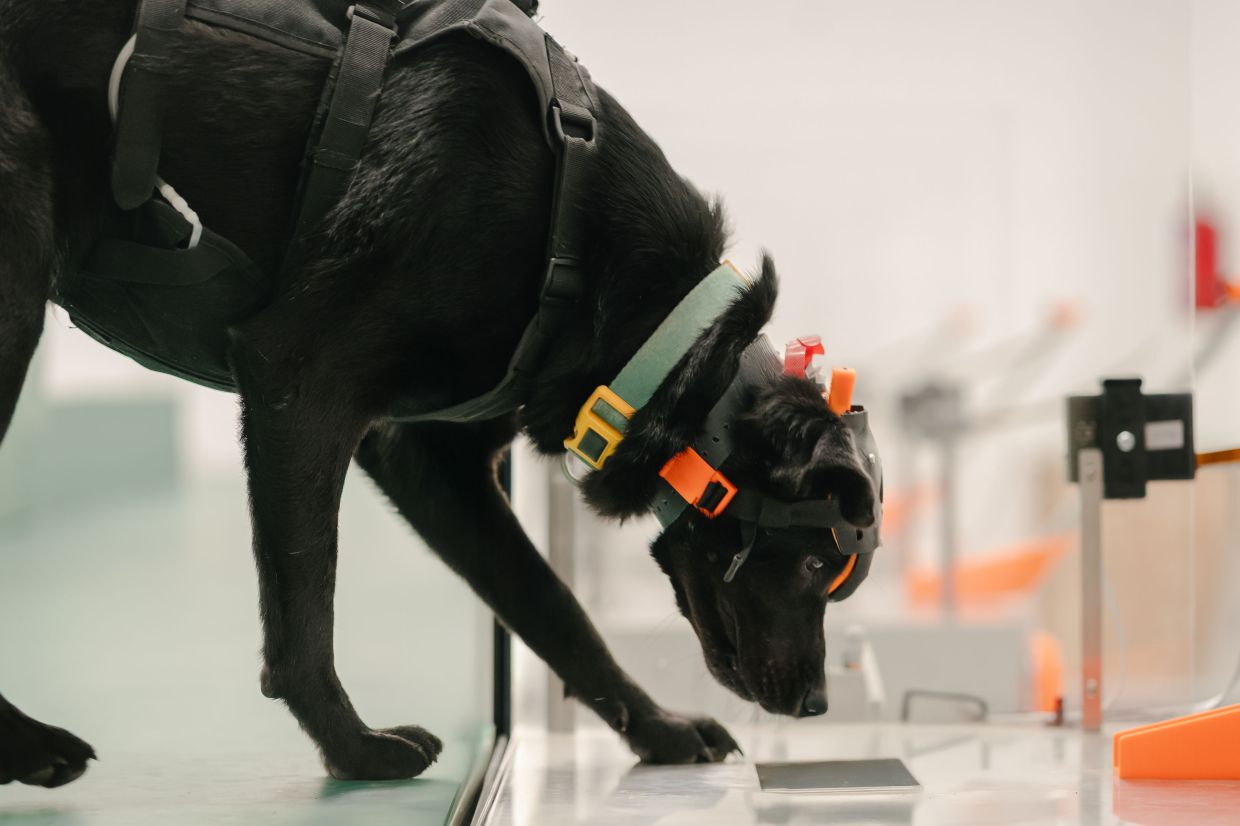
A Bengaluru-based startup is pioneering an unconventional approach to cancer detection that marries ancient canine instinct with modern machine learning. Dognosis has established a two-acre facility where teams of beagles, labradors and Dutch shepherds work alongside artificial intelligence systems to identify early signs of malignancy from human breath samples—a methodology that could fundamentally reshape how developing nations approach preventive healthcare.
The company's operating principle is elegantly simple: patients exhale into masks that are shipped to Dognosis's laboratory, where trained dogs undergo controlled exposure to the samples. Rather than relying on conventional diagnostic imaging, blood work or tissue biopsies, the system employs an array of sensors to monitor the animals' physiological responses—including movement patterns, respiratory changes, neural activity and behavioural cues. Artificial intelligence algorithms then synthesise these signals to generate preliminary cancer assessments without requiring expensive medical infrastructure. This innovation transforms the dog's legendary sense of smell from its traditional applications in drug and explosive detection into a scalable public health tool.
The scientific foundation supporting this venture is substantial. A Phase 2 trial published in the Journal of Clinical Oncology documented approximately 90 percent sensitivity in identifying early-stage malignancies across seven broad cancer categories encompassing more than 20 distinct tumour types, with breast cancer among those tested. Remarkably, dogs trained specifically on ten cancer variants subsequently demonstrated the capacity to identify an eleventh type they had never previously encountered—suggesting their olfactory discrimination extends beyond rote memorisation to genuine pattern recognition of disease-related biomarkers.
For Malaysia and the broader Southeast Asian region, the implications of this technology warrant serious consideration. India currently ranks third globally in cancer incidence, with the International Agency for Research on Cancer documenting approximately 1.5 million new diagnoses and over 900,000 deaths in 2024 alone. Yet screening coverage remains shockingly deficient: fewer than two percent of Indian women report ever undergoing cervical cancer screening, while less than one percent have participated in breast or oral cancer examinations. Among men, oral cancer screening participation hovers below 1.2 percent. These figures underscore a critical diagnostic gap affecting not merely India but the entire South Asian region, where comparable infrastructural and economic constraints similarly suppress preventive medicine uptake.
Dognosis, which raised $1.5 million during a pre-seed funding round in 2024 through investors including Accel India and San Francisco-based Caffeinated Capital, intends to launch at-home multi-cancer prescreening tests across India next year at a price point measured in thousands of rupees—a fraction of conventional diagnostic costs. The company's financial runway, according to co-founder Akash Kulgod, extends sufficiently to support planned expansion trajectories for the next two years. This funding backdrop demonstrates substantial investor confidence in the scalability and commercial viability of canine-assisted diagnostics.
The operational mechanics at Dognosis's facility reveal a sophisticated balance between animal welfare and rigorous testing protocols. The dogs inhabit the premises communally, receiving regular exercise and recreational activities whilst spending just thirty minutes to an hour daily engaged in detection work, which is deliberately gamified with treat-based rewards. During a recent demonstration, a two-year-old beagle named Whiskey processed ten breath samples, demonstrating the characteristic pause, sniff and circling behaviour when encountering a positive sample at the sixth position—a moment captured by monitoring systems that translate observable animal responses into quantifiable diagnostic data.
Dognosis's ambitious roadmap reflects confidence in the technology's potential. The startup envisions processing one million annual tests within several years whilst expanding its canine workforce from the current complement to thirty animals and reducing sample turnaround times from current periods to approximately one week. Concurrently, the company is pursuing North American expansion, with Kulgod projecting facility establishment in the United States by late 2027 or early 2028. These targets suggest the founders regard canine-AI hybrid diagnostics not as a niche Southeast Asian experiment but as a globally deployable healthcare innovation.
Currently, a Phase 3 trial commenced in April involving ten Indian hospitals and projected to recruit approximately 10,000 participants over twelve months. This expanded study will evaluate asymptomatic individuals at elevated cancer risk alongside survivors vulnerable to disease recurrence, with positive prescreening results triggering conventional diagnostic confirmation through imaging and biopsy. The deliberate integration of Dognosis screening within established diagnostic pathways rather than as a replacement mechanism demonstrates pragmatic recognition that new technologies must supplement rather than supplant existing medical infrastructure.
Regulatory positioning represents another strategic consideration. Kulgod has stated that Dognosis's prescreening tool does not require Indian regulatory approval insofar as prescreening differs from diagnostic classification, with only the latter subject to formal regulation. This regulatory arbitrage enables faster market entry whilst potentially raising governance questions as the technology achieves broader adoption. Pankaj Chaturvedi, deputy director of cancer epidemiology at Mumbai's Tata Memorial Centre, cautiously endorsed emerging diagnostic technologies whilst emphasising that such innovations must strengthen rather than undermine established screening infrastructure.
The competitive landscape includes SpotitEarly, a New Jersey-based startup reporting comparable canine cancer-detection trial results, though commercial deployment remains pending. The concentration of similar ventures signals genuine scientific consensus regarding dogs' diagnostic capabilities whilst highlighting that commercialisation obstacles remain substantial. Standardising canine olfactory performance at scale, managing logistics for processing massive sample volumes and persuading healthcare professionals to integrate animal-derived diagnostics within conventional clinical workflows all present formidable challenges.
For Southeast Asian healthcare systems confronting similar cancer screening deficits as India, Dognosis's model offers instructive possibilities. The technology's fundamental advantage lies in cost-efficiency and non-invasiveness—precisely the characteristics required for population-level screening in resource-constrained settings. However, successful deployment would require partnerships with regional healthcare networks, diagnostic laboratories and government health agencies to establish necessary infrastructure and build clinical acceptance. The coming Phase 3 trial results will prove determinative in validating whether this unorthodox fusion of canine biology and artificial intelligence can genuinely democratise cancer detection across economically diverse populations.

