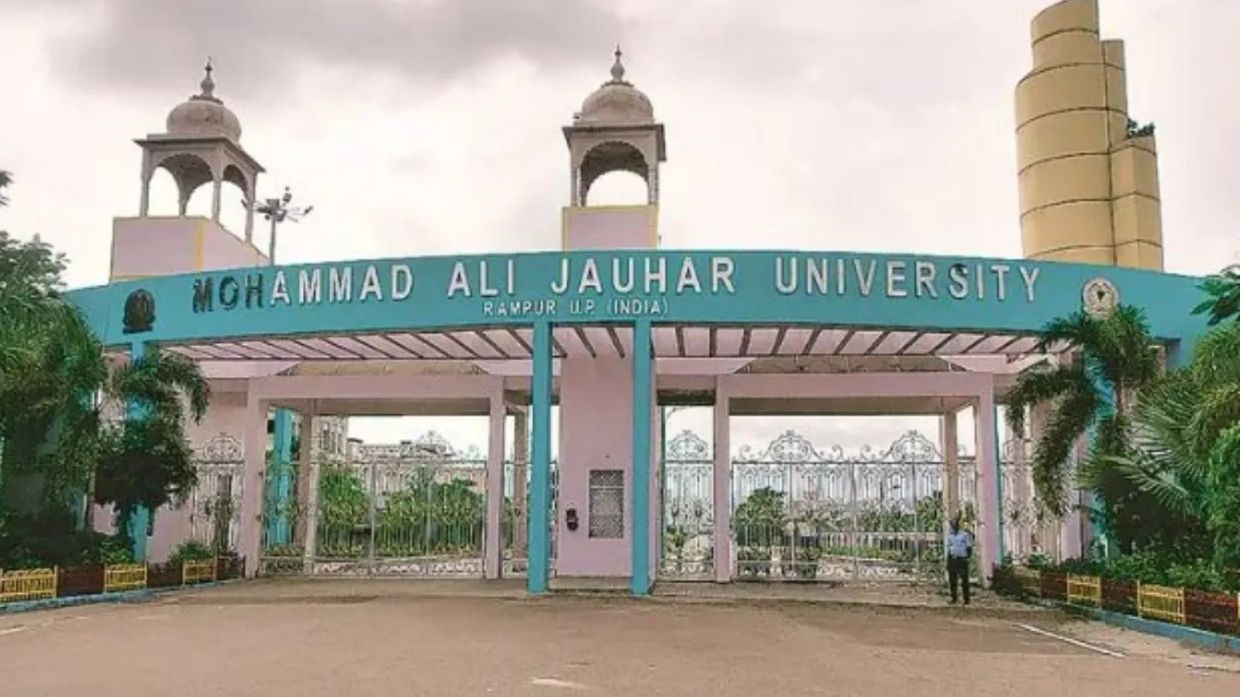
The local authorities in Rampur, a city in Uttar Pradesh in northern India, have issued a sweeping demolition order affecting the Mohammad Ali Jauhar University campus. The Rampur Development Authority directed the removal of 38 buildings out of a total of 40 structures on the institution's sprawling 250-acre property, claiming they were constructed without proper authorisation. The order came down on Wednesday, July 15, marking a significant development for the university and raising questions about its operational future.
Mohammad Ali Jauhar University, named after a prominent freedom fighter who played a key role in India's independence struggle, was established relatively recently in 2006. The institution was founded by Azam Khan, a seasoned politician who previously served as a state minister in Uttar Pradesh. The university represents one of Khan's major contributions to the educational landscape of the region, though it now faces a critical administrative challenge that could fundamentally alter its structure and viability.
Azam Khan's political career has been closely tied to the Samajwadi Party, a significant force in Uttar Pradesh politics. The party governed the state during the period from 2012 to 2017, when Khan held ministerial positions and wielded considerable influence over state policy and development projects. His political fortunes shifted dramatically when the Bharatiya Janata Party, the ruling national party, won control of the state government in 2017, leading to a significant realignment of power dynamics in the region.
Khan's current circumstances present a complex picture. Known throughout India as a compelling orator and influential community leader, he now finds himself imprisoned following a court conviction in a case centring on forged documents. His son Abdullah has also been incarcerated in connection with related proceedings, creating significant strain on the family's standing and business interests. The simultaneous incarceration of both father and son has drawn considerable attention in Indian political circles and media outlets.
The family's legal troubles extend beyond Khan and his son. Tazeen Fatima, Azam Khan's wife, was also charged and imprisoned in a separate case involving a birth certificate, though she has since secured bail and been released from custody. The mounting legal cases facing multiple family members have created a pattern that observers struggle to separate from broader political developments in the state.
The Khan family has consistently maintained that the legal proceedings represent a coordinated political attack rather than genuine justice mechanisms. They characterise the various court cases as components of a wider vendetta motivated by partisan interests and political opposition. This narrative resonates with supporters who view the prosecutions through the lens of inter-party rivalry and power struggles that characterise Indian politics. The demolition order at the university can be understood within this broader context of contested legal actions.
The timing and scale of the demolition order raises important questions about institutional governance and the oversight of educational facilities in India. Universities typically enjoy certain protections and exemptions from standard regulatory processes, making the aggressive enforcement action unusual. The fact that 38 of 40 buildings face demolition suggests either significant and systematic construction violations or, according to Khan family supporters, a disproportionate application of regulatory authority.
From a Southeast Asian perspective, this case illustrates broader patterns in South Asian politics where institutional autonomy can become entangled with political factional disputes. Educational institutions in the region sometimes face pressure when their founders or leadership fall out of political favour, creating uncertainty about their long-term viability. For Malaysian observers tracking developments in the Indian subcontinent, the situation underscores the importance of institutional independence from partisan political influence.
The practical implications for the university are severe. With approximately 95 percent of campus buildings targeted for removal, the institution would lose nearly all its physical infrastructure. This would effectively halt normal operations, displace students and faculty, and destroy years of educational development. The decision raises humanitarian concerns about the welfare of current students and staff members who depend on the institution for their livelihoods and education.
The case also touches on fundamental questions about the rule of law and due process in India's judiciary. When legal actions against political opponents intersect with regulatory enforcement against institutions they founded, concerns about selective application of rules become difficult to dismiss. International observers and civil society organisations have increasingly scrutinised whether such cases reflect genuine legal violations or weaponised legal systems.
Moving forward, the university's situation will likely depend on legal appeals and potential political developments. If opposition parties return to power in Uttar Pradesh, the regulatory climate could shift dramatically. Conversely, if the current government consolidates power, the demolition order may proceed. This uncertainty creates a precarious position for the institution and everyone connected to it, illustrating how educational and economic interests become vulnerable when entangled with factional political struggles.

