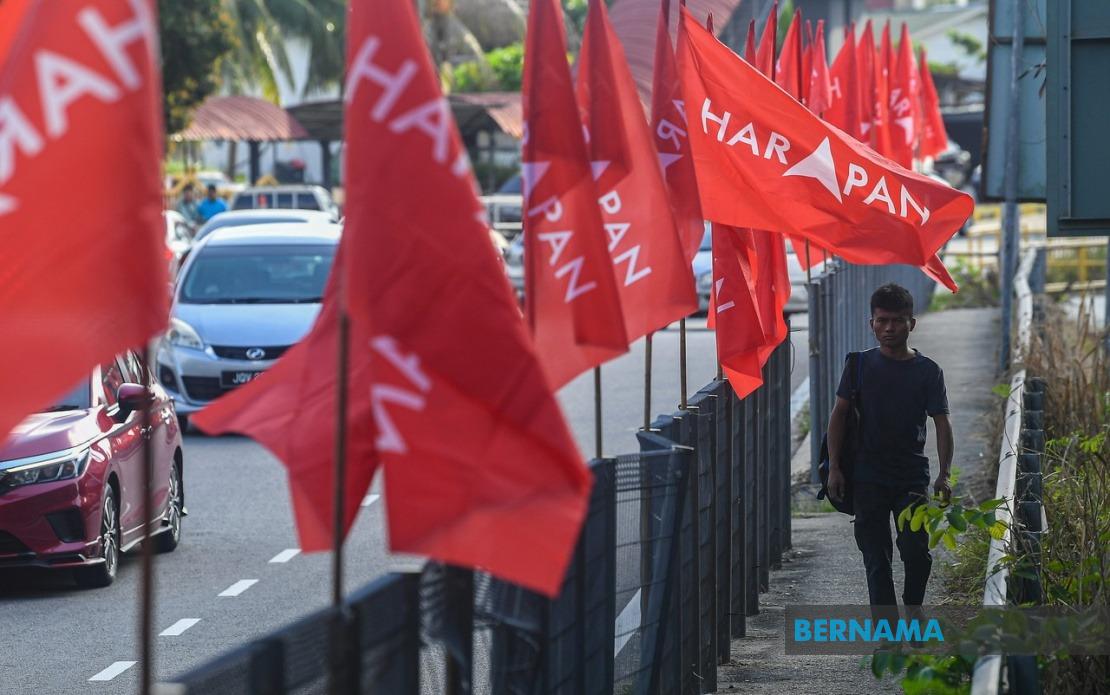
The Indian community's support will be decisive in determining whether Pakatan Harapan secures victory and continuity in the Johor state election scheduled for July 11, according to Parti Keadilan Rakyat (PKR) Central Leadership Council member Dr Gunaraj George. Though comprising a smaller proportion of Johor's population compared to other ethnic groups, Indian voters possess considerable leverage in approximately 25 mixed and marginal State Legislative Assembly seats that are likely to swing the overall election outcome. Dr Gunaraj, who represents the Sentosa state seat, framed the electoral contest not merely as a choice of individual representatives but as a referendum on Malaysia's political and economic trajectory.
The senior PKR figure urged the Indian electorate to back Pakatan Harapan to safeguard three interconnected objectives: sustained political stability, the continuation of the MADANI reform agenda, and accelerated economic development. He positioned the election within the context of Malaysia's current international standing, arguing that domestic political certainty remains essential for attracting foreign investment and maintaining macroeconomic confidence. With global economic headwinds, intensifying geopolitical tensions, and mounting cost-of-living pressures affecting household budgets across Malaysia, Dr Gunaraj stressed that voters must weigh the security of established governance against the risks of returning to a period of political turbulence.
Dr Gunaraj emphasized that political stability functions as more than rhetorical flourish; it constitutes the foundational requirement for investor confidence, sustained job creation, rising real incomes, and broad-based economic expansion. He contrasted the current administration's record of systematic policymaking and implementation with the disruption and administrative paralysis that characterised earlier periods of political uncertainty. The implicit argument was that prolonged political instability would undermine Malaysia's competitiveness for foreign direct investment, jeopardize employment prospects across sectors, and disproportionately affect lower-income households who depend on stable employment and predictable social programmes.
The MADANI Government's tenure of more than three and a half years has, according to Dr Gunaraj, demonstrated tangible commitment to policies benefiting all citizens regardless of ethnicity. He pointed to increased allocation to the Malaysian Indian Transformation Unit (MITRA), which rose from RM100 million to RM150 million following nearly a decade of stagnation under previous administrations. Prime Minister Datuk Seri Anwar Ibrahim has pledged progressive increases to this allocation to address evolving community needs. Beyond funding increases, Dr Gunaraj underscored that MITRA's governance structure has become notably more transparent, with systematic programme monitoring and parliamentary accountability mechanisms replacing less rigorous oversight arrangements.
Beyond the symbolic significance of MITRA funding, the MADANI Government has expanded budgetary commitments to Tamil National-Type Schools (SJKT), a cornerstone of Indian educational identity and community continuity. The administration has also enhanced maintenance assistance for places of worship, including temples serving the Hindu, Sikh, and other faith communities. These interventions address long-standing advocacy issues within Malaysian Indian civil society that had languished despite previous representations to earlier governments.
Economic support mechanisms have multiplied under the current administration. The MADANI Government expanded access to Technical and Vocational Education and Training (TVET) programmes, historically underutilised by Malaysian Indian youth, while providing targeted financial assistance to students from low-income families. Cash assistance programmes including Sumbangan Tunai Rahmah (STR) and Sumbangan Asas Rahmah (SARA) have reached vulnerable households, while targeted support for micro, small, and medium enterprises has created entrepreneurial pathways for community members.
Dr Gunaraj situated these specific Indian community-oriented policies within the broader institutional reform architecture underpinning the MADANI agenda. He noted that alongside targeted community initiatives, the government has simultaneously pursued institutional strengthening, governance enhancement, intensified anti-corruption enforcement, and increasingly inclusive economic policy frameworks. The cumulative effect, he argued, ensures that development dividends reach across multiple societal segments rather than concentrating among narrow constituencies. This framing attempts to position support for Pakatan Harapan as instrumental to securing both particular Indian community interests and broader national institutional advancement.
The electoral mathematics in Johor carry significance beyond the state level. Johor's 56 state seats represent a substantial bloc within Malaysia's federal political configuration, and the state's economic prominence as a manufacturing and investment hub means that Johor's political direction influences national governance trajectories. Pakatan Harapan's commitment to contesting all 56 seats signals confidence in the coalition's capacity to mobilise support across demographic groups, including the geographically dispersed Indian population whose votes in marginal constituencies could provide decisive margins.
For Malaysian Indian voters specifically, the election presents a choice between competing visions of their community's political integration and economic participation. Dr Gunaraj's appeal emphasizes that sustained institutional reform, transparent governance, and inclusive economic policy—hallmarks of the MADANI agenda—serve Indian community interests more effectively than political systems prone to instability and patronage-based resource distribution. He implicitly argues that community members' rational calculation should prioritize the security and measurable achievements of the incumbent administration over untested alternatives.
The timing of Dr Gunaraj's statement—made precisely ahead of the July 11 Johor poll—reflects Pakatan Harapan's strategic recognition that marginal constituencies and swing voter demographics, particularly minority communities with concentrated voting power, warrant explicit outreach and detailed performance justification. By itemising specific allocations, programme expansions, and governance improvements, the PKR leadership attempted to ground the abstract MADANI narrative in concrete, community-relevant outcomes. This approach acknowledges that Indian voters, like all electorates, evaluate political parties substantially on demonstrated delivery of tangible benefits and institutional reforms that translate into improved living standards and preserved cultural institutions.
The Indian community's ultimate voting behaviour in Johor will carry implications extending beyond state-level outcomes. A strong Indian voter turnout for Pakatan Harapan could signal sustained coalition cohesion and inclusive governance legitimacy, while divergent voting patterns might suggest fracturing in the coalition's demographic foundations. For Malaysian political observers monitoring the health of the current federal arrangement, the Johor state election—and specifically the Indian community vote—provides a revealing indicator of whether the MADANI Government's institutional and economic reforms have successfully maintained or expanded its constituent base among traditionally important minority communities.

