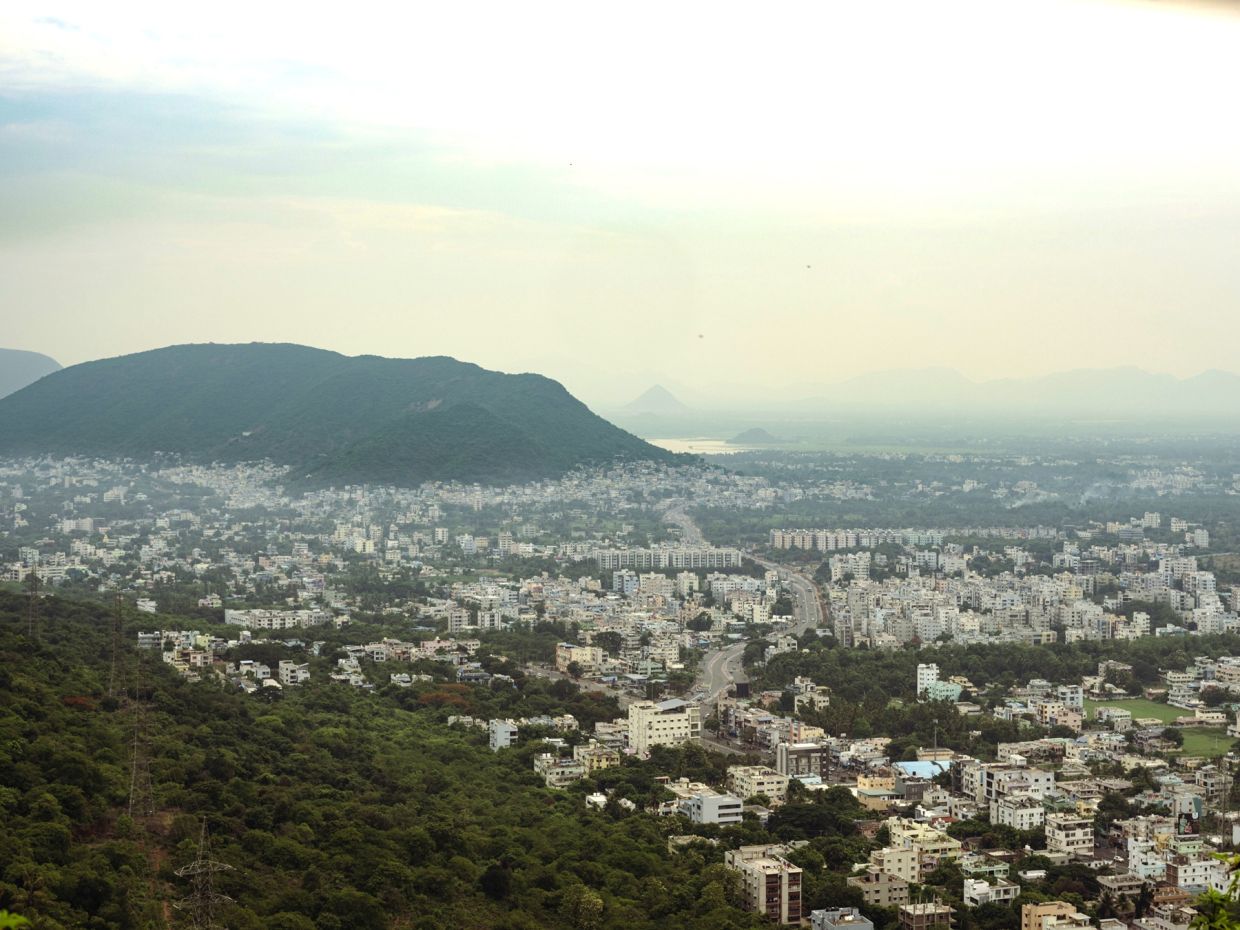
India's drive to secure a foothold in the global artificial intelligence economy has crystallised around an ambitious infrastructure push along the country's southern coast, where Google and local partners are constructing enormous data centres that promise to reshape the nation's technological standing. Yet the rapid deployment of these facilities in Visakhapatnam, a coastal city in Andhra Pradesh, reveals deep tensions between New Delhi's development ambitions and the concerns of local communities who question whether they bear disproportionate environmental and financial burdens.
The scale of the undertaking is substantial. Google is investing US$15 billion in a project that includes multiple data centres, subsea cable infrastructure, and manufacturing facilities, supported by state government backing and subsidies spanning discounted land, reduced energy costs, water allocations, and extensive tax concessions. A parallel venture between Brookfield Asset Management and India's Reliance conglomerate is simultaneously constructing an equally large facility nearby. Once operational, these two projects alone will more than double India's existing data centre capacity—a dramatic expansion that underscores how far the nation lags behind its aspirations in the AI infrastructure race.
The framing of these investments at state level reveals how central they are to India's competitive calculus. Andhra Pradesh's information technology minister Nara Lokesh has publicly championed the Google project as a catalyst for broader manufacturing and supply chain development, envisaging that power electronics suppliers, air conditioning manufacturers, and building material producers would establish operations in the state. This ecosystem approach reflects official thinking that data centres are not isolated technical facilities but anchors for wider industrial development. The welcome billboards erected in Tarluvada village, emblazoned with faces of national and state politicians including Prime Minister Narendra Modi, signal how politically invested New Delhi has become in these projects.
However, the underlying structural problem driving this aggressive expansion is undeniable. Despite producing approximately 20 percent of the world's data, India controls only a tiny fraction of global data centre capacity—a gap that constrains its ability to build artificial intelligence capability domestically. Morgan Stanley research has classified India as a "laggard" in AI infrastructure development, a designation that galls policymakers who point to the country's abundant technical talent and massive consumer market. The brain drain of investment capital, particularly the flow of billions toward Taiwan and South Korea for cutting-edge semiconductor manufacturing, has reinforced India's position as a technology deployer rather than innovator. From this perspective, data centre expansion represents a necessary if belated response to a strategic deficit.
Yet this urgency appears to be driving decisions that subordinate environmental and social review to timeline pressures. Activists and former government officials in Visakhapatnam contend that environmental clearance protocols have been compromised to permit construction in ecologically sensitive areas within a region already classified as water-stressed, where supply disruptions occur regularly during summer months. The lack of public transparency about where water and electricity will originate, how infrastructure costs will be distributed, and who ultimately bears the burden of subsidies has deepened community scepticism. VS Krishna, a campaigner with the Human Rights Forum, articulated the frustration plainly: a project of this scale and developmental consequence should not proceed behind a veil of opacity that prevents public deliberation.
The employment projections offered by state officials have become a particular flashpoint. Lokesh and his advisers claim the Google project will generate approximately 120,000 jobs during construction and 60,000 permanent positions thereafter—figures that critics argue bear no relationship to employment patterns observed at comparable data centre facilities elsewhere. Scrutiny of environmental clearance documents reveals remarkably modest staffing assumptions, with calculations based on parking space requirements and toilet flushing volumes suggesting a workforce fraction of what officials publicly cite. This discrepancy matters deeply given India's parallel labour market crisis: with 1.4 billion people and limited formal employment growth, the International Monetary Fund has warned that artificial intelligence deployment could unleash a "tsunami hitting the labour market," potentially disrupting the technology support services industry that has been crucial to India's export economy.
The political economy surrounding these projects introduces additional complications. Google's local partner in the venture is the Adani Group, controlled by billionaire Gautam Adani, widely perceived as closely aligned with Prime Minister Modi during his twelve-year tenure. Adani's fortune has expanded dramatically under Modi's government, and he has developed a reputation for prevailing on major infrastructure projects. Former senior officials like EAS Sarma, who held positions in India's finance and energy ministries and possesses doctoral credentials in energy planning, argue candidly that Adani's political access and Modi government's desperation to demonstrate AI-era progress have created conditions where ordinary procedural safeguards are circumvented. Sarma contends that transmission line construction costs, though initially absorbed through subsidies, will ultimately transfer to consumers' electricity bills, making the apparent fiscal gift to foreign investors a disguised cost borne by ordinary households.
Google and its project partners have responded to environmental concerns by emphasising technological solutions. Company executives assert that data centre cooling systems have been engineered to minimise water consumption and operate independently of potable water supplies. They pledge that power generation investments will be pursued internally and that no costs will be transferred to local households, businesses, or state government coffers. Yet such assurances have failed to persuade sceptics, particularly given the broader context of how development projects proceed in India. The government's documented enthusiasm for expediting the project, the political backing from Delhi, and Adani's track record all suggest that community resistance, however vocal, may ultimately prove insufficient to alter trajectory or substance.
The Visakhapatnam situation reflects a broader pattern now visible across multiple countries: data centre expansion, while essential for artificial intelligence infrastructure, has become contentious even in developed economies. In the United States, projects worth tens of billions have encountered delays or been blocked entirely by local opposition centred on energy consumption, water depletion, and economic displacement concerns. That India is pursuing comparable mega-projects with less stringent public oversight and greater subsidy burdens, in regions with existing resource constraints, suggests the country is importing infrastructure patterns before resolving the governance and environmental safeguards that other nations are insisting upon.
For India's leadership, the competitive imperative appears overriding. The country cannot afford to fall further behind in the artificial intelligence era without forgoing a role in global technology markets and surrendering influence over emerging standards and norms. Data centre capacity is not optional infrastructure but fundamental to any credible AI capability. Yet the manner of deployment matters profoundly for legitimacy and sustainability. When major projects proceed with limited transparency, questionable employment projections, environmental shortcuts, and subsidies whose ultimate costs remain obscured, they invite exactly the kind of scepticism and opposition now crystallising in Visakhapatnam. India's challenge is to demonstrate that it can pursue technological advancement through processes that command public confidence rather than state suppression of dissent—a test that will shape not only these specific projects but India's broader claim to developmental legitimacy.
For Southeast Asian nations watching India's trajectory, the implications are instructive. As artificial intelligence infrastructure becomes a economic and geopolitical priority across the region, governments will face parallel pressures to move quickly, accommodate foreign capital, and streamline environmental review. The Visakhapatnam experience suggests that speed without accountability creates lasting grievances, undermines project sustainability, and raises fundamental questions about who bears the costs of technological advancement. Whether India can adjust course remains uncertain, but the region would benefit from learning these lessons before pursuing similar paths.

