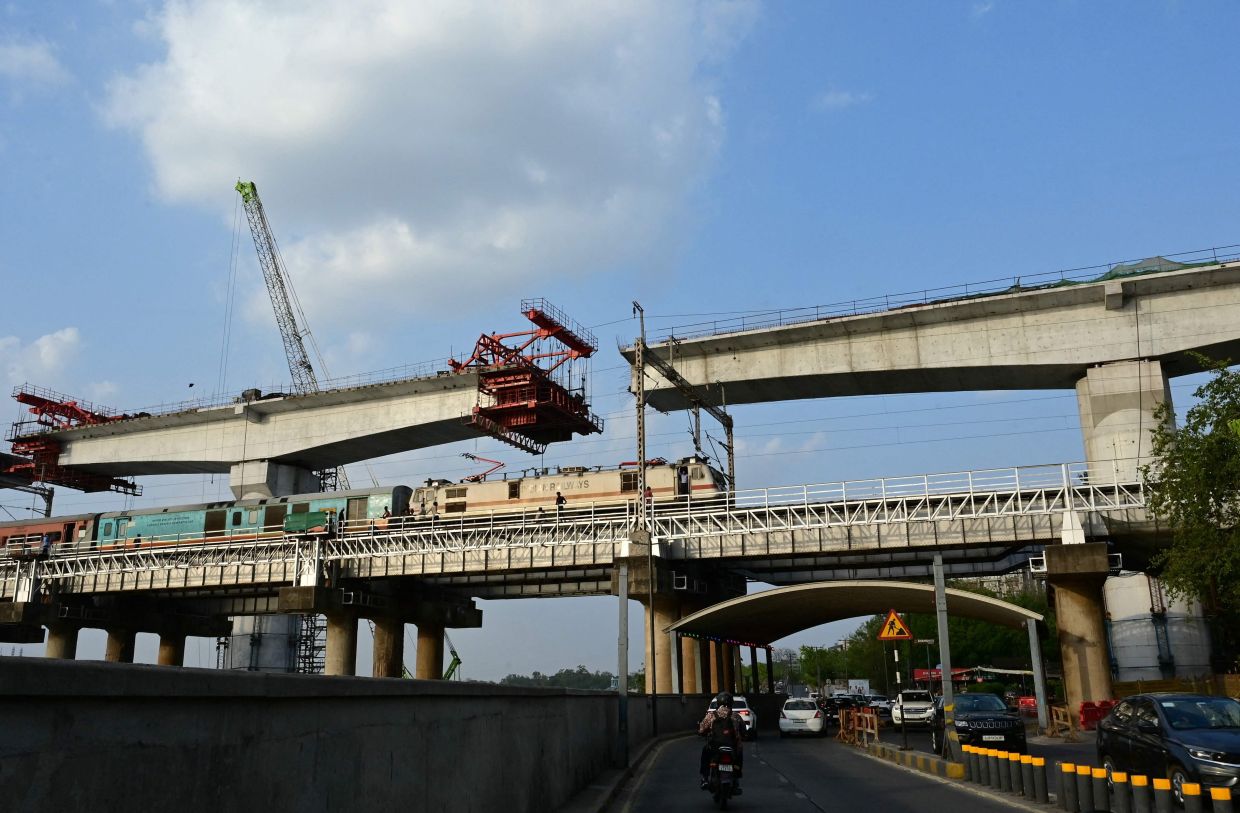
India's ambitious first bullet train project is gathering momentum at last, with railway officials declaring that a section of the much-delayed high-speed line will become operational in 2027, nearly a decade after construction commenced. The inaugural segment will connect the cities of Surat and Vapi, two industrial hubs situated roughly 100 kilometres apart on India's western coast. This incremental milestone, while modest compared to the original vision, signals tangible progress on what New Delhi describes as a pivotal moment in transforming the nation's railway infrastructure.
The Mumbai-Ahmedabad High Speed Rail Corridor represents India's flagship venture into bullet train technology, utilising Japanese Shinkansen engineering developed through a partnership between the Indian and Japanese governments. Originally unveiled in 2017 by then-Prime Minister Narendra Modi and Japanese counterpart Shinzo Abe, the project was initially scheduled for completion by 2023. The intervening years have witnessed substantial cost pressures and logistical complications, prompting significant extensions to the timeline. Dharmendra Tewari, additional director general of Indian Railways, acknowledged to AFP that considerable work remains, though substantial portions of the overall corridor infrastructure have already progressed.
The complete 508-kilometre corridor is projected to reach full operational status by the end of 2028, condensing the journey between Mumbai and Ahmedabad from six hours to under two hours by rail. This dramatic reduction in travel time carries profound implications for India's financial capital and the strategic cities dotting Gujarat's landscape. Beyond mere convenience, the line represents a critical link between Mumbai's financial powerhouse status and Ahmedabad's growing economic significance within Modi's home state. The timing is strategically aligned with Ahmedabad's hosting of the 2030 Commonwealth Games, an event that New Delhi openly positions as a stepping stone toward securing the 2036 Olympic Games.
The financial dimensions of the project underscore both India's commitment and the complexities inherent in such infrastructure ventures. The government estimates a total cost of USD 17 billion, with Japan's International Cooperation Agency funding 81 percent through concessional loans. However, Indian media outlets have reported that land acquisition expenses and accumulated delays may substantially inflate these figures, raising questions about the true fiscal burden on New Delhi. These cost pressures reflect broader challenges facing India's infrastructure sector, where ambitious timelines frequently encounter unexpected obstacles requiring recalibration and additional investment.
The engineering challenges embedded within the Mumbai-Ahmedabad corridor exemplify the technical sophistication required for such projects. The alignment includes a 21-kilometre tunnel burrowing through mountainous terrain, alongside India's first undersea rail tunnel, still under construction. These elements represent genuine achievements in engineering capability, suggesting that Indian firms and their international partners have developed substantial expertise in executing complex rail infrastructure. The successful completion of these technically demanding segments will provide validation for the methodologies and expertise that proponents hope to leverage across a wider national network.
India's railway transformation extends far beyond this single bullet train line. The nation operates one of the world's most extensive rail networks, spanning approximately 85,000 kilometres, carrying 7.41 billion passengers annually and moving 1.67 billion tonnes of freight. Approximately 80 percent of these lines now accommodate speeds of 110 kilometres per hour or above, reflecting sustained investment in modernising colonial-era infrastructure. The domestically developed Vande Bharat express trains, achieving 180 kph and carrying nearly 40 million passengers last year, represent another facet of this modernisation effort, delivering tangible benefits without the international technology transfer required for bullet trains.
The bullet train's design specifications underline its significance as a flagship project. Operating at 320 kilometres per hour with a design capacity of 350 kph, the line will substantially outpace India's existing rail offerings. This speed capability opens possibilities for facilitating business travel between major metropolitan areas, potentially supporting economic integration across state boundaries. For a nation seeking to enhance connectivity between its sprawling cities and regions, such capability represents transformative infrastructure, particularly for time-sensitive commercial and professional movement.
Beyond the Mumbai-Ahmedabad corridor, New Delhi has articulated an expansive vision for high-speed rail development. Government proposals outline seven additional corridors spanning 4,000 kilometres, designed as what officials term "growth connectors" to integrate key cities and facilitate inter-regional economic interaction. These ambitious proposals include an east-west route linking New Delhi to Varanasi, Modi's parliamentary constituency and one of Hinduism's holiest cities, extending to Siliguri, which serves as the crucial gateway connecting India's northeastern states to the remainder of the nation. A north-south network would traverse from Ahmedabad through Mumbai, then southeast toward the technology hubs of Pune, Hyderabad, and Chennai, potentially reshaping India's transportation geography.
However, these broader corridor proposals remain largely conceptual, lacking defined timelines and securing funding commitments. The gap between announcement and implementation reflects persistent challenges in advancing India's infrastructure agenda at scale. While the successful completion of the Mumbai-Ahmedabad section could catalyse momentum for subsequent projects, the absence of concrete financial mechanisms and regulatory frameworks suggests these corridors will require sustained political commitment and international cooperation to progress beyond planning documents.
The implications for Southeast Asian nations merit consideration. India's pursuit of bullet train connectivity signals its determination to position itself as a modern, forward-looking economy capable of managing complex technological integration. Successful execution could influence regional perceptions of India's infrastructure competence and willingness to undertake transformative projects. Additionally, the knowledge and expertise accumulated through the Mumbai-Ahmedabad project may facilitate future cooperation across South and Southeast Asia, particularly as nations in the region contemplate similar high-speed rail investments.
Japanese Prime Minister Sanae Takaichi, a protégé of Shinzo Abe who originally shepherded this partnership, is scheduled to visit India for three days beginning Wednesday, likely to review progress and potentially discuss expanded cooperation. Her visit signals Tokyo's continued investment in the relationship and possibly its interest in broadening technological collaboration beyond this initial bullet train project. For India, such high-level bilateral engagement reinforces the political importance attributed to railway modernisation within national development strategy.
The journey toward operational bullet train service encapsulates broader themes within India's development narrative. A nation that inaugurated its first passenger steam train in 1853 is now racing to position itself at the vanguard of 21st-century rail technology. The delays and cost overruns that have characterised the Mumbai-Ahmedabad project reflect genuine complexities inherent in executing such ventures within India's institutional, financial, and geographic contexts. Yet the confirmed 2027 opening represents meaningful progress, suggesting that despite setbacks, the trajectory toward bullet train operation continues advancing, potentially unlocking a new chapter in India's transportation modernisation.
Looking forward, the success or failure of the initial Surat-Vapi segment will prove decisive for India's broader high-speed rail ambitions. Should this section deliver operational excellence and passenger satisfaction, it may catalyse the political will and financial commitment necessary to progress toward the more expansive network envisioned by New Delhi. Conversely, operational difficulties or cost overruns could dampen enthusiasm for subsequent corridors, potentially constraining India's transport modernisation trajectory for years to come.

