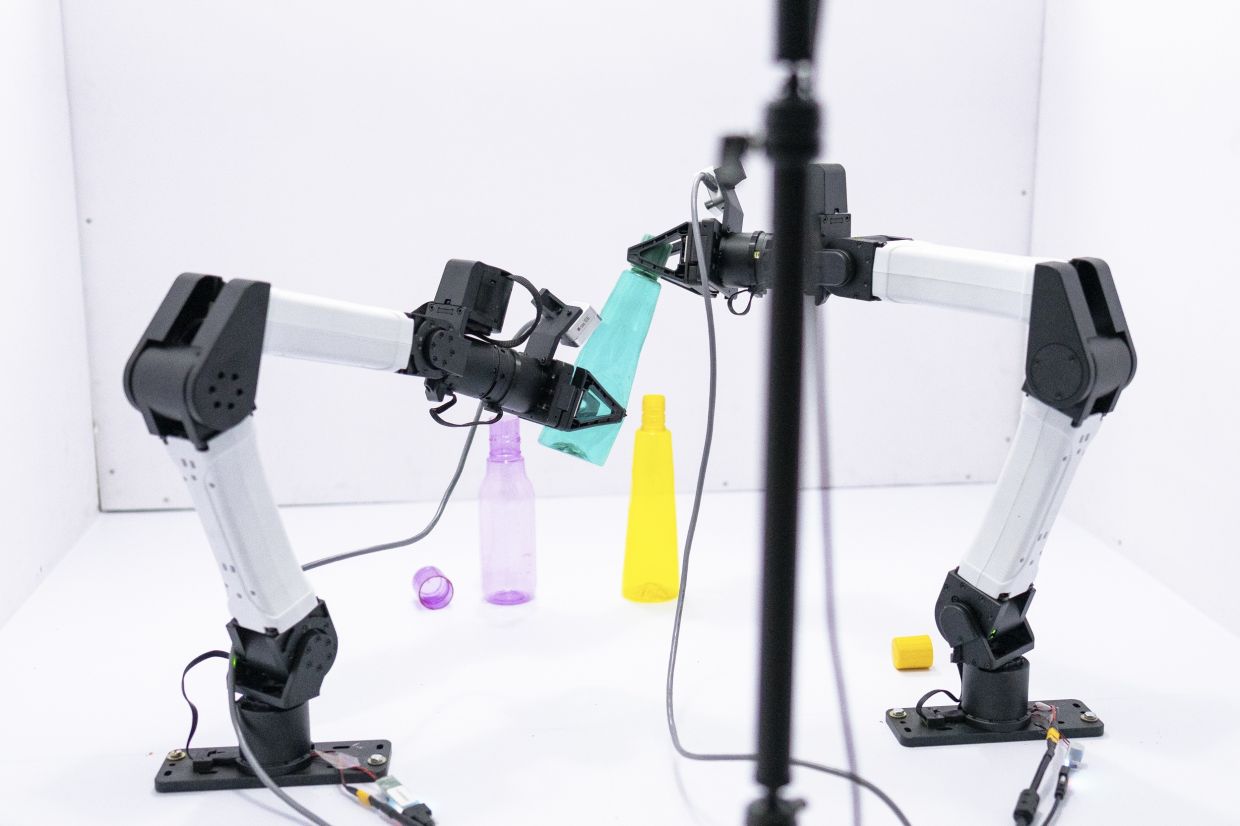
India's technology sector is experiencing an unexpected employment surge in an unlikely quarter: thousands of young workers are being hired to watch video footage frame by frame, label images, and train robots to perform mundane household tasks. This explosion in data annotation work—the process of preparing raw information that teaches artificial intelligence systems to recognise patterns and make decisions—has emerged as a significant source of entry-level employment for India's rapidly expanding youth population, even as the country grapples with a persistent skills mismatch that triggered widespread protests last year. Companies like Objectways Technologies, headquartered in the southern city of Karur, exemplify this trend, having grown to employ 2,600 workers and hired 300 new staff in a single recent month, many of them fresh graduates seeking their first stable paycheques.
The work itself is unglamorous but essential. Data annotators examine footage from self-driving cars, humanoid robots, and other AI-powered devices, documenting in meticulous detail how well machine learning models perform their assigned tasks. Some workers spend their weekdays in corporate offices watching video sequences unfold, while others supplement their income by recording themselves at home performing everyday activities—chopping vegetables, making beds, handling household objects—all to provide artificial intelligence with the diverse training data it requires. The contrast between the intellectual credentials of many workers and the repetitive nature of their employment is striking: Aiswarya Palaniswamy, who holds a master's degree in data analytics, now watches video footage for hours each day, confident nonetheless that her role addresses a genuine gap in the AI development pipeline that machines cannot yet fill on their own.
For India, a nation where approximately two million citizens turn eighteen every month, this emerging field addresses an acute employment crisis. Prime Minister Narendra Modi's government has staked considerable political capital on promises of job creation and economic modernisation, yet recent months have seen youth anger boil over into public protest. The "cockroach" demonstrations that erupted over education policy in January highlighted deeper anxieties about whether India's education system is actually producing graduates whom employers want to hire. Though Modi made a symbolic concession by replacing his education minister, the structural problem persists: millions of young Indians emerge from universities with degrees in hand but few genuine employment prospects, particularly in the skilled, technical roles that command respectable salaries.
Data annotation offers a partial solution to this conundrum, at least temporarily. At Objectways' facilities in Karur, a city of roughly 440,000 people, entry-level office positions pay between 210 and 260 US dollars per month—approximately 846 to 1,047 Malaysian ringgit—a figure that constitutes a comfortable living in smaller Indian cities. Freelance workers recording themselves at home earn 2.50 US dollars per usable hour of footage. By these standards, Objectways is providing meaningful income to workers who might otherwise struggle to find formal employment. Mohamed Afsar, now twenty-nine years old and managing 600 employees across the company's Coimbatore office, exemplifies the internal mobility such firms offer: promoted from his initial annotation role, he oversees operations processing approximately seventy hours of video daily, yet the demand vastly exceeds supply—his company receives 1,000 hours of raw footage every day from clients that remain unanalysed.
Yet beneath this apparent success story lies a troubling anxiety that preoccupies India's technology establishment and government planners. S. Krishnan, India's information technology minister, has publicly warned that the country must avoid recreating the precarious conditions that defined its previous phase of technology employment: becoming merely "the back office for the world," processing outsourced work that generates limited economic value and remains perpetually vulnerable to disruption. Data annotation, whatever its current scale, represents precisely this danger—these are jobs outsourced by American companies and international technology firms seeking low-cost labour to accomplish tasks that might eventually be automated away entirely. A 2025 report from India's government think tank has already estimated that as many as 1.5 million positions in information technology services could disappear within the decade due to artificial intelligence disruption, a prospect that renders the current hiring boom seem fleeting rather than foundational.
Minister Krishnan has articulated a more ambitious vision for India's role in the AI economy, one that transcends simple labour arbitrage. He argues that India's primary competitive advantage lies not in cheap workers performing standardised tasks, but in deploying its 1.4 billion people—and particularly the diversity of languages, cultural knowledge, and professional expertise they represent—in higher-value applications of artificial intelligence. Indian companies already work on projects involving medical imaging analysis in intensive care units and translation services leveraging India's constellation of regional languages, tasks that demand contextual understanding rather than rote processing. From this perspective, the current data annotation boom, though economically meaningful to individual workers, represents a missed opportunity if it becomes merely another iteration of the low-wage outsourcing model that has defined Indian technology employment for decades.
Objectways' founder and chief executive, Ravi Rajalingam, voices a different interpretation of his company's trajectory and significance. He established the firm in 2019 specifically to employ recent graduates in his hometown, recognising that traditional technology roles requiring engineering expertise were concentrated in distant metropolitan centres like Bangalore and Hyderabad. His insistence that data annotation work, while not demanding advanced degrees, constitutes genuine technical employment with genuine learning opportunities reflects a broader argument: that the jobs being created are not merely temporary expedients but represent legitimate career pathways. Several of his workers have indeed advanced into supervisory and analytical roles, suggesting that the company functions as a training ground rather than merely an exploitation operation. Rajalingam's repeated assertion that "India is the back office for the world no longer" appears to express both aspiration and defensive positioning, acknowledging the historical criticism whilst claiming transformation.
The economic projections surrounding data annotation illustrate the tension between optimism and caution. Industry analysts project that the field could contribute as much as 10 billion US dollars—approximately 40.3 billion Malaysian ringgit—to India's economy by the end of the decade, a figure substantial enough to represent meaningful aggregate employment and income generation. Yet even sympathetic economists acknowledge that this scale remains too modest to constitute the foundation of genuine competitive advantage in artificial intelligence development. For India to compete meaningfully in the global AI race, the argument goes, the country requires indigenous companies developing proprietary artificial intelligence applications, not merely providing labour services to foreign technology corporations. The distinction matters profoundly for long-term economic independence and technological sovereignty.
What remains unclear is whether this moment of data annotation employment expansion represents a genuine structural shift in India's technology economy or merely another episode in a recurring pattern wherein new forms of low-wage technical work temporarily absorb educated but underemployed youth before automation or wage arbitrage eliminates the positions. Hari Prasad, a twenty-five-year-old engineer hired by Objectways last year, articulates the optimistic interpretation: his work training robots to perform household tasks, he explains, contributes to the science fiction becoming reality. He frames his role as essential to the future, not peripheral to it. Yet the very temporality he invokes—his casual reference to what robots might accomplish "ten years down the road"—contains an implicit countdown: these jobs that train artificial intelligence may themselves have limited lifespans as the systems they nurture grow more autonomous and capable.
The broader significance of India's data annotation surge extends beyond national employment statistics into questions about how artificial intelligence development will be geographically distributed and who will capture the economic value generated by AI systems. If India remains confined to the labour-intensive, lower-margin work of preparing training data whilst foreign companies retain ownership of the models and applications built upon that data, the country repeats historical patterns of extraction. Conversely, if Indian companies and workers develop capacity to move upstream into model development, application design, and intellectual property creation, the present moment might represent a genuine inflection point. Minister Krishnan's warnings about "higher-value-added jobs" amount to an implicit acknowledgment that India's technology leadership has not yet resolved this dilemma—they have identified the problem clearly but have not yet articulated or implemented a convincing solution.
For the hundreds of thousands of young Indians currently employed in data annotation roles, the philosophical debates about economic structure and technological sovereignty feel abstract. These workers are earning salaries, gaining technical experience, and participating in the economically vital if unglamorous infrastructure of artificial intelligence. They are the human backstop that prevents AI systems from learning flawed patterns, the quality-control workforce ensuring that autonomous vehicles recognise pedestrians correctly and robotic systems grasp objects without dropping them. Their contribution is both essential and potentially temporary, making data annotation employment in India a profound paradox: a jobs boom built atop a technology that may ultimately eliminate such jobs, creating opportunity within an inherently precarious condition, and demonstrating how India continues to adapt to technological change whilst remaining vulnerable to economic disruption.

