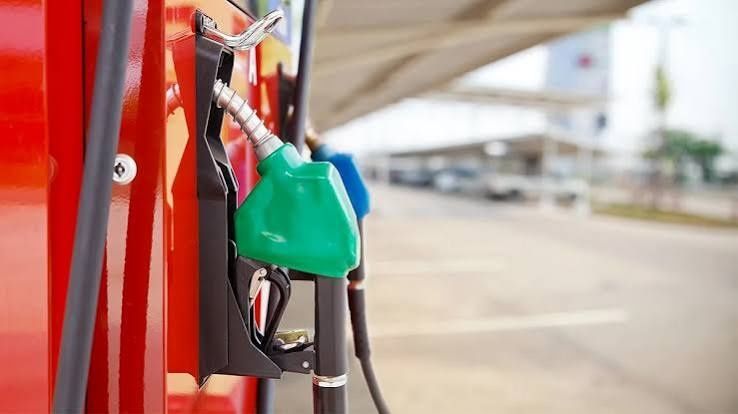
India's government moved swiftly on Friday to manage escalating public dissatisfaction with its mandatory adoption of E20, a petrol blend containing 20 per cent ethanol, as disgruntled motorists mobilized protests and social media erupted with complaints. The policy, implemented last year, has become a significant political liability for Prime Minister Narendra Modi's administration in the world's third-largest automotive market, drawing criticism from consumers, opposition politicians, and civil society activists who question both its rollout strategy and underlying scientific basis.
The controversy reached a critical juncture when Attorney General R. Venkataramani characterized E20 as an "experiment" during court proceedings this week, a remark that ricocheted across social platforms and galvanized public anger. Despite government denials that the statement was ever made, video footage from the courtroom hearing circulated widely, showing Venkataramani explicitly using the term. The visual evidence contradicted official claims and undermined the administration's credibility on the issue, transforming what might have remained a technical policy dispute into a full-fledged political confrontation over government transparency and honesty.
Venkataramani subsequently clarified to Reuters that he had employed "experiment" solely in reference to the volume of ethanol supply chains, not the fuel policy itself. This parsing of language failed to mollify critics, who interpreted the distinction as semantic gymnastics designed to deflect accountability. The government's press office attempted damage control by dismissing objections as "wild claims" and cautioning the public against falling for what officials characterized as "rage bait," language that itself became fodder for accusations of governmental arrogance and dismissiveness toward legitimate consumer concerns.
Petroleum Minister Hardeep Singh Puri endeavored to normalize E20 adoption by drawing comparisons to motorsport applications, noting that racing vehicles utilize ethanol-based fuels and experience improved acceleration, though acknowledging marginal reductions in fuel economy. This argument, while technically accurate, appeared tone-deaf to ordinary motorists unable to accept compromised vehicle performance in their daily lives without meaningful consultation or alternative options. The absence of choice at petrol pumps, combined with mounting evidence of reduced efficiency, crystallized public frustration into demands for policy revision.
Tehseen Poonawalla, a prominent New Delhi-based activist and Congress party associate, organized a protest scheduled for Sunday, declaring that thousands had expressed interest in participating. This demonstration reflected broader mobilization efforts by opposition figures, including state minister Priyank Kharge of the Congress party, who criticized the government on social media for implementing E20 without adequate public engagement and for demanding citizens prove damage whilst official data remained incomplete. Such coordinated opposition signaled that this was no longer merely a consumer concern but had crystallized into organized political resistance against the Modi government's policy-making approach.
Social media platforms became repositories of motorist grievances, with hundreds posting accounts of fuel efficiency deterioration and accelerated mechanical wear attributable to E20 consumption. A particularly viral video featuring motorist Manish Kashyap in a workshop, viewed more than 500,000 times, captured raw consumer anguish, with Kashyap lamenting substantial vehicle investment and tax payments only to face expensive repairs within two months of E20 fuel use. These individual testimonies, aggregated across digital networks, created a powerful counter-narrative to official assurances and demonstrated the government's communications deficit on the issue.
The government's defense of E20 rests on environmental and economic arguments rather than performance claims. Officials emphasize that the fuel blend reduces carbon emissions, decreases India's crude oil import dependency thereby preserving foreign exchange reserves, and stimulates domestic agricultural income by increasing feedstock demand for ethanol production. These systemic benefits, however macroeconomically sound, offered little comfort to motorists experiencing tangible degradation in vehicle functionality and bearing personal financial consequences.
For Southeast Asian observers, India's E20 controversy illuminates broader tensions surrounding environmental policy implementation in developing economies. Governments across the region grapple with balancing climate commitments against immediate consumer welfare concerns, often discovering that technical policy efficacy proves insufficient without parallel investments in public understanding and voluntary adoption mechanisms. Malaysia, Indonesia, and Thailand have pursued or contemplated similar biofuel mandates and would be wise to note how hastily imposed requirements lacking transparent scientific communication and consumer consultation generate precisely the backlash India currently experiences.
The Indian episode further underscores how government credibility functions as essential infrastructure for policy success. When senior officials employ language subject to multiple interpretations, or when administrations flatly deny documented statements, public trust erodes rapidly, transforming potentially manageable technical disagreements into existential questions about governmental honesty. India's Attorney General's "experiment" terminology, whether intentionally ambiguous or genuinely misunderstood, exemplified how poor communication amplifies political damage beyond the policy itself.
Looking ahead, the government faces a constrained menu of options. Suspending E20 would constitute a dramatic policy reversal damaging to Modi's environmental credentials and agricultural stakeholder relationships. Proceeding without modification risks sustained opposition that metastasizes beyond fuel policy into broader critiques of governmental competence and responsiveness. A middle course involving voluntary E20 adoption with improved transparency about vehicle compatibility, targeted support for repairs, and genuine scientific data release might restore some public confidence, though the damage to official credibility runs deep.

