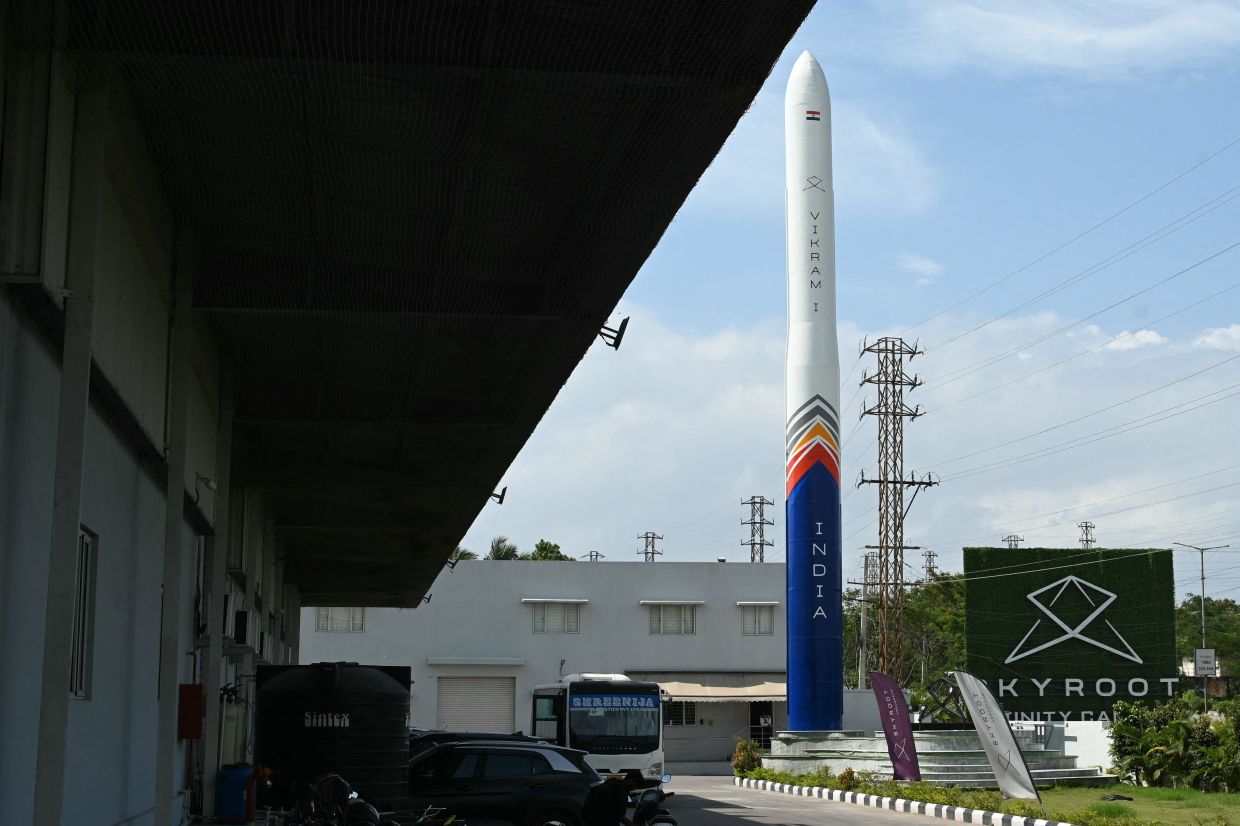
India stands on the cusp of a landmark achievement in its space programme. Within days, Skyroot Aerospace will attempt to launch Vikram-1, the country's first privately developed orbital-class rocket, from the Sriharikota spaceport between July 12 and August 4. This milestone underscores how rapidly India's space sector has matured beyond government monopoly into a thriving ecosystem of private enterprises, each contributing specialised capabilities to an industry that has transformed from a domestic curiosity into a genuinely competitive global player.
The foundation for this private sector explosion was laid in 2020, when the Indian government liberalised space policy, effectively opening a once-restricted domain to commercial investment. The results have been dramatic. India's space economy, currently valued at US$8.4 billion, has attracted more than 400 space startups competing across multiple segments. This represents a fundamental shift in how India approaches space technology—no longer the exclusive preserve of the Indian Space Research Organisation (ISRO), the sector now encompasses hundreds of ventures ranging from satellite manufacturers to launch providers to specialised component suppliers.
Skyroot Aerospace exemplifies this new breed of space entrepreneur. The firm's Vikram-1 rocket is specifically engineered to carry small satellites into low-Earth orbit, addressing a growing segment of the commercial market where traditional, heavy-lift launchers prove uneconomical. The company's imminent launch represents validation not merely of its engineering capabilities but of a broader ecosystem that can now compete internationally. Other significant players have emerged simultaneously: Pixxel is building Earth observation satellites for agricultural and environmental applications; Bellatrix Aerospace is developing advanced satellite propulsion systems; and Agnikul Cosmos has gained attention for manufacturing small satellite launch vehicles powered by 3D-printed rocket engines, a technological frontier that demonstrates Indian ingenuity in cost reduction and manufacturing innovation.
India's space achievements extend far beyond these recent private sector developments. The nation has established itself as a serious space power through a succession of ambitious government missions. In 2014, India became the first Asian nation to achieve a spacecraft in Mars orbit, a feat that required navigating significant technical and financial challenges. The country's lunar programme, Chandrayaan (meaning "Mooncraft" in Sanskrit), has progressively advanced from an orbital mission in 2008 through a failed landing attempt in 2019 to a successful rover deployment in 2023. With that 2023 success, India became the fourth nation globally to land an unmanned spacecraft on the Moon, joining only Russia, the United States, and China in this exclusive club. Future ambitions include a fourth Chandrayaan mission scheduled for 2027 that will retrieve lunar samples, plus a dedicated Venus orbit mission slated for 2028.
Beyond lunar and Martian exploration, India's space programme encompasses solar observation and deep-ocean research. The Aditya mission is currently studying the Sun's outermost atmospheric layers and monitoring space weather phenomena critical for understanding solar radiation effects. More distinctively, ISRO technology is contributing to India's Matsya submarine programme, named after a Hindu deity's fish avatar. This deep-ocean vessel, designed to carry scientists to six-kilometre depths by 2027, will facilitate resource exploration including rare earth elements and critical minerals—a particularly resonant objective for Southeast Asian regional stability, given global competition for such resources.
What has allowed India to punch above its weight in space exploration is a reputation for cost-efficiency that has become legendary in the industry. Since ISRO launched India's first satellite aboard a Soviet rocket in 1975, the organisation has cultivated a culture of technological excellence achieved through frugal engineering. This approach has translated into commercial success: ISRO has launched more than 430 foreign satellites, generating over US$600 million in revenue whilst simultaneously deploying more than 144 of its own. This dual capability—serving international clients whilst advancing national objectives—has positioned India as a reliable, affordable alternative to Western launch providers, with profound implications for developing nations seeking affordable satellite access.
India's infrastructure expansion reflects confidence in sustained growth. The primary Sriharikota spaceport on Andhra Pradesh's southeast coast is undergoing significant expansion to accommodate increased launch cadence. Simultaneously, a second spaceport is under construction at Kulasekarapattinam in Tamil Nadu's southern region, a strategic development that will reduce geographic bottlenecks and enable simultaneous launch operations. These investments signal that the government anticipates substantially higher demand than current capacity can support. Official projections estimate India's space industry will reach US$44 billion by 2033 and US$100 billion by 2040—assumptions that may prove conservative if private sector growth accelerates as rapidly as recent years suggest.
International collaboration has been instrumental in India's space advancement. Beyond the traditional ISRO partnership with the Soviet Union and later Russia, India now conducts joint missions and cooperative arrangements with NASA, the European Space Agency, France, Germany, Italy, Japan, and Saudi Arabia. These partnerships facilitate technology transfer, provide access to complementary expertise, and enhance India's standing within the global space community. Russia continues supporting India's ambitious human spaceflight preparations, a dimension that will see Indian astronauts launch aboard Indian-developed vehicles within the coming years—a capability achieved by only a handful of nations.
A critical but often underexamined dimension of India's space sector involves the deepening integration between civilian and defence applications. Several government agencies and private companies supply components and systems to both ISRO and India's Defence Research and Development Organisation. This encompasses launch rockets, propulsion systems, satellite buses, electronics, and guidance mechanisms—technologies that enable both peaceful space exploration and India's expanding military capabilities. ISRO has publicly acknowledged "active coordination" with defence authorities, and the organisation maintains documented connections to the BrahMos missile programme, a joint India-Russia venture producing advanced cruise missiles. This defence-space nexus represents a geopolitical dimension particularly relevant for Southeast Asian states, as it reflects how India's civilian space ambitions necessarily intersect with its strategic military modernisation.
The emerging private space sector inherits this dual-use reality. Many suppliers of avionics and guidance systems to ISRO are simultaneously benefiting from heightened military procurement demand, creating incentive structures that encourage innovation applicable across both domains. Companies developing satellite propulsion systems, for instance, create technologies valuable for both Earth observation constellations and potential anti-satellite capabilities. This convergence is not unique to India—other spacefaring nations exhibit similar patterns—but it underscores how ostensibly civilian space ventures operate within strategic contexts that extend beyond pure commercial considerations.
For Malaysian and broader Southeast Asian observers, India's space sector trajectory carries multiple implications. First, India's emergence as a cost-competitive launch provider offers neighbouring countries alternatives to established Western providers, potentially reducing barriers to satellite deployment for communications, Earth observation, and navigation applications. Second, India's technological advancement and investment in space infrastructure indicates a nation positioning itself as a regional technology leader, relevant to broader competition for influence and expertise within Asia. Third, the defence-space integration within India's programme reflects how space capabilities increasingly constitute elements of national security strategies across the region, with potential implications for regional stability and proliferation dynamics. Finally, India's success in attracting private investment and building a competitive ecosystem offers a potential model for other developing nations considering space sector liberalisation, though India's particular advantages in scientific talent, government funding, and existing ISRO expertise may not be easily replicated elsewhere.

