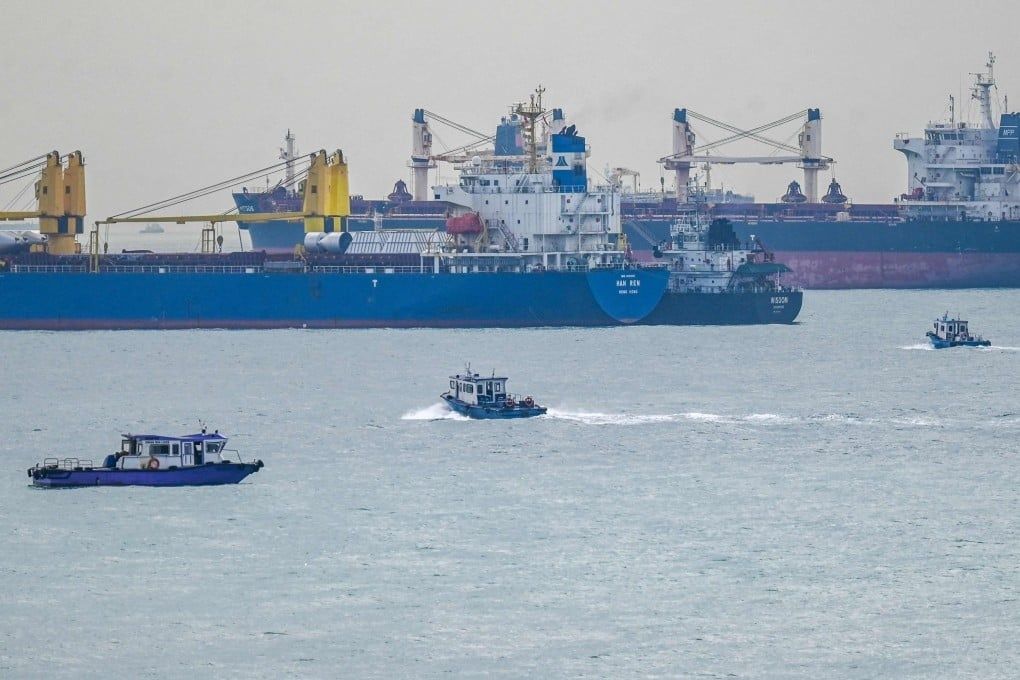
During the annual Indonesia-Singapore Leaders' Retreat in Jakarta on Monday, both nations underscored their shared responsibility for maintaining peace and security along the Strait of Malacca, one of the world's most strategically vital maritime corridors. President Prabowo Subianto and Singapore Prime Minister Lawrence Wong issued a joint commitment to preserve the waterway's status as an open passage for international traffic while working alongside Malaysia and Thailand to ensure continued stability in the region.
The Strait of Malacca represents one of Southeast Asia's most critical chokepoints, serving as a conduit for global maritime commerce connecting the Indian Ocean to the South China Sea. For Indonesia and Singapore, which directly border this passage, the stakes are particularly high. Both nations recognise that their geographic position brings inherent responsibility for protecting one of the world's busiest shipping lanes, through which roughly one-third of global maritime trade passes annually. This shared geography creates natural alignment between Jakarta and Singapore on matters affecting the waterway's security and functionality.
Prabowo emphasised that Indonesia and Singapore's commitment operates within the framework of the 1982 United Nations Convention on the Law of the Sea (UNCLOS), the international legal instrument governing maritime conduct worldwide. By anchoring their position in established international law, both leaders signalled respect for international norms while asserting their legitimate interests as littoral states. This approach provides legal grounding for their broader vision of an open Strait accessible to vessels from all nations, a position that resonates with maritime powers globally who depend on unobstructed passage through Southeast Asian waters.
Beyond maintaining open navigation channels, the two leaders identified multiple security threats requiring coordinated vigilance. Pollution from shipping accidents poses environmental risks to the region's marine ecosystems and coastal communities. Maritime piracy, though historically reduced from peak levels, remains a persistent concern that necessitates constant monitoring and rapid response capabilities. The prospect of maritime accidents—whether from collision, mechanical failure, or human error—could disrupt traffic flow and create humanitarian crises. These multifaceted challenges underscore why bilateral and multilateral cooperation proves essential for effective maritime governance.
The inclusion of Malaysia and Thailand in Indonesia and Singapore's coordination framework reflects an understanding that Strait management requires consensus among all littoral states. Malaysia controls significant portions of the waterway's western reaches, while Thailand sits at the northern gateway. Involving both nations in security arrangements demonstrates commitment to inclusive governance rather than unilateral action, an approach that builds regional confidence and distributes responsibility equitably. This multilateral dimension strengthens the legitimacy and effectiveness of any protective measures implemented along the Strait.
The retreat afforded Prabowo and Wong opportunities to address broader regional and global concerns extending beyond maritime security. Both leaders reaffirmed ASEAN's longstanding principles favouring peaceful resolution of disputes through dialogue rather than coercion. In an era marked by great power competition and rising geopolitical tensions across multiple regions, this reaffirmation carries particular weight. The leaders' emphasis on resolving misunderstandings openly and frankly as friendly nations models the kind of pragmatic diplomacy that Southeast Asia increasingly needs as external powers jockey for influence.
The annual nature of the Indonesia-Singapore retreat indicates an institutionalised commitment to high-level dialogue, with this meeting representing the second summit under Prabowo's presidency. Such regular engagement creates continuity in bilateral relations and establishes predictable forums for addressing emerging challenges before they escalate into crises. The retreat format allows leaders to move beyond ceremonial exchanges and engage substantively on complex, multidimensional issues affecting both countries' strategic interests.
Looking ahead, the approaching 60th anniversary of Indonesia-Singapore diplomatic relations in the coming year provides symbolic momentum for deepening cooperation. Six decades of formal relations have witnessed the two countries navigate regional transformations, including ASEAN's formation and evolution, shifting global power balances, and technological advancement. This historical depth suggests that current cooperation efforts build on established patterns of pragmatism and mutual respect, even when disagreements arise.
For Malaysia and broader Southeast Asia, Indonesia and Singapore's commitment to Strait protection carries significant implications. As fellow ASEAN members deeply invested in regional stability, Malaysia benefits from their explicit dedication to maintaining the waterway as a global commons open to all maritime users. The coordination framework also reassures smaller nations that major regional powers can manage sensitive security issues through consultation rather than domination. This model of cooperative governance strengthens ASEAN's collective approach to addressing transnational maritime challenges that affect all member states.
The emphasis on preparing the Indonesia-Singapore partnership for future challenges suggests both leaders recognise that today's regional environment differs markedly from previous decades. Climate change threatens coastal communities and marine resources throughout Southeast Asia. Emerging technologies reshape maritime security and navigation practices. Economic interdependencies deepen ties between nations while creating new vulnerabilities. By consciously preparing their partnership to address tomorrow's challenges while protecting today's interests, Prabowo and Wong acknowledge that maintaining Strait security requires constant adaptation and evolution of bilateral cooperation mechanisms.

