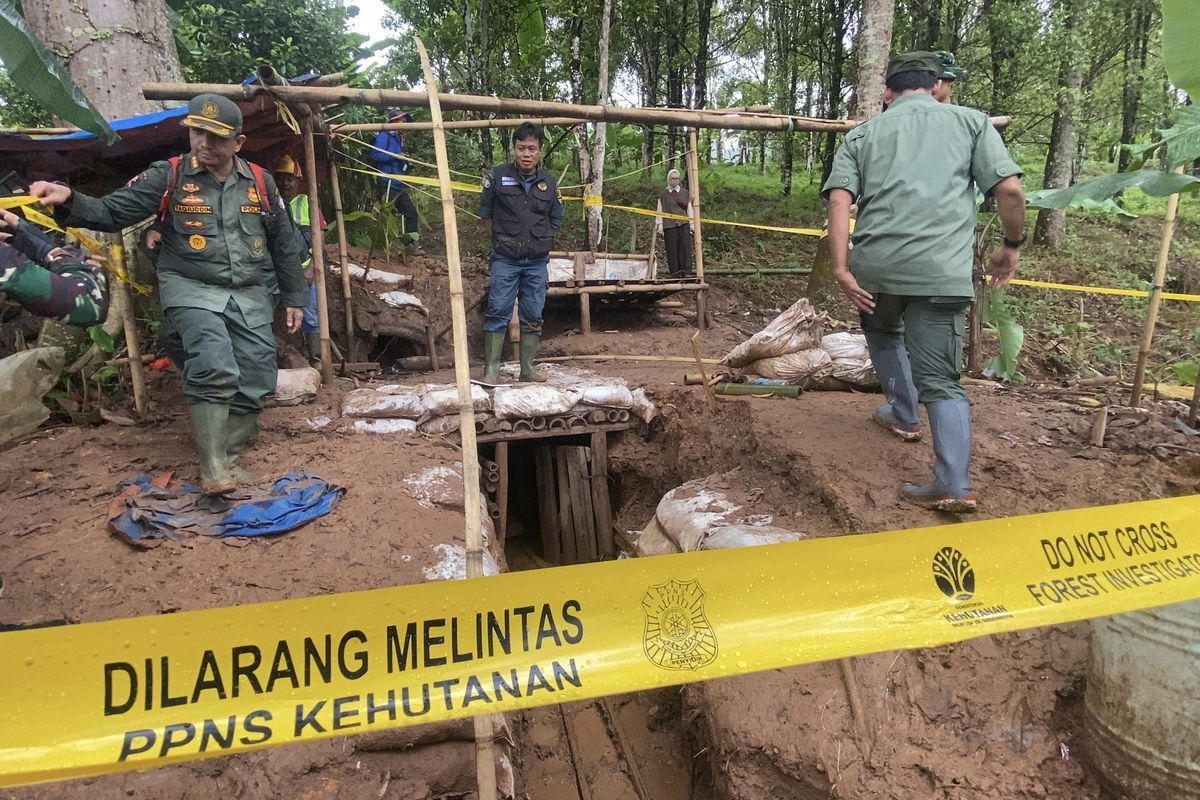
Indonesia's energy ministry has formally charged 24 foreign nationals as criminal suspects in connection with an extensive illegal gold mining operation discovered in the Maluku region, marking the latest in a series of enforcement actions against organised extraction networks operating within the country's borders. Energy ministry official Jeffri Huwae announced the charges in a statement released late Thursday, signalling a renewed push by Jakarta to clamp down on resource theft that continues to drain the archipelago's natural wealth and undermine legitimate mining operations.
The investigation centred on the Gunung Botak area of Maluku, where the accused foreigners are believed to have constructed substantial infrastructure to support unauthorised mining activities. This infrastructure included not merely the mines themselves but also access roads and ore processing facilities, indicating a sophisticated operation designed for sustained, large-scale extraction rather than small-scale opportunistic digging. The scope of the alleged construction suggests significant investment and planning, pointing to an organised criminal enterprise with substantial financial backing and technical knowledge.
Under Indonesian law, those convicted of such violations face maximum prison sentences of five years, a penalty that authorities hope will serve as a deterrent to foreign nationals considering participation in illegal mining schemes. However, the ministry has not disclosed the nationalities of the charged individuals, nor has it provided information regarding the quantity of gold allegedly extracted through the operation. This lack of transparency raises questions about the broader context of the case and its relationship to larger regional patterns of resource crime.
According to state news agency Antara, the detained suspects include 24 Chinese nationals who had been operating in the Gunung Botak area under sponsorship from local company PT Harmoni Alam Manise. Their detention for questioning occurred in the months preceding the formal charges, allowing investigators time to build their case and coordinate with local authorities. The involvement of a domestic company in sponsoring the foreign workers suggests potential complicity or facilitation by Indonesian business interests, a complication that underscores how illegal mining often involves networks spanning both foreign and local participants.
A critical challenge facing Indonesian authorities is that only half of the accused remain within the country's jurisdiction. The energy ministry confirmed that 12 of the 24 charged foreigners have already been detained and are available for prosecution, while the remaining 12 have fled Indonesia or operate from locations beyond government reach. This split reflects a persistent enforcement problem in Southeast Asia, where suspects can readily cross borders into jurisdictions unwilling or unable to cooperate with extradition requests, effectively placing them beyond meaningful legal consequences.
Beyond the foreign nationals, Indonesian authorities have also implicated two local individuals as criminal suspects in the same operation. The inclusion of domestic actors in the charges underscores a fundamental reality of illegal mining in Indonesia: such operations cannot function without local collaboration, whether through provision of land access, facilitation of sales networks, or protection from law enforcement. Prosecuting Indonesian accomplices remains essential if authorities wish to dismantle the domestic support structures that enable foreign criminal groups to operate.
This enforcement action is not an isolated incident but rather part of a broader pattern of illegal mining involving foreign nationals across Indonesia's eastern regions. The country's geography and mineral wealth make it a persistent target for organised crime groups seeking to exploit resources with minimal regulatory oversight. Previous arrests have occurred in Papua, the nation's easternmost region, where police apprehended four Chinese nationals in Senggi district during the previous year. These recurring incidents demonstrate that despite enforcement efforts, the financial incentives driving illegal mining remain sufficiently attractive to sustain operations across multiple provinces.
For Malaysian observers, the Maluku case offers instructive parallels and warnings. Illegal mining operates as a transnational criminal enterprise affecting the broader Southeast Asian region, with networks and actors often crossing between countries. If foreign nationals can operate with relative impunity in remote Indonesian regions, similar vulnerabilities may exist in Malaysia's own border areas and less-populated districts. The involvement of local companies in sponsoring foreign workers also mirrors challenges that Malaysian authorities have confronted in their own investigations, where ostensibly legitimate business entities serve as covers for illegal resource extraction.
The case also highlights the capacity constraints facing regional law enforcement. The fact that half the accused remain at large underscores the difficulty of pursuing perpetrators once they leave Indonesian territory, a problem compounded by limited extradition treaties and varying levels of cooperation among Southeast Asian nations. Enhanced information-sharing and coordinated enforcement between Indonesia, Malaysia, and other regional partners could improve outcomes, particularly in cases involving organised international criminal networks.
Looking forward, Indonesia's prosecution of this case will offer important lessons about the effectiveness of its legal framework in addressing illegal mining. Securing convictions and imposing meaningful penalties on both foreign and domestic participants could establish precedent and demonstrate commitment to enforcement. Conversely, if prosecutions stall or perpetrators evade justice, the message sent to criminal networks will be decidedly negative, potentially encouraging further incursions into Indonesian territory.

