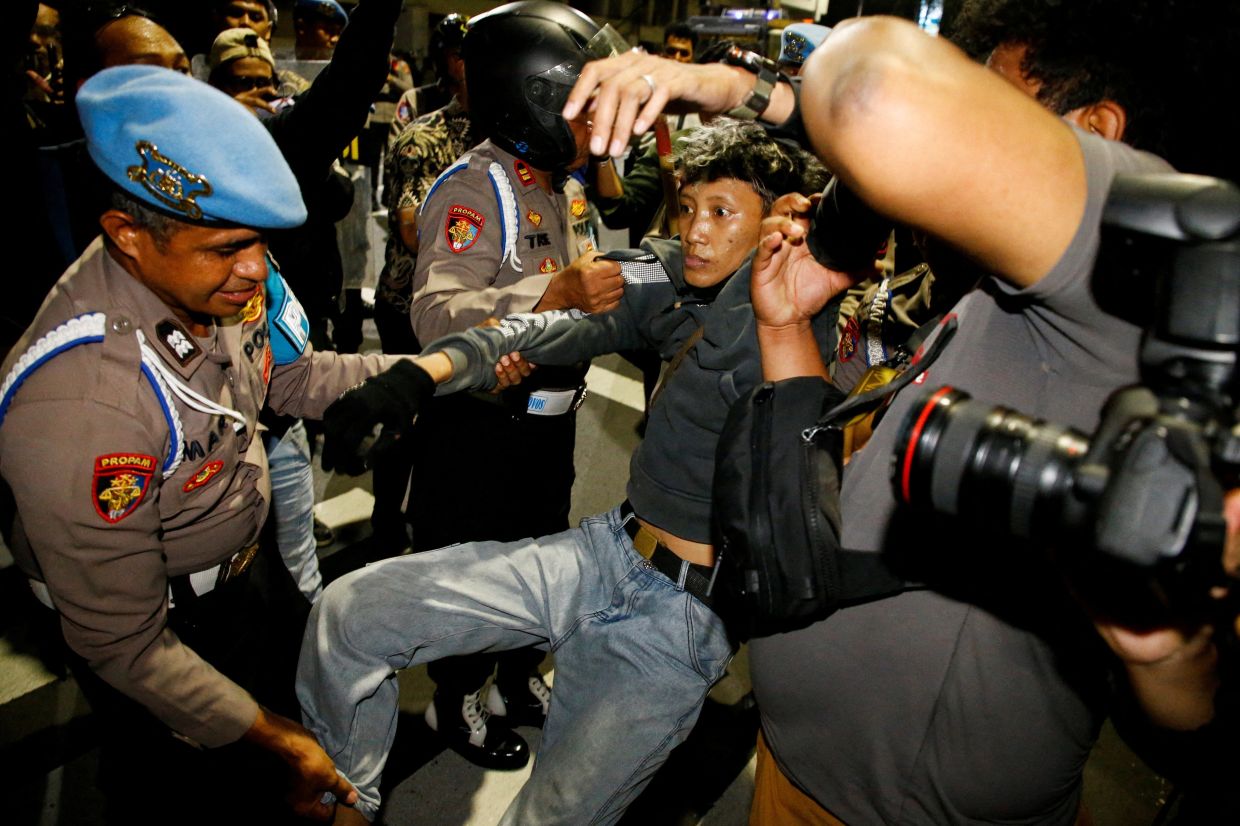
Indonesian police have pressed charges against four individuals in connection with an anti-government protest held in Surabaya, the nation's second-largest city, marking the latest development in a growing wave of public discontent over economic pressures and government initiatives. According to Surabaya police chief Luthfie Sulistiawan, the charges relate to property destruction and assault against law enforcement officers during Friday's demonstration, when authorities say some participants became unruly and threw objects including firecrackers and rocks.
The gathering of approximately 100 demonstrators near a government building in Surabaya reflected mounting frustration over two government policies that have dominated Indonesian discourse this month. Chief among these is the government's decision to raise prices of non-subsidised petrol by roughly 30 per cent, a move designed to relieve mounting fiscal strain as instability in the Middle East disrupts global petroleum markets. Simultaneously, the protesters voiced opposition to the government's multi-billion-dollar free school meals programme, which has become mired in controversy and public health concerns since its introduction.
The fuel price decision, announced amid global energy market turbulence, represents a significant adjustment for Indonesian consumers given the country's reliance on subsidised petroleum. Despite being Southeast Asia's largest economy and an oil-producing nation, Indonesia paradoxically remains a net importer of crude, making it vulnerable to international price fluctuations. The government's decision to reduce subsidies reflects a calculation that budgetary relief outweighs the political costs of raising consumer prices. However, this calculation has proven misjudged, as ordinary Indonesians already grappling with inflation have responded with visible anger.
The school meals initiative, which the government has positioned as an anti-malnutrition measure targeting vulnerable children, has encountered substantial implementation problems since its launch. The scheme has been partially suspended following a cascade of food poisoning incidents that affected tens of thousands of recipients across the nation. Investigative reporting and civil society monitoring have uncovered allegations of procurement corruption and mismanagement, suggesting that funds intended for nutrition have been diverted or wasted. These revelations have substantially damaged public confidence in the programme and transformed it into a symbol of governmental dysfunction and neglect.
On the day of the Surabaya protest, police detained twenty-four people, though most were subsequently released without facing formal charges. The decision to prosecute only four individuals suggests authorities exercised selective enforcement, possibly targeting individuals identified as protest organisers or those allegedly involved in the more confrontational aspects of the demonstration. This approach reflects a common pattern in Indonesian law enforcement, where protest management often involves mass temporary detentions followed by charges against a smaller subset deemed most culpable.
Complicating matters further, six additional detainees remain under investigation after authorities conducted drug testing and detected controlled substances in their systems. This parallel investigation raises questions about whether the police were employing drug possession allegations as a supplementary tool to suppress protest activity, a tactic that civil liberties organisations have previously documented in Indonesia. The inclusion of drug charges alongside protest-related offences can serve to delegitimise demonstrators in public perception, even where such charges may be tangential to the underlying protest activity.
The situation in Surabaya forms part of a larger pattern of public mobilisation across multiple Indonesian cities, with the capital Jakarta becoming a particular focal point for demonstration activity. Student activists have been especially prominent, taking to streets repeatedly to express opposition to both fuel price increases and the embattled school meals programme. The involvement of younger, educated demographics suggests that discontent extends beyond immediate economic grievances to encompass broader questions about government competence, integrity, and commitment to public welfare.
For Malaysian observers, Indonesia's current turbulence carries particular relevance given the countries' economic interconnection and shared vulnerabilities to global commodity price fluctuations. Both nations maintain fuel subsidy systems that create fiscal challenges and distort market signals, and both have experienced popular resistance to subsidy reduction efforts. The Indonesian experience demonstrates how protests over economic policy can rapidly broaden into challenges to government legitimacy and institutional trust, particularly when compounded by high-profile programme failures such as the school meals debacle.
The escalating confrontation between protesters and authorities in Indonesia also underscores regional trends regarding youth activism and government responsiveness to public dissent. As post-pandemic economic pressures mount across Southeast Asia, governments face intensifying expectations to deliver tangible improvements in living standards and service quality. Failures in either domain risk triggering sustained mobilisation, as the Indonesian case illustrates. The charging of protest participants, while legally justified in some respects, may ultimately entrench grievances rather than resolve underlying discontent, potentially setting conditions for larger-scale demonstrations in coming weeks.

