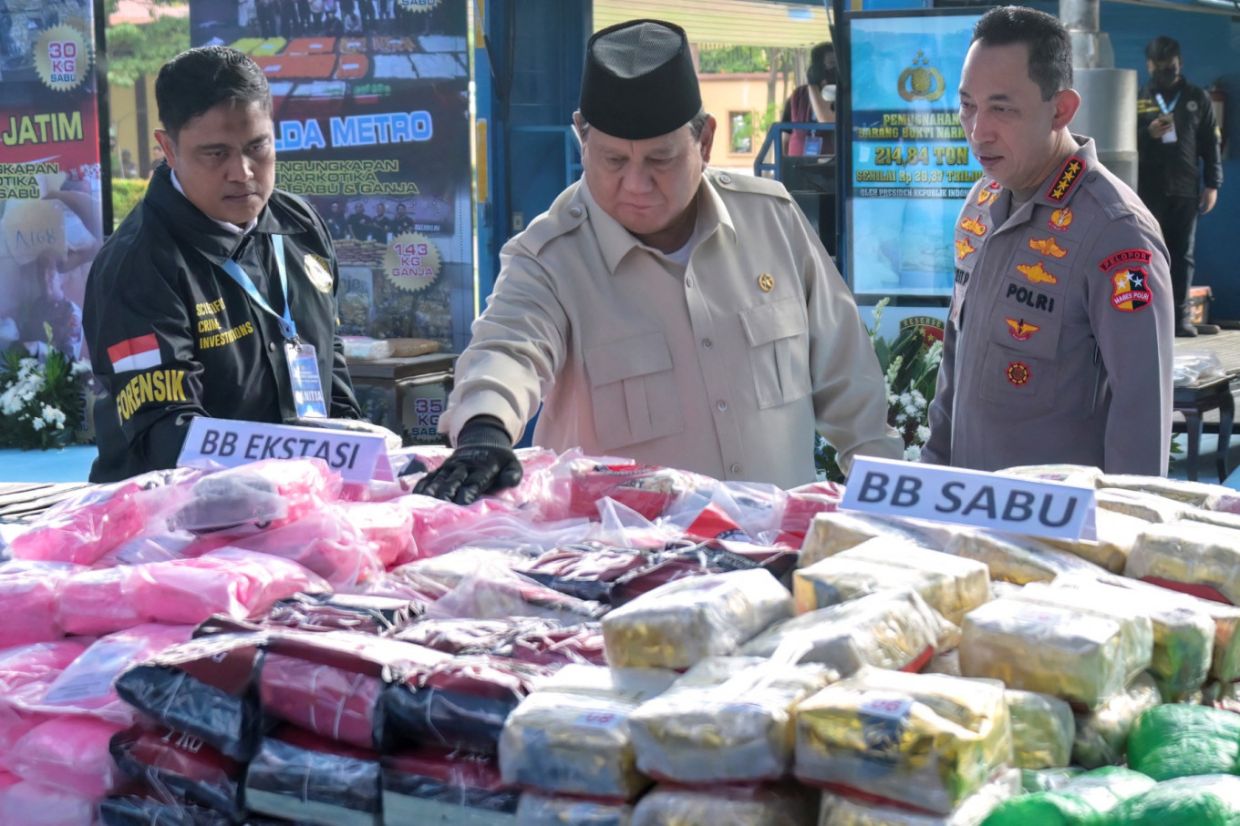
Indonesian authorities have struck a significant blow against transnational drug trafficking networks by confiscating 2.6 tonnes of liquid methamphetamine from a cargo vessel in the Strait of Malacca region, according to officials from the National Narcotics Agency. The interception, executed late Monday near Bengkalis in Riau province, resulted in the arrest of ten crew members and represents one of the country's most substantial recent narcotics seizures. The discovery underscores Southeast Asia's persistent vulnerability to large-scale drug smuggling operations that exploit maritime routes connecting production centres in the region to downstream markets.
Intelligence gathered by narcotics authorities flagged a suspicious vessel departing from Malaysian Sarawak and transiting through the Andaman Sea bound for Indonesian ports. The MV Rain Maker, registered under the Tanzanian flag but operating with a fake identity, became the focus of a coordinated interdiction operation involving the National Narcotics Agency and Indonesian customs officials. When authorities boarded and inspected the vessel, they discovered the contraband concealed within eight water barrels and a pressurised water tank, a sophisticated smuggling method designed to evade detection by standard scanning equipment.
The scale of this operation demonstrates the industrial nature of methamphetamine production and trafficking across Southeast Asia. Liquid methamphetamine represents a particularly concerning variant for law enforcement agencies throughout the region, as it can be more easily transported and concealed than crystalline forms, and subsequently converted into saleable product at destination points. The 2.6-tonne haul would represent a staggering street value and sufficient quantity to supply substantial portions of Indonesia's illicit drug market for an extended period.
Customs teams also discovered over 1.5 million contraband cigarettes aboard the vessel during their thorough examination, indicating that the trafficking operation was diversified across multiple prohibited commodities. This dual-commodity smuggling pattern is increasingly common among organised crime networks operating in maritime zones, as it allows operators to hedge their financial exposure and maximise returns per voyage. The cigarette seizure suggests connections between the drug trafficking enterprise and parallel smuggling networks specialising in tobacco products throughout the Strait of Malacca.
All ten arrested crew members are Myanmar nationals, a demographic consistent with patterns observed in recent Southeast Asian drug seizures. Myanmar has emerged as a major hub for methamphetamine and ketamine production, with major manufacturing complexes in border regions supplying regional markets through sophisticated trafficking networks. The nationality of the apprehended sailors points toward employment recruitment pipelines that source expendable crew for high-risk narcotics voyages originating from or transiting through Myanmar.
This latest interception represents merely the visible tip of enforcement activity in the region's contested waters. In the preceding ten days, Indonesian authorities had already seized 1.3 tonnes of ketamine from a separate Tanzanian-flagged vessel operating in waters adjacent to the Riau Islands near Singapore, where seven Myanmar nationals and one Taiwanese crew member were arrested. The rapid succession of major seizures from vessels flying Tanzanian colours suggests either that flag registries have become heavily compromised by trafficking networks seeking to obscure origins, or that certain shipping companies registered under that jurisdiction have become systematically utilised for narcotics transport.
Indonesia's enforcement apparatus has intensified maritime interdiction efforts over the past several years, contributing to a series of record-breaking seizures. The country announced its largest-ever narcotics bust last year when authorities recovered two tonnes of crystal methamphetamine from a fishing vessel travelling from the Andaman Sea toward Batam Island, an entry point for drugs destined for Jakarta and surrounding metropolitan zones. The consistency of major seizures along established trafficking corridors suggests that whilst enforcement agencies have achieved impressive tactical victories, the underlying supply networks remain robust and capable of sustaining significant losses without disruption to their operations.
The geopolitical location of these interdictions is strategically significant for Malaysia and the broader Southeast Asian region. The Strait of Malacca and surrounding waters represent critical chokepoints through which substantial volumes of illicit goods transit annually. Malaysian ports, particularly in Sarawak, feature prominently in trafficking route intelligence as departure points for vessels bound toward Indonesian territorial waters. The persistence of this smuggling corridor highlights the necessity for deepened bilateral and multilateral cooperation among Southeast Asian nations to interrupt supply chains at their origin.
Indonesia maintains some of the world's most stringent narcotics legislation, including provisions for capital punishment of major traffickers convicted under the country's anti-drug statutes. However, the Indonesian government has observed a moratorium on executions for several years, creating ambiguity regarding the ultimate criminal consequences facing apprehended traffickers. This enforcement gap, combined with the apparently marginal profitability impact of periodic large seizures on trafficking enterprises, suggests that law enforcement interdiction alone cannot substantially diminish the attractiveness of methamphetamine smuggling to transnational criminal organisations.
For Malaysia, the proximity of these trafficking operations and the involvement of Malaysian territorial waters as transit zones underscore the shared security interests across the region. Methamphetamine trafficking generates enormous profits that fund broader criminal enterprises and destabilise societies through addiction and related social pathologies. The employment of Tanzanian flag registries and multi-national crews indicates the sophisticated, compartmentalised nature of modern trafficking networks that deliberately obscure the nationality and operational structure of trafficking enterprises to complicate law enforcement investigations and prosecution efforts.
Efforts to dismantle these networks will require sustained intelligence cooperation, port security enhancements, and targeted interventions against flag-of-convenience shipping registries that facilitate illicit maritime commerce. The recent seizures demonstrate that Indonesia possesses capable enforcement capacity and access to actionable intelligence, yet the continuous flow of large shipments suggests that interdiction rates remain insufficient to substantially elevate the operational costs and risks confronting trafficking organisations. Regional vulnerability to methamphetamine trafficking will likely persist absent comprehensive strategies addressing both supply-side production in Myanmar and demand-side consumption patterns throughout Southeast Asia.

