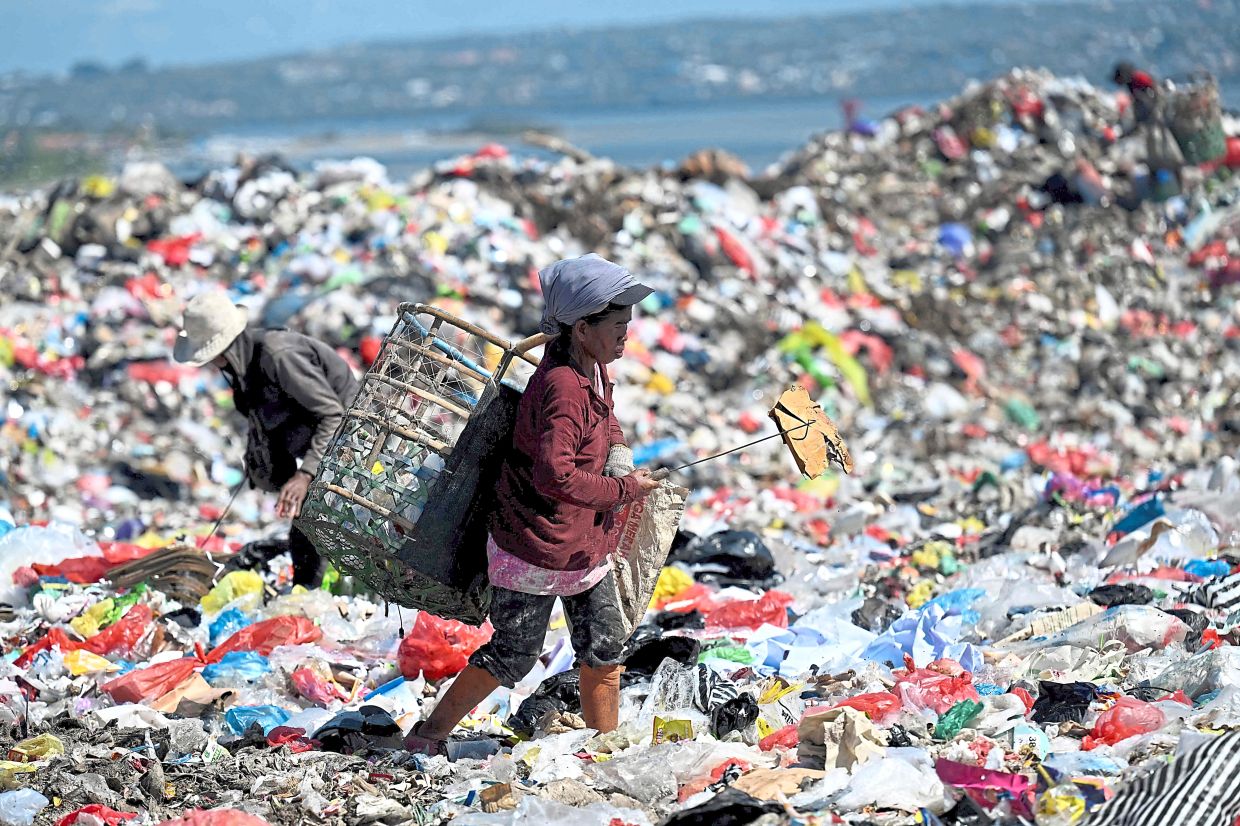
Indonesia has begun construction on its inaugural waste-to-energy facility in Bali, signalling a significant shift in how the nation tackles one of its most pressing environmental challenges. The groundbreaking ceremony, held on Wednesday in Pedungan Village, South Denpasar, represents the opening salvo of a government-backed initiative to harness energy from municipal refuse, a strategy that reflects growing urgency around waste management across the archipelago. The project, jointly developed by Danantara Investment Management and Daya Energi Bersih Nusantara, carries the explicit backing of President Prabowo Subianto and underscores his administration's commitment to modernising Indonesia's waste infrastructure.
Rosan Roeslani, chief executive officer of Danantara Indonesia, framed the undertaking as a matter of generational responsibility. In official remarks, he emphasised that waste management constitutes a shared challenge requiring immediate action to prevent environmental burdens from cascading to future populations. This language reflects a broader recognition within Indonesian policymaking circles that the country's waste crisis has moved from a peripheral concern to a central governance issue. With daily waste generation exceeding 140,000 tonnes, Indonesia confronts a sanitation problem of continental proportions, making innovative solutions not merely desirable but essential for urban sustainability.
The Bali facility will employ moving grate incinerator technology, a proven method deployed extensively in waste-to-energy installations worldwide. This particular technological approach has been selected specifically for its compliance with the European Industrial Emissions Directive, indicating that Indonesia is importing not just equipment but also advanced environmental standards from international best practices. The choice of European regulatory benchmarks suggests the developers aim to position the facility as a model installation that can withstand scrutiny from both domestic environmental advocates and international observers concerned about pollution in Southeast Asia. By anchoring the project to established global standards, the developers signal confidence in the plant's environmental credentials.
The emissions reduction potential offers compelling environmental mathematics. According to Danantara, the facility is projected to curtail emissions by up to 80 per cent per tonne of waste compared with conventional open dumping at landfills. This differential reflects the environmental cost of landfill decomposition, which generates methane and leachate contamination, versus controlled combustion with energy recovery. For a nation grappling with air quality challenges in major urban centres, this emissions profile represents a material improvement over existing waste disposal methods. The comparison is not merely theoretical; it speaks directly to the health outcomes and environmental quality that millions of Indonesians experience daily in cities from Jakarta to Surabaya.
Beyond environmental metrics, the project carries significant employment implications. During its construction and operational phases, the facility is anticipated to generate up to 1,200 green jobs. This employment dimension addresses a secondary but nonetheless important dimension of the waste crisis: the integration of waste management into broader economic development strategies. Green jobs in waste-to-energy sectors offer pathways for workers to transition from informal waste collection and recycling into formalized, safer, and more remunerative employment. For communities surrounding the facility, this employment opportunity represents tangible economic benefit flowing from infrastructure investment.
Crucial to the project's commercial viability is the Power Purchase Agreement signed between state utility PLN and the project company during the groundbreaking ceremony. This accord provides the facility with long-term contractual certainty for electricity sales, effectively underwriting the project's revenue model and reducing investment risk. PLN's commitment to purchase electricity generated by the facility anchors demand, ensuring that the plant can operate at planned capacity utilisation rates. For investors evaluating similar waste-to-energy opportunities across Indonesia's archipelago, this PPA framework establishes a replicable model for project finance and operational stability.
The timing of this initiative coincides with mounting pressure on Indonesia's landfill infrastructure. Many municipal landfills in Java and Sumatra have reached or exceeded designed capacity, creating urgent disposal challenges for growing urban populations. Waste-to-energy technology offers a partial solution to this capacity crunch by diverting significant waste streams away from landfills toward energy generation. This capacity relief is particularly acute in densely populated regions where land availability for new landfill development becomes increasingly constrained. The Bali facility, while singular, functions as a proof-of-concept for scaling such solutions across the country's urban centres.
The project's positioning within Indonesia's energy landscape merits consideration alongside broader electricity generation strategies. As the nation seeks to expand renewable and low-carbon energy sources, waste-to-energy facilities occupy a distinctive niche. They address simultaneously two pressing policy objectives: waste management and electricity supply. This dual benefit explains why waste-to-energy has gained traction within the government's energy transition planning. Unlike solar or wind projects that generate electricity alone, these facilities convert an environmental liability into a productive asset, a compelling proposition for policymakers balancing multiple development imperatives.
For regional observers, the Bali project signals Indonesia's readiness to adopt technologies and practices that other Southeast Asian nations are simultaneously exploring. Thailand, Vietnam, and the Philippines all operate or are developing waste-to-energy capacity, making this sector increasingly competitive within the region. Indonesia's entry into this space, backed by sovereign wealth fund capital and state utility partnerships, suggests the nation intends to become a significant player in waste-to-energy deployment. Success with the Bali facility could inspire replication across provincial capitals and metropolitan areas, fundamentally reshaping how Indonesia manages the waste generated by its 270-million-strong population.

