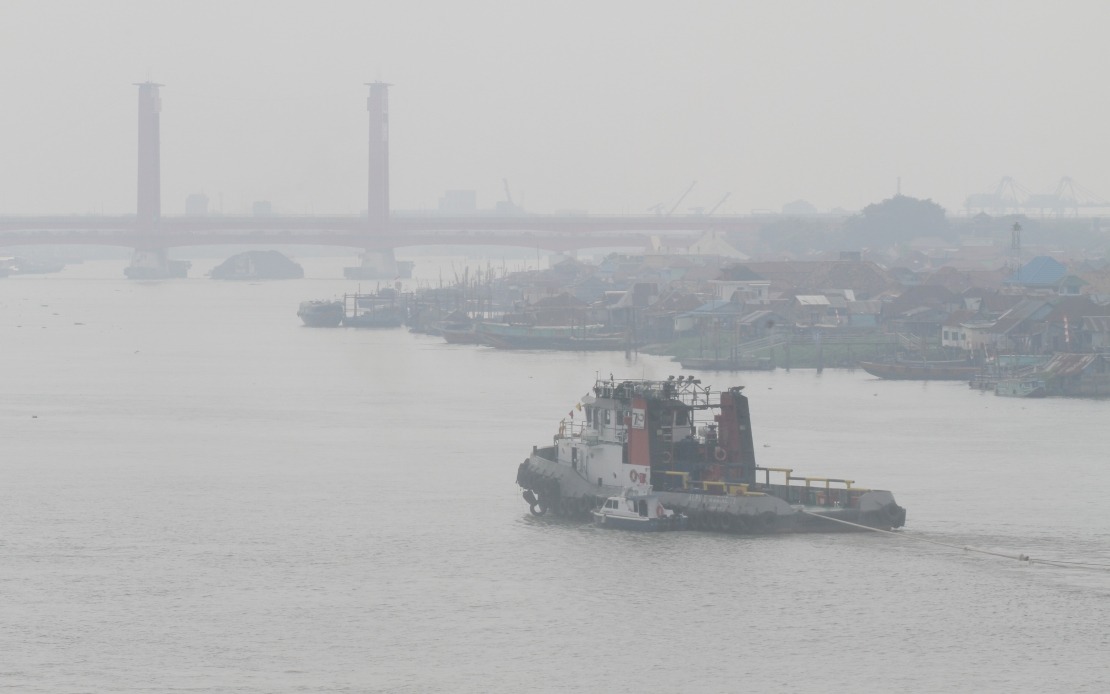
Facing mounting air quality concerns across peninsula Malaysia and Sarawak, Indonesia has confirmed active coordination with its neighbour to address the worsening transboundary haze crisis through a combination of weather modification initiatives and intensified firefighting support. The announcement comes as smoke from forest and land fires concentrated in West Kalimantan continues to degrade air quality across the region, with readings in parts of Sarawak reaching 195 on the Air Pollutant Index—approaching dangerous thresholds that government agencies classify as very unhealthy for vulnerable populations.
The scale of air pollution affecting Malaysian territory has expanded considerably, with multiple states now registering unhealthy air quality levels. Beyond Sarawak, which bears the brunt of smoke from nearby Kalimantan fires, the haze has drifted across the peninsula affecting major population centres including Kuala Lumpur, Selangor, Penang, Kedah, and Perak. The convergence of smoke from Indonesian sources with favourable atmospheric conditions has created a widespread air quality challenge demanding regional cooperation rather than unilateral domestic measures alone.
Berton Panjaitan, acting head of Indonesia's National Disaster Mitigation Agency Data, Information, and Disaster Communication Centre, outlined the bilateral framework during media engagement, emphasising that prevention and monitoring capability would be strengthened through joint mechanisms. He revealed that Malaysia and Indonesia had moved beyond high-level political discussions into operational coordination, with weather modification operations receiving particular focus along shared border areas where fire-induced haze generation is most concentrated. The positioning of weather modification assets along the frontier represents an effort to intervene in atmospheric conditions before smoke masses drift across into Malaysian airspace.
The diplomatic groundwork underpinning this operational coordination crystallised during an August 24 meeting between Malaysian Natural Resources and Environmental Sustainability Minister Datuk Seri Arthur Joseph Kurup and Indonesian Environment Minister Jumhur Hidayat. Beyond operational agreements, Indonesia granted Malaysia formal authorisation to conduct cloud-seeding operations within Indonesian airspace—a significant diplomatic concession recognising the urgency of the cross-border air quality crisis. This airspace access removes bureaucratic impediments that might otherwise complicate rapid deployment of Malaysian weather modification aircraft and technology to zones where fire-generated haze originates.
Malaysia's readiness to directly assist with firefighting capabilities has also been communicated to Jakarta, though the formal mechanisms through which such support would be activated remain under discussion. Panjaitan acknowledged that while no official request for water-bombing aircraft or other direct firefighting assets had materialised, the Indonesian government maintains openness to accessing such capabilities should operational necessities demand them. This cautious approach reflects the procedural frameworks governing bilateral military and emergency services cooperation, suggesting that deployment of Malaysian helicopters or aerial firefighting resources would follow established protocols rather than ad-hoc emergency arrangements.
The current haze situation marks a significant escalation from recent years, representing the most severe transboundary air quality crisis since 2023. The Malaysian Consulate in Pontianak drew striking contrasts with 2024 and 2025, during which no severe haze episodes transpired across the region. The deterioration has prompted the consulate to activate comprehensive health protection protocols for the 577 Malaysian citizens registered in West Kalimantan, predominantly expatriate workers and their families dispersed across the province. Protective measures including mandatory mask-wearing, shifting educational institutions to online delivery, and restricting outdoor movement except for essential activities now structure daily life for this Malaysian community.
The institutional response to haze crises reflects a pattern of incremental capacity-building developed through previous episodes. In 2023, Malaysia's diplomatic presence in Pontianak contributed six water pumps to the West Kalimantan Governor's Office, demonstrating a complementary approach to supporting local Indonesian firefighting infrastructure. This historical precedent illustrates how Malaysia has navigated transboundary haze not merely through diplomatic protest or domestic mitigation, but through active participation in strengthening regional firefighting capabilities that ultimately serve Malaysian interests by reducing smoke generation at source.
Weather modification technology represents an increasingly central element within regional air quality governance frameworks. Cloud-seeding operations, which involve dispersing substances such as silver iodide into clouds to promote precipitation, aim to suppress fire-generated particulates and reduce smoke concentration. The bilateral agreement permitting Malaysian aircraft to operate within Indonesian borders signals recognition that atmospheric physics recognises no sovereignty constraints—smoke originating in Kalimantan will inevitably affect Malaysian territories without intervention, making weather modification efforts mutually beneficial rather than unilaterally imposed external solutions.
For Malaysian policymakers and citizens, the haze coordination framework underscores the limits of purely domestic air quality management. Even aggressive measures implemented within Malaysian territory—industrial emission controls, vehicle regulations, and construction dust suppression—cannot address smoke generation occurring hundreds of kilometres away across international borders. The transboundary nature of air pollution thus necessitates the diplomatic investment and operational planning now materialising through Indonesian-Malaysian cooperation, elevating haze management from an environmental technicality into a significant bilateral governance challenge.
The broader Southeast Asian context amplifies the urgency of robust Indonesian-Malaysian cooperation. Transboundary haze has historically triggered diplomatic friction, health emergencies, and economic disruption across the region whenever coordination mechanisms prove inadequate. By establishing weather modification operations, formalising firefighting support channels, and maintaining continuous bilateral communication, Indonesia and Malaysia are constructing institutional resilience against future episodes. However, the persistence of severe haze despite such measures suggests that deeper interventions—addressing underlying drivers of fire occurrence through land management, agricultural practices, and economic incentive structures—may ultimately prove necessary for sustainable resolution of transboundary air quality crises.

