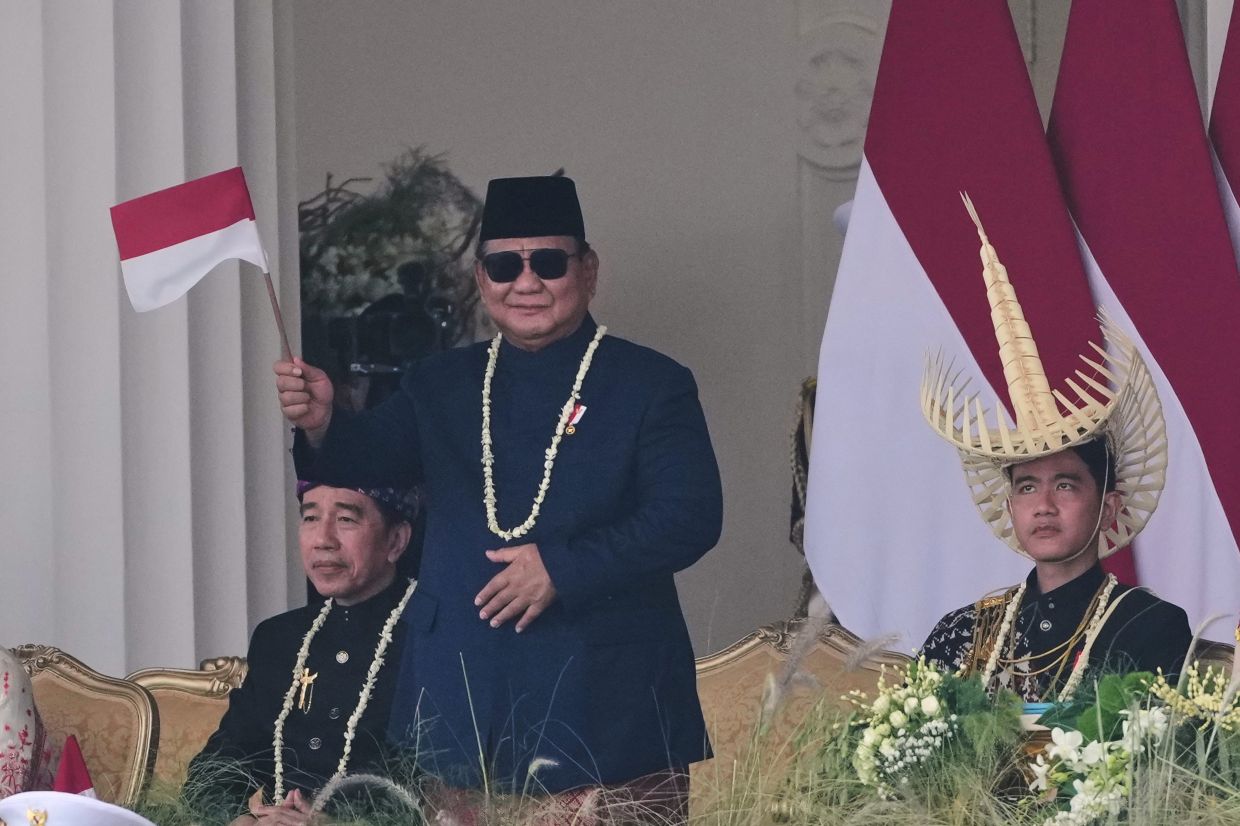
President Prabowo Subianto presided over Indonesia's 81st Independence Day observance in Jakarta on Monday, steering the nation's most significant patriotic commemoration through a period shadowed by natural disaster and regional instability. The ceremony at Merdeka Palace unfolded against the backdrop of an ongoing humanitarian crisis in the eastern archipelago, where a catastrophic earthquake had claimed dozens of lives just days earlier, underscoring the complex reality of governing a vast and geologically volatile nation.
The President appeared in formal traditional dress—a navy beskap paired with a black peci and a fragrant garland of jasmine flowers—as he presided over the flag-hoisting ceremony at the seat of presidential power in Central Jakarta. His role as inspector of the commemoration reflected the ceremonial weight attached to Indonesia's most solemn national observance, a day when the country formally honours the declaration of independence issued on August 17, 1945, and reflects on the sacrifices that secured sovereignty from colonial rule.
The Jakarta proceedings featured the full pageantry expected of such occasions. A gilded carriage transported replicas of the national colours alongside the original Proclamation text from the National Monument, processing from Monas to Merdeka Palace in a carefully choreographed display of state pageantry. The procession, escorted by 114 cavalry troops and 45 military police motorcycle officers from the presidential security apparatus, moved through streets closed to ordinary traffic—a striking visual reminder of the state apparatus at full ceremonial display.
Yet beneath the formality lay a sombre undercurrent. Prabowo led attendees in a moment of silence dedicated to honouring national heroes and the sacrifices they made for Indonesian independence. In remarks that appeared carefully calibrated for the moment, he called on those gathered to extend their prayers and thoughts to fellow citizens grappling with the aftermath of natural calamity. The juxtaposition of patriotic celebration and disaster acknowledgment reflected a deliberate choice to balance national pride with humanitarian concern.
The earthquake that struck Flores Island in East Nusa Tenggara early Saturday morning had proven devastatingly powerful. The 7.7-magnitude quake killed 53 people, caused hundreds of structures to collapse or sustain serious damage, and forced approximately 5,400 residents to abandon their homes. According to figures from the National Disaster Mitigation Agency, the initial tremor was followed by nearly 1,000 aftershocks of varying strength, creating prolonged terror for residents already displaced and traumatised. Medical assessments indicated that more than 130 people sustained injuries, with many suffering broken bones and other serious trauma requiring extended treatment.
The geological instability continued to plague the region even as the Independence Day ceremony unfolded in the capital. A 5.8-magnitude earthquake struck offshore on Monday morning, originating from a depth of 10 kilometres with its epicentre positioned approximately 39 kilometres north of NTT according to the Meteorology, Climatology and Geophysics Agency. This secondary seismic event served as an unwelcome reminder of the tectonic pressures that render Indonesia one of the world's most earthquake-prone nations and the constant vigilance required to manage disaster response across such a dispersed and vulnerable population.
The human cost of the disaster necessitated a strategic governmental response that competed for ministerial attention on the nation's most important ceremonial day. State Secretary Prasetyo Hadi explained that several senior cabinet members had chosen to be absent from the Jakarta ceremony, instead deploying themselves to affected areas in NTT to oversee disaster mitigation and recovery efforts. Among those deployed were Coordinating Minister for Human Development Pratikno, Home Minister Tito Karnavian, Public Works Minister Dody Hanggodo, and Deputy Health Minister Benjamin Paulus Octavianus, each assigned to monitor specific dimensions of the emergency response.
This calculated division of governmental attention reflected a delicate balance between maintaining the symbolic importance of the Independence Day ceremony and demonstrating immediate responsiveness to citizen suffering. Prasetyo articulated this tension directly, emphasising that celebrating national independence necessarily involved ensuring that disaster-affected populations received adequate care and support. The statement implicitly positioned the government as one that could honour its founding principles while simultaneously managing the human consequences of natural forces beyond its control.
When pressed on whether Prabowo himself planned to travel to Flores to observe conditions firsthand and offer presidential consolation to victims, Prasetyo deflected with measured language suggesting that no final decision had been reached. He noted that ministerial teams were already conducting on-site assessments and that presidential movements would depend on how conditions evolved in the coming days. This cautious stance perhaps reflected awareness that presidential visits to disaster zones carry complex implications—they demonstrate concern and solidarity but can also divert resources from frontline emergency response efforts.
For Malaysia and other regional observers, Indonesia's simultaneous management of national ceremonial obligations and disaster response offers instructive lessons about governance during crisis. The deliberate choice to proceed with the Independence Day ceremony while deploying substantial ministerial resources to earthquake zones reflects a sophisticated understanding that states must maintain institutional continuity even during emergencies. It also underscores how natural disasters in any single region of the Indonesian archipelago carry implications for the entire nation's political and administrative apparatus, a reality that shapes how the central government allocates its finite leadership resources.
The earthquake's timing—striking during a period when the nation was also managing unrest during an Aceh peace anniversary event—compounded the challenge facing Prabowo's fledgling administration. Managing multiple simultaneous crises across diverse regions tests governmental capacity and decision-making processes. How Indonesia navigates this period will provide insights into the effectiveness of the new administration's disaster management protocols and its ability to maintain public confidence when natural forces threaten citizen wellbeing in vulnerable areas far from the capital's power centres.

