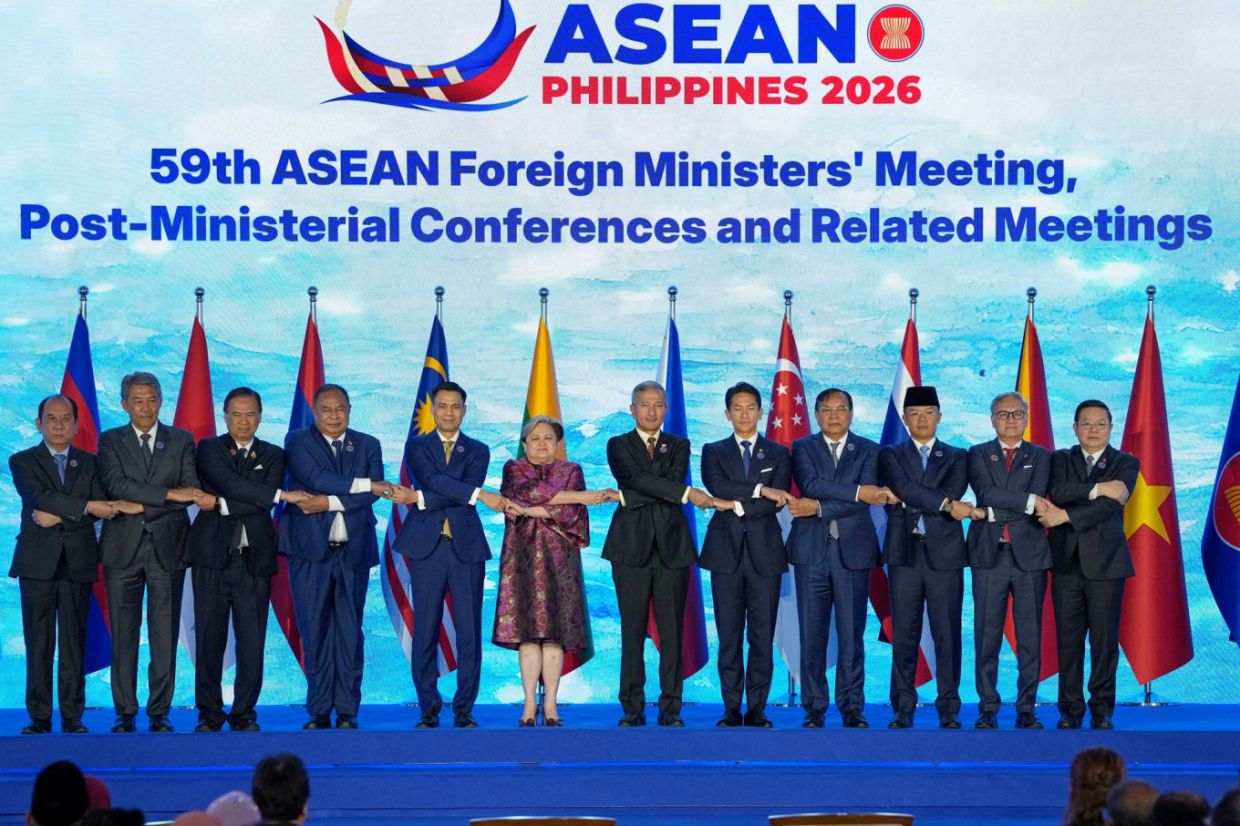
Indonesia has placed Asean squarely on notice, demanding that the regional bloc translate its ambitious commitments into measurable outcomes through binding agreements and strategic partnerships with external powers. The stark warning came from Indonesian Foreign Minister Sugiono during Tuesday's gathering of top diplomats from all eleven Asean member states in Manila, underscoring deep concerns about the organisation's capacity to navigate an increasingly fractious geopolitical environment. His intervention signals growing anxiety within Jakarta's leadership that Asean risks squandering its institutional credibility unless it demonstrates tangible progress on longstanding regional challenges that continue to fester.
The Manila meeting brought together foreign ministers on the eve of broader discussions with external partners, creating an opportunity for Asean to consolidate a unified stance on pressing issues ranging from Middle Eastern instability to maritime disputes and the Myanmar political crisis. Sugiono's pointed question—"Can Asean deliver on its promises?"—reflected frustration at the bloc's historical tendency to announce grand initiatives while struggling with implementation. He referenced the bloc's May summit in Bali, where members adopted a charter amendment that admitted Timor-Leste as the organisation's eleventh member, framing this institutional expansion as merely a preliminary test of Asean's collective will.
The Middle East conflict has emerged as an immediate economic threat to Southeast Asia's prosperity, with ministers expressing concern about potential disruptions to energy supplies, the welfare of the region's nationals working in conflict zones, and broader implications for trade and investment flows. The joint statement released after Tuesday's closed-door session acknowledged the bloc's shared vulnerability to external shocks originating from distant geopolitical flashpoints. This recognition underscores a painful reality for Asean: despite comprising over 650 million people and significant economic clout, member states lack sufficient collective leverage to insulate themselves from global crises that emerge beyond their borders. The conversation extended to support mechanisms for vulnerable populations who depend on cross-border economic activity and remittances from the Middle East.
The energy crisis triggered by Middle Eastern tensions has exposed a structural weakness in Asean's negotiating position with Beijing. As member states scramble to secure alternative energy sources following potential Strait of Hormuz disruptions, their dependency on Chinese suppliers has intensified precisely at a moment when they are attempting to negotiate a binding Code of Conduct for the South China Sea—a framework meant to constrain Chinese actions in contested waters. The Philippines, serving as this year's Asean chair, exemplifies this dilemma: data shows solar panel imports from China more than doubled in the first five months of 2024 compared to the same period last year. This dynamic creates an uncomfortable paradox wherein economic necessity appears to be undermining Asean's collective bargaining power on strategic issues.
The South China Sea Code of Conduct represents perhaps Asean's most frustrating unfinished business. Negotiations have dragged on for nearly two decades and a half, with member states still unable to conclude an agreement that would establish mutually agreed rules governing behaviour in one of the world's most economically vital waterways. Sugiono's warning that "our people have waited 24 years for rules at sea" carries particular weight given that delays have already consumed a generation of policymakers and regional observers. His framing of the issue in moral and civilisational terms—arguing that a rules-based region proves inherently stronger than one dominated by raw power—represents an attempt to mobilise political will by appealing to Asean's foundational principles. The underlying anxiety is that without concrete progress, China's de facto control over critical sea lanes will continue to expand unchallenged.
Myanmar's political crisis has returned to central importance in Asean deliberations, with ministers devoting a dedicated session to evaluating implementation of the organisation's Five-Point Consensus peace roadmap. This initiative, launched in the aftermath of the 2021 military coup, attempted to chart a path toward democratic restoration through dialogue and international pressure. However, deep divisions among member states regarding how aggressively to confront the Myanmar military government have consistently hamstrung Asean's effectiveness. Thai and Vietnamese reluctance to isolate the junta militarily or diplomatically has clashed with Philippine and Indonesian preferences for stronger measures. The retreat session revealed that tensions persist, though Philippine Foreign Secretary Theresa P. Lazaro characterised emerging positions as "progressive," suggesting some evolution in thinking even amid disagreement.
The discussion on Myanmar also highlighted Asean's willingness to adapt its institutional mechanisms in pursuit of breakthrough progress. Ministers agreed to review how the bloc measures progress on the Five-Point Consensus and considered potential reforms to Asean's annual special envoy mechanism—the diplomatic channel through which the organisation attempts to influence events in Nay Pyi Taw. This review process, expected to conclude by November's leaders' meeting, suggests recognition that existing approaches have yielded insufficient results and require recalibration. The timing is significant: as Myanmar's internal conflict becomes increasingly intractable and humanitarian suffering intensifies, Asean faces mounting international scrutiny regarding its role as mediator and the credibility of its crisis management capacity.
The broader context of Asean's current predicament reflects the bloc's fundamental structural limitations as a consensus-based organisation lacking enforcement mechanisms. Member states retain sovereignty over their foreign policies and domestic priorities, making it difficult to coordinate positions on issues where economic interests or ideological preferences diverge. Indonesia, as the bloc's largest economy and unofficial leader, has periodically sought to inject greater dynamism into Asean's functioning, but faces the perennial challenge of persuading smaller or less aligned members to embrace positions that might constrain their individual policy options. Sugiono's rhetoric represents an attempt to shame or inspire the organisation into greater effectiveness through appeals to collective identity and shared interests.
Wednesday's expanded discussions involving Asean's eleven dialogue partners—including the United States, China, and Russia—will test whether the bloc can present a coherent regional perspective to these external powers or whether internal divisions undermine its negotiating position. The presence of both Washington and Beijing in these forums creates inherent tensions, with Asean seeking to balance great power competition while maintaining relationships with both. Southeast Asian governments worry that accelerating US-China rivalry will force uncomfortable choices and that Asean's weak institutional capacity may lead to marginalisation in decisions that profoundly affect the region's future. The meetings represent an opportunity for Asean to assert relevance and centrality, yet also highlight the bloc's vulnerability to external pressures beyond its control.
The practical implications of Asean's credibility challenge extend well beyond diplomatic protocol and institutional reputation. Economic resilience, energy security, maritime safety, and political stability across Southeast Asia depend fundamentally on regional institutions functioning effectively and external powers respecting Asean's agency in shaping regional outcomes. If the bloc continues to issue declarations that remain unfulfilled and negotiations that stall indefinitely, it risks becoming irrelevant to the very challenges its members created it to address. Indonesia's blunt intervention in Manila represents acknowledgment that cosmetic progress and rhetorical commitments no longer suffice. The organisation must now demonstrate whether it possesses the political will, institutional capacity, and structural coherence necessary to transform Southeast Asia into a genuinely rules-based region capable of managing its own geopolitical destiny.

