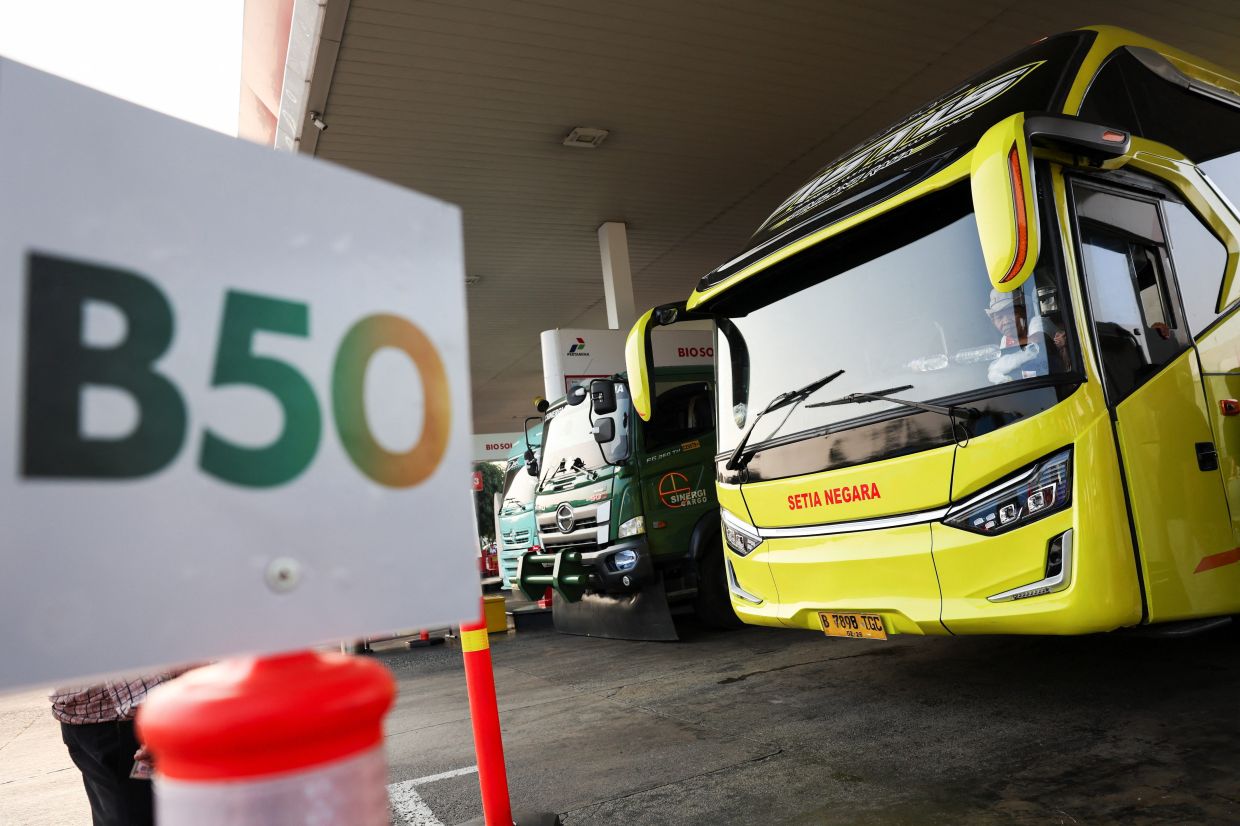
Indonesia, the world's largest palm oil producer, has formally begun implementing a mandatory biodiesel programme that raises the palm oil content in fuel blends to 50%, a significant escalation from the current 40% threshold. Energy Minister Bahlil Lahadalia unveiled the initiative at a ceremony in Karawang, West Java, in the presence of President Prabowo Subianto, signalling government commitment to the scheme as a cornerstone of the nation's energy and environmental policy.
The B50 programme represents one of the most ambitious mandatory biodiesel mandates globally, with far-reaching consequences for Indonesia's domestic palm oil industry and import dynamics. Under the new framework, crude palm oil consumption is projected to surge to between 16.3 million and 17 million metric tons annually, compared with the current 15.2 million tons. This expansion reflects the government's determination to absorb more of its agricultural output into the fuel sector, creating additional demand that should support domestic producers and stabilise commodity prices at a time when global palm oil markets face ongoing scrutiny.
From a fiscal perspective, the transition to B50 carries substantial economic implications. Ministry projections suggest that increasing the biodiesel blend this year alone will reduce Indonesia's diesel import bill by 170 trillion rupiah, or approximately 9.41 billion US dollars. This figure substantially exceeds the 133 trillion rupiah in savings anticipated for 2025, underscoring the accelerated impact of the higher blend ratio on foreign exchange outlays. For a nation chronically challenged by import pressures and current account vulnerabilities, such savings represent meaningful relief on the balance of payments, though implementation challenges remain.
President Prabowo has positioned the B50 programme within a broader narrative of climate leadership and carbon reduction. He indicated that Indonesia is championing global efforts to lower emissions through renewable fuel adoption, a claim that sits alongside Indonesia's significant commitments under international climate agreements. The President also revealed that he had initially advocated for a B100 mandate—pure palm oil biodiesel—but accepted ministerial advice that a 50% blend would suffice to eliminate diesel imports while remaining technically and logistically feasible. This suggests internal government debate over the pace of transition, with pragmatic considerations of engine compatibility and supply-chain readiness tempering environmental ambitions.
Looking ahead, the government has indicated willingness to push the boundaries further. Prabowo stated that authorities should continue pursuing a 60% blend ratio, and the Energy Ministry has committed to initiating research into such a configuration. This phased approach suggests that B50 may represent a stepping stone rather than the final destination, with incremental increases planned as production capacity, distribution infrastructure, and technical standards evolve. The trajectory toward higher blends could reshape Southeast Asia's fuel landscape and intensify the role of palm oil in global energy markets.
From a supply-chain perspective, the programme introduces significant logistical requirements. The government estimates that the B50 mandate will necessitate between 16.7 million and 18 million kilolitres of fatty acid methyl ester, the chemical compound that forms the basis of biodiesel, annually. This represents a marked increase over the 15.64 million kilolitres allocated under the preceding B40 programme, itself already 4.68% above the previous year's consumption of 14.94 million kilolitres. The acceleration in volumetric requirements underscores the challenge of scaling production and distribution to meet higher blending targets.
A critical outstanding issue is the government's formal allocation of biodiesel quotas under the new B50 framework. Although the programme was launched last week, industry participants remain in a holding pattern, awaiting official allocations that will determine production targets and commercial certainty. The Energy Ministry has yet to issue supplementary quotas beyond existing arrangements, creating ambiguity for refineries, traders, and biodiesel producers about how much capacity they should activate. This delay could constrain the pace of actual implementation and may necessitate rapid policy clarification to prevent bottlenecks.
The transition from B40 to B50 carries transition-management implications. Businesses have been given until the end of September to deplete remaining B40 stocks, establishing a clear timeline for the shift to higher-blend fuel distribution. This grace period reflects logistical realities—pipelines, storage facilities, and retail networks cannot instantaneously switch over—but also provides a window for supply-chain adjustments and inventory management. How smoothly this transition unfolds will test the government's implementation capacity and the private sector's readiness to adapt.
For Malaysia and the broader Southeast Asian region, Indonesia's B50 programme carries interconnected implications. As a fellow major palm oil producer and exporter, Malaysia faces intensified competition for markets and potentially altered regional dynamics in commodity pricing. The diversion of Indonesian palm oil into domestic fuel blending effectively reduces the global supply available for export and industrial uses, which could provide price support but also trigger international criticism regarding land use and environmental sustainability. Investors and policymakers across Southeast Asia are watching to assess whether Indonesia's model will be replicated elsewhere, reshaping regional energy strategies.
The B50 initiative also intersects with global climate diplomacy and trade tensions. While Indonesia frames the programme as a emissions-reduction measure, international environmental critics have questioned whether large-scale palm oil expansion for biofuels genuinely reduces carbon intensity when accounting for land-use change and deforestation risks. The programme thus operates at the intersection of domestic economic interests, climate commitments, and international scrutiny—a tension that will likely intensify if the government pursues its stated ambition of moving toward even higher blends.

