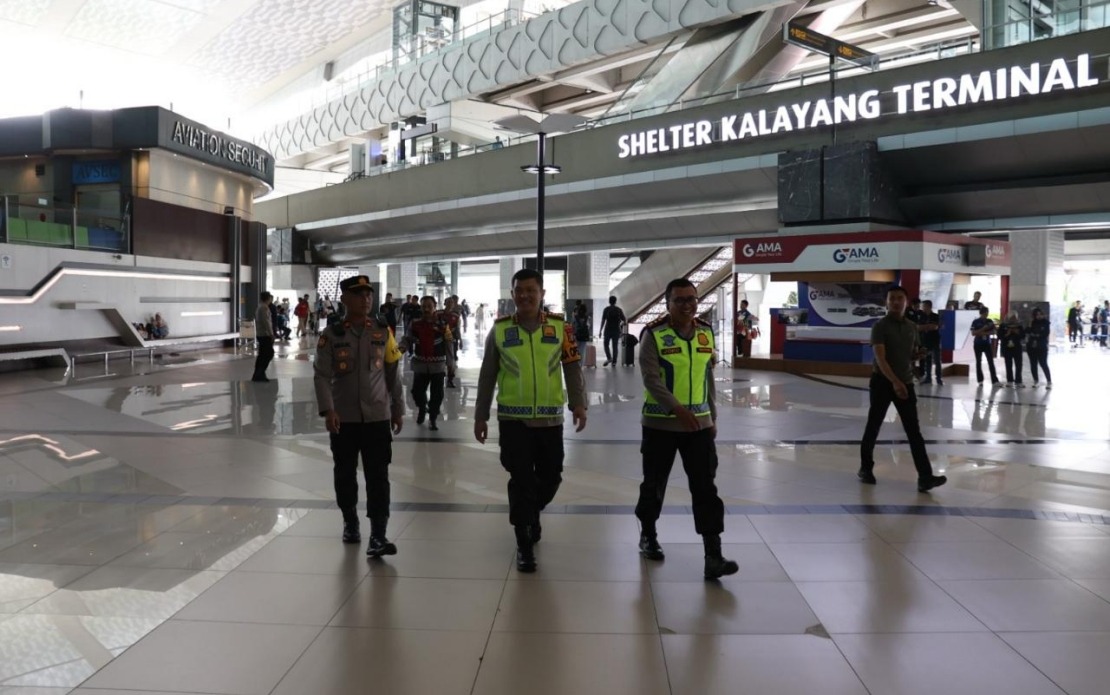
Indonesia's customs authorities have moved to bolster security protocols at Soekarno-Hatta International Airport, the nation's primary aviation hub, in response to the high-profile arrest of a Malaysian pilot implicated in a major narcotics trafficking case. The incident has prompted officials to implement more rigorous inspections targeting flight crew members from both international and domestic carriers, signalling heightened concern about vulnerabilities in airport security systems that could be exploited by organised smuggling networks.
Hengky Tomuan Parlindungan Aritonang, head of Soekarno-Hatta's Main Customs and Excise Office, outlined the enforcement strategy during a statement on Saturday, emphasising that while the airport maintains its dedicated crew processing lane as a standard operational facility, random inspections will now occur with greater frequency. The intensified approach reflects a shift toward unpredictability in screening procedures, designed to deter potential offenders who might have become complacent with established routines. Officials stressed that despite the enhanced vigilance, the airport's existing crew facilities will continue functioning, balancing operational efficiency with security imperatives.
At the centre of this enforcement overhaul is the July 29 arrest of a 39-year-old Malaysian pilot who allegedly attempted to import approximately 25 kilogrammes of ecstasy into Indonesia. Indonesian authorities valued the seized narcotic at around Rp60 billion, equivalent to approximately RM13.51 million, making it a substantial quantity that underscores the financial stakes involved in such trafficking schemes. The timing of the arrest—discovered just as the suspect was entering the country—illustrates both the effectiveness of targeted enforcement and the persistent threat posed by criminal syndicates seeking to exploit air transport networks.
The suspect's arrest revealed troubling patterns in both personal conduct and operational methodology. Laboratory testing indicated that the individual tested positive for MDMA, methamphetamine and cocaine, suggesting potential substance dependency issues that may have made the individual susceptible to recruitment by trafficking organisations. Beyond the immediate case, preliminary investigations uncovered evidence that this pilot had engaged in prior smuggling activities, indicating a pattern of repeated offences rather than a single lapse in judgment. This history underscores the risk posed by individuals with existing criminal records who retain access to secure airport facilities and crew privileges.
Particularly alarming to authorities was the methodological sophistication demonstrated in the attempted smuggling. The suspect allegedly exploited the dedicated crew baggage handling system—a facility designed to expedite legitimate crew movements—by concealing narcotics beneath clothing within luggage bearing proper crew documentation. This deliberate manipulation of existing security loopholes suggests pre-planning and insider knowledge of airport procedures. The exploitation of expedited crew processes for illicit purposes represents exactly the type of vulnerability that regulatory bodies must address through enhanced randomised checks, making the current enforcement adjustment both timely and operationally justified.
Financial incentives driving such smuggling attempts remain substantial, with preliminary findings suggesting the pilot had been promised RM50,000 (approximately Rp220 million) for executing this single transaction. While this represents a fraction of the contraband's street value, the compensation reflects the compartmentalised nature of trafficking networks, where individual operatives receive modest remuneration while organisational hierarchy captures the majority of profits. The disparity between the offered payment and actual contraband value illustrates how criminal syndicates maintain control and loyalty through careful financial management, even as they preserve profit margins.
Indonesian authorities have indicated that investigations remain ongoing regarding the alleged orchestrators of the smuggling operation. Law enforcement agencies are pursuing leads into the broader criminal network believed responsible for coordinating the trafficking attempt, recognising that dismantling such operations requires identifying and prosecuting senior figures rather than focusing exclusively on transporters and intermediaries. This investigative trajectory suggests that the case may ultimately expose wider organisational structures operating across Southeast Asian borders, potentially implicating individuals in Malaysia and other regional jurisdictions.
For Malaysian aviation and law enforcement authorities, this incident carries significant implications. The involvement of a Malaysian citizen in a major international smuggling attempt at a major regional airport raises questions about recruitment patterns, vetting procedures, and the effectiveness of inter-agency intelligence sharing between Malaysia and Indonesia. Airlines operating routes through Jakarta would be particularly attuned to potential vulnerabilities within their crew management systems and may themselves implement additional screening measures to protect operational integrity and corporate reputation.
The broader context extends beyond this individual case to encompass systemic vulnerabilities in crew processing that trafficking networks have evidently identified and exploited. The dedicated crew lanes, while operationally essential for maintaining airport efficiency, require parallel security mechanisms to prevent misuse. Indonesia's decision to implement randomised inspections represents a recognition that predictable processes—however thorough—become targets for criminal adaptation. The strategic deployment of unpredictability, combined with enhanced technical screening and intelligence-gathering, represents contemporary best practice in aviation security across Southeast Asia.
Regional aviation bodies and customs authorities across ASEAN nations are likely monitoring this case closely as a cautionary study in airport security management. The incident demonstrates that even at major international hubs with significant security infrastructure, determined criminal networks can identify and exploit systemic gaps. The enhanced measures at Soekarno-Hatta may prompt parallel reviews at other major regional airports, including Malaysian facilities such as Kuala Lumpur International Airport, where similar crew processing vulnerabilities could theoretically exist. Collaborative regional approaches to aviation security, potentially through existing ASEAN frameworks, may become increasingly important as trafficking organisations themselves operate across jurisdictional boundaries.
The customs authorities' decision to prioritise baggage screening over drug testing for crew represents a pragmatic enforcement philosophy grounded in detection efficacy. While drug testing could identify substance-dependent individuals, baggage screening directly targets the physical contraband that constitutes the trafficking operation's actual objective. This approach acknowledges that some individuals may use controlled substances while maintaining operational capability, whereas the presence of large quantities of illicit drugs in crew luggage represents an unambiguous security breach warranting immediate intervention. The emphasis on detection rather than healthcare or rehabilitation reflects the enforcement-first orientation characterised by Indonesian customs operations.
Looking forward, sustained commitment to enhanced crew screening will require adequate resource allocation, including trained personnel, modern screening technologies, and intelligence systems capable of identifying patterns of suspicious activity. The economic cost of comprehensive random inspections must be balanced against the substantial value of narcotics interdiction and the reputational damage that would result from major trafficking operations succeeding at the airport. For Malaysia-based airlines and crew members, the enhanced environment at Soekarno-Hatta represents a new operational reality requiring acknowledgment and compliance, even as industry participants advocate for screening procedures that remain proportionate and non-discriminatory.

