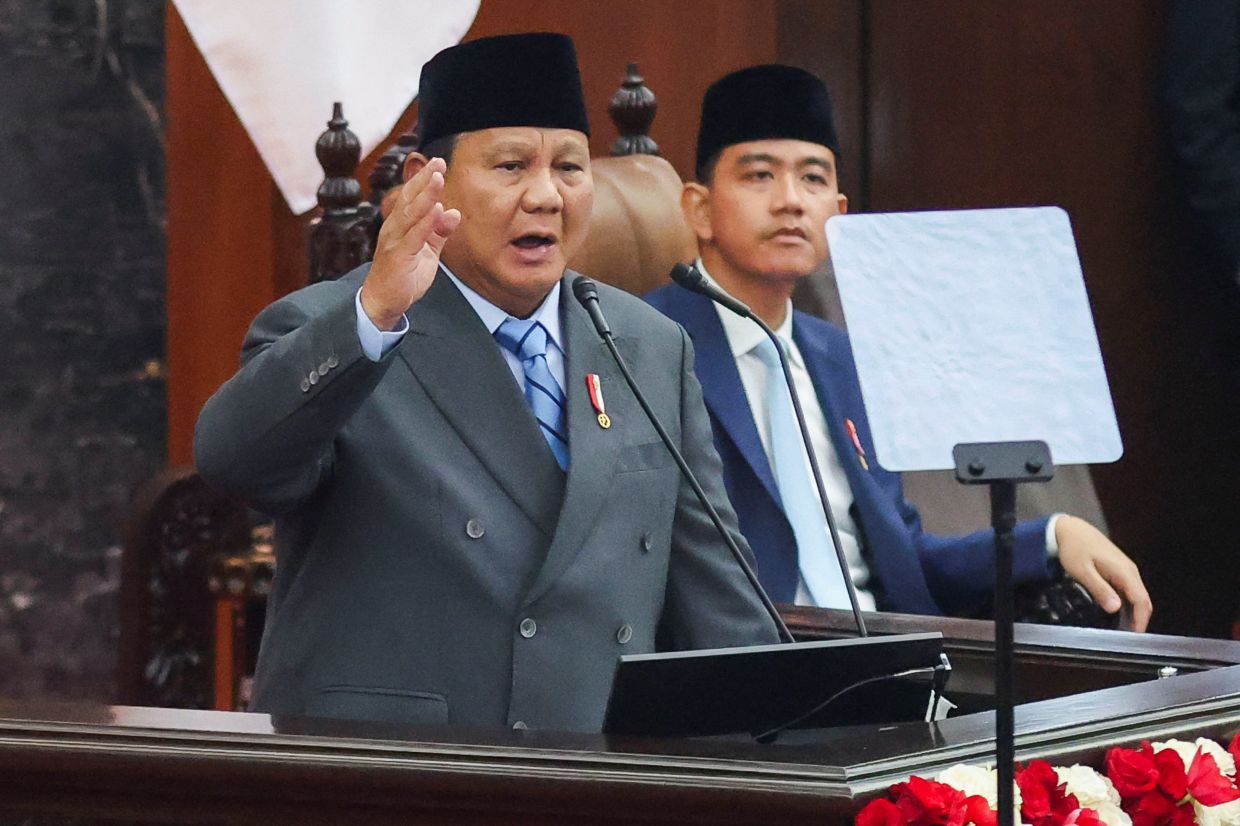
Indonesia's newly elected President Prabowo Subianto has unveiled an ambitious plan to shut down more than 750 state-owned enterprises before the year concludes, signalling an aggressive drive to combat entrenched corruption and operational inefficiency within the public sector. During his state of the nation address to parliament on August 14, Prabowo attacked what he described as deeply embedded problems across Indonesia's sprawling network of state corporations, where he alleged boards habitually reported fictitious profits while draining public resources through excessive administration and wasteful spending. The initiative represents one of the most sweeping restructuring efforts of its kind globally, reshaping the institutional architecture of Southeast Asia's largest economy as it grapples with pervasive graft and fiscal mismanagement.
The scope of Indonesia's state enterprise problem became apparent only recently, following the establishment of the Danantara sovereign wealth fund last year to oversee state assets. Prabowo revealed that this audit uncovered 1,074 state-owned enterprises scattered across the economy—far exceeding the 300 to 400 entities he had initially assumed existed. This discovery underscored the depth of institutional fragmentation and opacity that has long characterised Indonesia's public sector, where disparate agencies operate with minimal coordination and accountability. The vast majority of these entities, Prabowo argued, function without meaningful responsibility to broader national interests, instead pursuing narrow sectional objectives or generating paper profits through creative accounting rather than genuine economic value creation.
The corruption problem plaguing Indonesia's state enterprises reflects a broader pattern of graft that has resisted decades of reform efforts. Despite strengthening legal frameworks against corruption, establishing multiple investigative commissions, and prosecuting several high-profile wrongdoers, Indonesia continues to struggle with endemic illicit practices across both public and private sectors. The country ranked a dismal 34 out of 100 on Transparency International's latest Corruption Perceptions Index for 2025, a damning assessment of institutional integrity that resonates deeply with ordinary Indonesians increasingly frustrated by official malfeasance amid rising living costs and economic pressures.
The consolidation drive has already achieved measurable results. According to Prabowo, 290 state enterprises have been closed to date, with the administration targeting a reduction to fewer than 300 viable entities by December 31. This aggressive timeline, combined with the ambition to retain only genuinely productive operations that generate tangible benefits for citizens, represents a decisive break from the status quo of tolerating persistent underperformance. The retained enterprises, Prabowo insisted, must demonstrate clear capacity to create added value and contribute meaningfully to national development rather than merely existing as repositories for politically connected management.
Financial savings from the restructuring already amount to approximately 50 trillion rupiah (more than $2.8 billion USD) in eliminated overhead costs—encompassing the salaries of surplus directors and commissioners, maintenance of unnecessary office facilities, and frivolous expenditures on vehicle fleets and executive travel. These were funds that should have strengthened Indonesia's fiscal position instead of enriching connected elites. The government projects that consolidation efforts will yield additional savings exceeding 70 trillion rupiah during 2025, providing crucial resources that can be redirected toward genuine development priorities including healthcare, education, and infrastructure that directly improve living standards for ordinary Indonesians.
Improvements in state enterprise management have begun translating into better financial performance. Prabowo cited a more than 75 per cent surge in aggregate profits from state enterprises, which climbed to 326 trillion rupiah in 2024 compared to the prior year—gains attributable to tighter oversight and elimination of phantom accounting practices. These figures suggest that substantial hidden capacity exists within the remaining enterprise portfolio to generate genuine returns if properly managed and insulated from political interference and corrupt practices. The turnaround demonstrates that institutional dysfunction rather than fundamental economic unviability explains much of the historical underperformance.
As part of his anti-corruption strategy, Prabowo proposed establishing a specialised ad hoc court to investigate the management and governance failures of state enterprises dating back three decades. This prosecutorial framework would examine how boards and executives systematically misappropriated public resources and engaged in fraudulent accounting over an extended period. However, recognising practical constraints on accountability processes, Prabowo simultaneously suggested implementing a limited amnesty programme for those willing to acknowledge wrongdoing and cooperate with investigations. This carrot-and-stick approach attempts to balance the imperative for justice with pragmatic recognition that comprehensive prosecutions might become unwieldy and distract from forward-looking reform.
The corruption issue has become a flashpoint for broader public discontent across Indonesia and the wider region. Protesters rallying against rising living costs, exacerbated by elevated global oil prices stemming from Middle Eastern tensions, increasingly invoke widespread graft as a symbol of state failure and inequality. Prabowo's decisive action on state enterprises thus addresses not merely technical governance concerns but taps into profound anxieties about whether political elites can be trusted to prioritise ordinary people's welfare over factional enrichment. The government's performance on this visible front may significantly influence public confidence in Prabowo's broader reform agenda.
One initiative drawing particular scrutiny is Prabowo's signature free school meals programme, which has become a lightning rod for criticism over implementation costs and efficiency concerns. Despite acknowledging the programme's high price tag, Prabowo reaffirmed his commitment to pursuing the initiative while promising significant operational improvements and cost controls. He emphasised the urgency of addressing child malnutrition, noting that approximately one in four Indonesian children suffer from stunting—a devastating health marker reflecting broader deficits in nutritional security and development outcomes. The tension between this socially important but expensive commitment and the broader austerity drive through state enterprise consolidation illustrates the complexity of Prabowo's reform balancing act.
Regarding macroeconomic performance, Prabowo expressed confidence that Indonesia would achieve six per cent GDP growth by the end of 2026, though recent figures suggest headwinds. Indonesia's economy expanded at 5.3 per cent in the second quarter and 5.6 per cent in the first quarter of 2025, growth trajectories that remain respectable but fall short of the ambitious target. Notably, independent analysts have repeatedly questioned the reliability of Indonesia's official growth statistics, suggesting that genuine economic momentum may be weaker than headline figures indicate. This scepticism underscores the importance of the state enterprise restructuring, as improvements in productivity and efficiency at state-owned entities could provide crucial ballast for sustainable expansion.
Prabowo's overarching philosophy, articulated during his parliamentary address, reframes development priorities away from pure growth metrics toward tangible improvements in living standards particularly for lower-income Indonesians. He stressed that economic expansion serves no purpose unless it generates meaningful employment opportunities and materially enhances quality of life for ordinary citizens rather than concentrating wealth among connected elites. This rhetorical shift, coupled with the concrete consolidation programme, signals Prabowo's intent to redirect state capacity toward inclusive development rather than sustaining bloated bureaucratic structures.
For Malaysian observers and policymakers, Indonesia's state enterprise restructuring offers both cautionary lessons and potential benchmarks. Malaysia's own extensive network of government-linked companies and statutory authorities warrants comparable scrutiny regarding productive capacity, governance standards, and elimination of redundant operations. The financial scale of Indonesia's consolidation—potentially saving tens of billions of dollars while eliminating widespread corruption—demonstrates the magnitude of inefficiency that can accumulate when state enterprises operate without meaningful accountability or performance discipline. Whether Prabowo's ambitious 2025 timeline proves achievable remains uncertain, but the initiative's scope reflects serious intent to fundamentally reshape state sector governance across Southeast Asia's largest economy.

