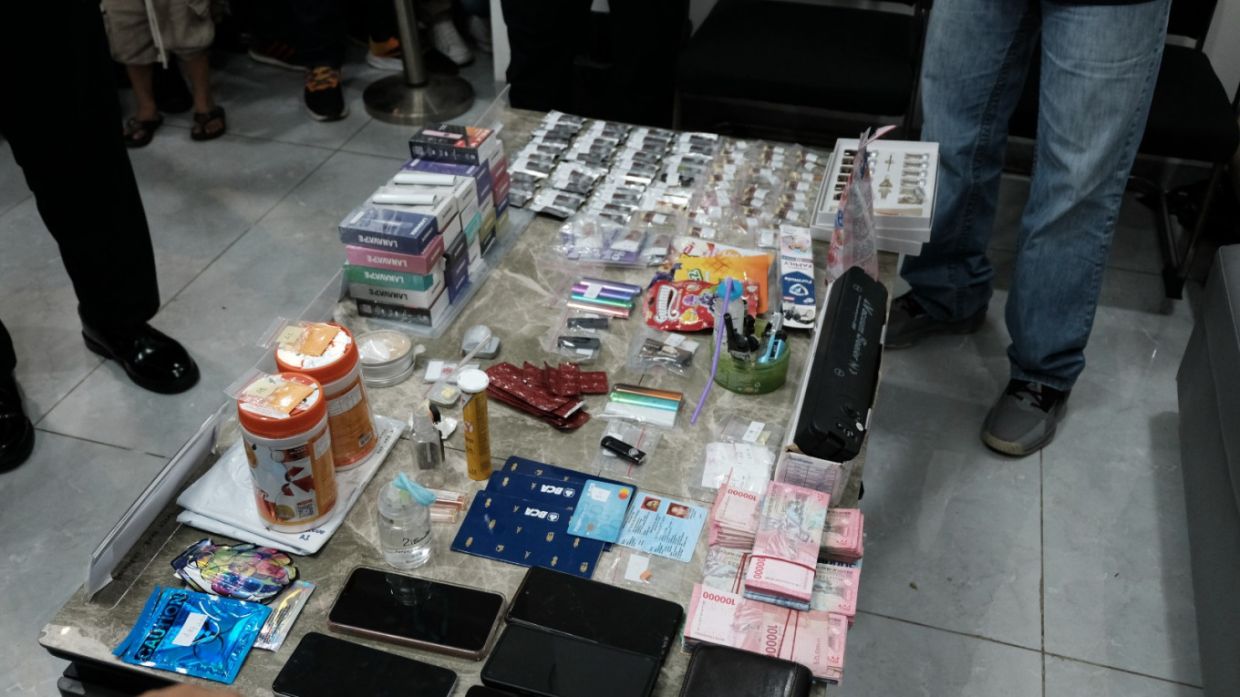
Indonesian law enforcement has successfully dismantled a sophisticated drug trafficking network operating across the Malaysia-Indonesia border, culminating in the arrest of six Indonesian nationals while two Malaysian suspects remain fugitives. The operation, conducted jointly by the National Narcotics Agency (BNN) and Indonesia's Customs and Excise Directorate General, targeted what investigators describe as a highly organised syndicate that leveraged illegal maritime routes to smuggle narcotics into the Riau Islands region. The case underscores the persistent challenge of cross-border drug trafficking in Southeast Asia, where porous boundaries and established smuggling corridors continue to facilitate the movement of illegal substances.
The investigation began when customs officials at Jakarta's Soekarno-Hatta International Airport intercepted a package purportedly containing Orange Fiber Xtra food supplement arriving from Malaysia. Subsequent laboratory testing at the Customs and Excise Laboratory revealed the shipment actually contained MDMA, ketamine, and various other controlled substances—a discovery that triggered a broader investigative effort. This initial seizure proved instrumental in unravelling the entire operation, as authorities traced the package's intended recipient and rapidly identified additional network members through follow-up interrogations and surveillance. BNN deputy for enforcement Insp. Gen. Aswin Sipayung highlighted the operation's complexity during a press conference held at one of the raided locations in Batu Ampar, emphasising the syndicate's sophisticated logistics and distribution methods.
The joint enforcement team conducted simultaneous raids across four separate locations within Batam, recovering substantial quantities of narcotics and precursor chemicals. Among the most significant findings was a cache of vape cartridges and electronic cigarette devices laced with etomidate, a pharmaceutical substance that has become increasingly prevalent in regional drug markets due to its euphoric properties and relative difficulty in detection. The raids also uncovered evidence of the syndicate's packaging operations, where legitimate food products served as cover for shipments of dangerous substances. Officers employed canine units during the Batu Ampar shophouse operation in the Sakura Garden area, underscoring the operation's scale and the authorities' commitment to thorough site investigation.
The first arrest occurred when customs officers apprehended a suspect identified as BAP on Wednesday as he attempted to collect the intercepted package at Batam. His subsequent cooperation with authorities led to the rapid apprehension of three additional suspects—ED, NC, and TFS—at a hotel in Baloi, with ED identified as the individual who had placed the original order. Further investigation revealed additional locations including an apartment in Teluk Tering and a boarding house in Sakura Garden, where suspects AJ and DA were apprehended alongside further drug stocks. The systematic unravelling of the network demonstrates the importance of initial interception protocols and rapid follow-up action in disrupting trafficking operations before they can move inventory into street-level distribution channels.
The quantity of substances seized during the operation was substantial, totalling 1,076.18 grams of MDMA, 50 grams of methamphetamine, 25.6 grams of ketamine powder, and 226 grams of pharmaceutical-grade etomidate across twelve vials. Authorities also recovered 170 vape cartridges containing etomidate, 86 vape devices, 88 ecstasy pills, and various consumption paraphernalia including nine water pipes specifically designed for smoking methamphetamine. The scale of these seizures suggests the syndicate was not merely servicing local Batam demand but may have been in the early stages of expanding distribution into the broader Riau Islands region. Separately, customs officers at Batam Centre International Ferry Terminal thwarted an additional smuggling attempt when they intercepted 48 cartridges of etomidate being carried by Malaysian passenger PS, who was arriving from the Stulang Laut ferry terminal in Johor Bahru.
Beyond drug seizures, authorities confiscated multiple vehicles including a Toyota Alphard van, Toyota Agya hatchback, Chery SUV, and two motorcycles—assets believed to have been instrumental in the network's distribution operations. The recovery of digital scales and plastic sealing devices provides further evidence of the syndicate's repackaging infrastructure. These assets, along with the vehicles, are typically retained under Indonesian asset forfeiture provisions, effectively dismantling the operational capacity necessary for the network to resume activities. The sophistication evident in the use of professional packaging equipment and sealed containers indicates a network operating above street-level dealing, likely coordinating with larger regional trafficking organisations.
Two Malaysian nationals identified as SL and WKC have been designated as the primary suppliers and architects of the operation, with authorities placing them on an active wanted list. Their continued evasion suggests the network's upper echelons remain at large and potentially capable of reorganising operations from across the border. The BNN and customs authorities have indicated that SL and WKC allegedly coordinated the procurement and shipment of etomidate and MDMA from Malaysia into Indonesia, with the Indonesian contingent handling reception, repackaging, and local distribution. This vertical division of labour is characteristic of professional trafficking organisations that compartmentalise operations to insulate upper management from operational risks.
Investigators are currently examining potential connections between this dismantled syndicate and a factory raided in Batam by BNN and customs personnel in an earlier operation, suggesting the possibility of a larger trafficking ecosystem than initially apparent. Should these connections be established, the scope of the investigation could expand significantly, potentially implicating additional suppliers and distribution networks. The possibility of factory-level drug manufacturing within Indonesian territory raises particular concerns about domestic production capacity and suggests that international trafficking may represent only one component of a more comprehensive narcotics problem in the region.
The suspects arrested during the operation face prosecution under multiple provisions of Indonesia's Law No. 35/2009 on Narcotics, specifically Articles 114(2), 132(1), and 112(2). These statutes establish severe penalties ranging from five years' minimum imprisonment up to capital punishment, alongside potential fines reaching Rp10 billion. The severity of potential sentences reflects Indonesia's strict approach to narcotics trafficking, a policy stance that has remained consistent across successive administrations. The substantial penalties serve as both deterrent and punitive measure, though their application has generated ongoing debate regarding proportionality and effectiveness in disrupting organised criminal enterprises.
Officials have characterised this operation as a direct consequence of enhanced border monitoring protocols and improved coordination between maritime customs authorities and narcotics enforcement agencies. Batam Customs and Excise Office head Agung Widodo noted in an official statement that the intervention prevented potential harm to approximately 6,770 individuals by removing these substances from circulation, while also avoiding an estimated Rp10.8 billion in state healthcare rehabilitation expenditures. These figures illustrate the broader public health calculus embedded within law enforcement operations, demonstrating how drug seizures translate into quantifiable social benefit beyond simple arrest metrics. The operation exemplifies the regional security dimension of narcotics enforcement, where cross-border cooperation and intelligence sharing between Indonesian and neighbouring agencies prove essential for disrupting trafficking networks that exploit jurisdictional boundaries.

