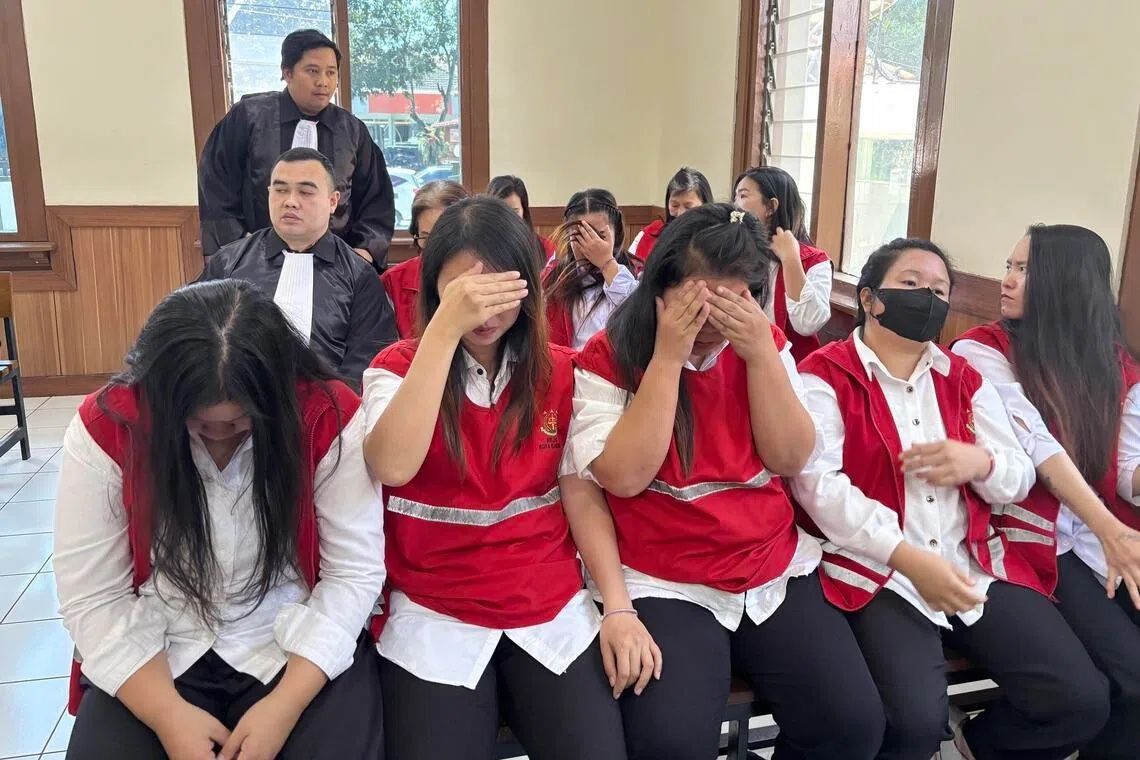
Indonesian prosecutors have intensified their pursuit of justice in one of the region's most significant human trafficking cases, demanding up to 10 years in prison for members of an alleged baby trafficking syndicate that dealt in the sale of at least 34 infants. The prosecution's plea came on Tuesday at the Bandung District Court, marking a critical juncture in a trial that has exposed the vulnerabilities within adoption networks across Southeast Asia and the mechanisms by which criminal syndicates exploit desperate families seeking to build their households through illegal channels.
The 19 accused individuals—comprising 18 women and a single man—have faced trial proceedings since April after being charged with trafficking infants during a two-year period spanning 2023 through early 2025. Court documents indicate that at least a dozen of the trafficked children were transported to Singapore, with individual infants commanding prices between 200 and 250 million rupiah, equivalent to approximately S$18,110 per child. This pricing structure suggests a highly organized operation with established pricing mechanisms and customer networks across state boundaries, characteristics that distinguish this case from more opportunistic trafficking incidents.
At the heart of the investigation stands 70-year-old Lie Siu Luan, known colloquially as Lily or Popo, whom investigators have identified as the central orchestrator of the criminal network. According to prosecution arguments presented at the Bandung hearing, Lie coordinated the entire supply chain of the operation, from identifying and recruiting infants to arranging the falsification of necessary documentation and orchestrating the logistical movement of children across international borders. Prosecutor Cucu Gantina formally requested that the court declare Lie guilty of recruiting, harboring, transporting, transferring, and receiving persons for exploitative purposes within Indonesian territory—charges that carry substantial penal consequences.
The prosecution's sentencing recommendations reflected the hierarchical structure of the alleged criminal organization. The heaviest sentences—a decade in prison—were sought for four individuals identified as playing central roles: Astri Fitrinika, characterized as a principal recruiter; fellow recruiters Djaka Hamdani and Elin; and Lai Su Hua, accused of fabricating official documentation to satisfy adoption requirements and circumvent regulatory oversight. These four defendants allegedly wielded greater authority and responsibility within the network's operations. By contrast, the remaining 14 defendants, who functioned as caretakers for the infants before their transfer, faced prosecution recommendations for five-year sentences, reflecting their perceived lesser culpability despite their participation in the broader trafficking enterprise.
The courtroom atmosphere grew tense as prosecutors concluded their sentencing arguments, with both Lie and Astri exhibiting visible emotional reactions—weeping as the full scope of potential punishment became concrete reality. Their emotional responses underscored the gravity of the moment, though such displays held limited legal significance. The defense strategies that emerged immediately afterward, however, revealed potential vulnerabilities in the prosecution's case and highlighted the complex legal definitions surrounding human trafficking that will likely shape the judges' deliberations.
Lie's legal representative, Sendi Sanjaya, signaled an intention to contest specific elements of the prosecution's narrative while nominally acknowledging the procedural legitimacy of the prosecutors' demands. Crucially, he focused his challenge on the exploitation component—arguably the most essential element distinguishing criminal trafficking from other forms of facilitated adoption or child placement. Sanjaya contended that trial evidence failed to demonstrate genuine exploitation, arguing instead that the transferred children remained in healthy condition and their circumstances remained traceable, thereby negating a foundational element of trafficking offenses. This defensive approach suggests the legal proceedings may hinge on definitional disputes regarding what constitutes exploitative practices within adoption contexts.
Astri's lawyer, Hendri Samuel Tampubolon, pursued a different tactical approach by emphasizing the hierarchical differences between his client and the alleged ringleader. He stressed that Astri operated under Lie's direction and control rather than as an autonomous decision-maker, suggesting diminished moral and legal responsibility. Tampubolon further highlighted his client's cooperation with law enforcement agencies, a factor that historically carries weight in sentencing considerations across Southeast Asian jurisdictions. The lawyer indicated that these mitigating circumstances would feature prominently during the defense phase, implying confidence in negotiating a more favorable outcome than the prosecution's recommendations.
The syndicate's operational reach demonstrates the complexity of cross-border criminal networks in Southeast Asia. The investigation originated in July 2025 when West Java authorities detained approximately a dozen suspects following a report submitted by a local resident, Dani Hidayat, who initially encountered the ring's activities through Facebook adoption groups. Hidayat's wife was pregnant at the time, rendering him a potential customer within the traffickers' target market. When Astri contacted him offering 8 million rupiah for an infant, the exchange triggered alarm bells that ultimately unraveled the entire enterprise. This origin narrative underscores how social media platforms facilitate connections between criminal syndicates and potential clients, a vulnerability that authorities across the region have increasingly recognized.
The involvement of Singaporean actors within the trafficking ecosystem adds significant diplomatic and enforcement dimensions to the case. During testimony, Lie identified four Singapore-based individuals who allegedly functioned as adoption facilitators for the ring, naming them as "Petter," "John," "Mr Tan," and "Mr Chew." These unidentified agents apparently formed a crucial component of the distribution network, connecting Indonesian supply sources with Singaporean demand. The Singapore and Indonesian governments formalized their collaborative response to the case in January, acknowledging the need for coordinated enforcement across jurisdictional boundaries. This bilateral cooperation framework reflects wider recognition within Southeast Asia that human trafficking operates through transnational networks requiring synchronized legal and investigative responses.
The forthcoming defense presentations scheduled for the following week represent a critical inflection point in the proceedings. The defendants will present their counter-narratives, challenge prosecution evidence, and advance legal arguments challenging specific charges or seeking mitigation considerations. Legal observers suggest the trial's outcome may establish important precedent regarding how courts in Indonesia prosecute trafficking cases centered on adoption networks, potentially influencing enforcement approaches throughout the region. The distinction between illegal adoption facilitation and trafficking constitutes a definitional boundary that different jurisdictions navigate with varying emphasis, and this case may clarify where Indonesian courts draw these crucial lines.
Beyond the immediate legal proceedings, this case illuminates systemic vulnerabilities within international adoption infrastructure that criminal syndicates exploit with disturbing efficiency. The combination of vulnerable pregnant women in economically stressed circumstances, families desperate for children willing to bypass regulatory processes, and intermediaries willing to falsify documents creates a perfect ecosystem for trafficking operations. Southeast Asian governments have increasingly acknowledged that combating such networks requires simultaneous attention to supply-side factors—poverty and limited social support that makes surrendering infants seem economically rational—and demand-side interventions through education and regulatory strengthening. The Bandung District Court's eventual judgment will represent just one element of a much broader enforcement and prevention challenge confronting the region.

