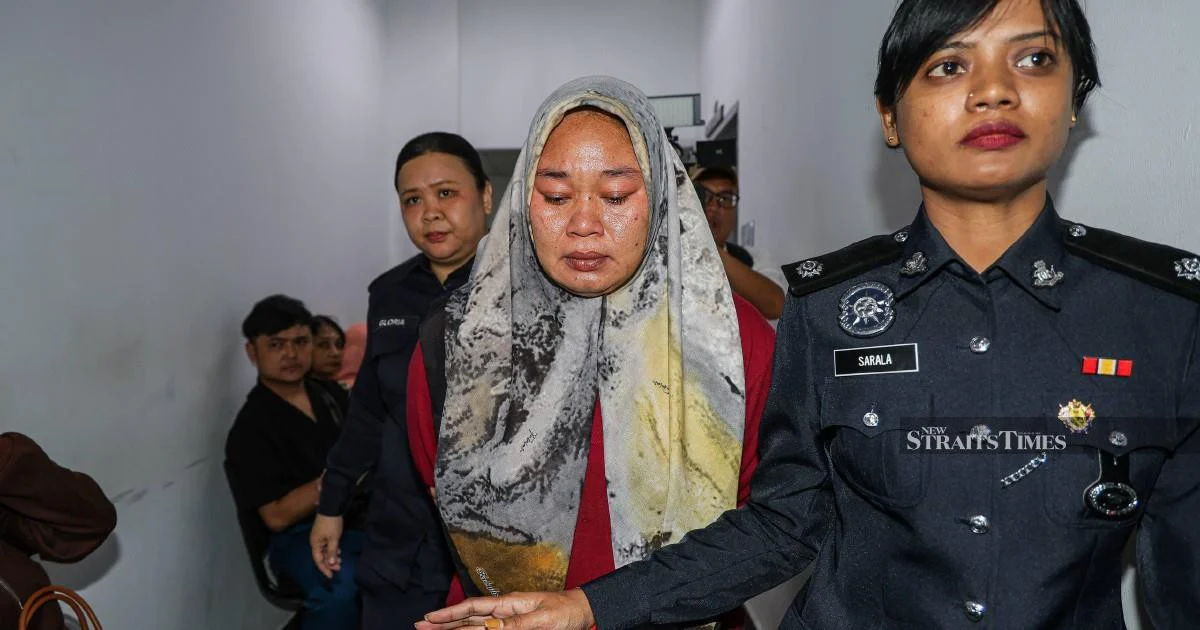
A case that sparked widespread outrage on social media has reached the courts, with an Indonesian domestic worker facing formal charges in Johor Baru for allegedly harming her employer's infant. The Sessions Court hearing marks the next significant phase in a matter that drew attention to vulnerabilities in how domestic workers and the children in their care are monitored within Malaysian households. The charge centres on the treatment of a toddler aged approximately one year, with the alleged incident occurring within the previous twelve months.
The emergence of such cases through viral social media circulation has become increasingly common in Malaysia and across Southeast Asia, highlighting how digital platforms now serve as both a reporting mechanism and a form of public accountability when conventional channels are perceived as slow or ineffective. In this instance, the widespread sharing of content related to the abuse allegations created significant public pressure for law enforcement to act swiftly. The case reflects broader anxieties among Malaysian families regarding the trustworthiness of domestic staff and the real or perceived difficulties in verifying backgrounds and monitoring behaviour within the privacy of residential spaces.
Domestic work in Malaysia remains a sector heavily populated by migrant workers, particularly women from Indonesia, the Philippines, and Bangladesh. An estimated hundreds of thousands of foreign domestic helpers work in Malaysian homes, often under conditions that vary considerably in terms of fair treatment, legal protections, and working standards. The regulatory framework governing their employment, while present, has faced criticism from labour rights advocates and international organisations for insufficient enforcement and inadequate mechanisms to address abuse or mistreatment. Each high-profile case reignites debates about whether existing protections are sufficient or whether systemic reforms are necessary.
From the perspective of child welfare advocates, cases involving harm to young children supervised by domestic staff underscore the complexity of balancing parental convenience with child safety. Many working parents rely on domestic helpers to provide full-time childcare, making the choice and oversight of such staff a consequential family decision. Yet verification procedures, background checks, and workplace monitoring remain inconsistent across the country. Some families may conduct thorough vetting; others rely on informal networks or recommendations. The vulnerability of children too young to communicate effectively about their treatment compounds the concern, as abuse may not be immediately apparent to parents.
The formal charging stage represents a transition from investigation to prosecution. In the Malaysian legal system, Sessions Court proceedings for such matters typically involve the presentation of evidence by the prosecution to establish guilt beyond reasonable doubt. The specific charges, the evidence compiled by police, and witness testimony will shape the trajectory of the case. Depending on the charge and evidence, outcomes can range significantly. The involvement of a one-year-old as the alleged victim also raises questions about how evidence is gathered in cases involving pre-verbal children, since direct testimony from the child is not feasible.
Indonesia, as the primary source country for domestic workers in Malaysia, has periodically sought to strengthen protections for its citizens working abroad. The Indonesian government has suspended domestic worker deployment to specific countries in response to abuse cases and has negotiated bilateral agreements aimed at improving working conditions and providing recourse channels for exploited workers. However, implementation remains inconsistent, and many workers remain vulnerable due to language barriers, unfamiliarity with host country laws, and economic dependence on wages sent home to families. This particular case may prompt renewed diplomatic or administrative attention to how Indonesian workers in Malaysia are safeguarded.
The role of technology and social media in bringing such cases to public attention has fundamentally altered how accountability operates in Malaysia. Content that once might have remained confined to family circles or neighbourhoods now circulates to hundreds of thousands instantly. This can accelerate official responses but also risks trial by public opinion, complicating fair legal processes. The ethical dimensions of sharing sensitive content involving child abuse—including questions of the child's privacy and dignity—remain contested. Media coverage and public discourse must navigate these tensions carefully while still serving the legitimate public interest in understanding systemic failures.
For domestic workers themselves, high-profile prosecutions can be double-edged. While they theoretically deter abuse and demonstrate accountability, they can also fuel discriminatory attitudes or stricter hiring practices that disadvantage migrant workers collectively. Some employers may become more reluctant to hire foreign staff, or may impose more restrictive conditions and monitoring practices. Workers' advocacy groups emphasise the importance of distinguishing between individual criminal conduct and the needs and vulnerabilities of the broader domestic worker population.
The coming sessions of the court case will likely provide clarity on the specific allegations, the circumstances of the incident, and the evidence available to support charges. The verdict and any resulting sentence will carry symbolic weight, signalling to the public, to migrant workers, and to employers what consequences follow from mistreating vulnerable individuals in one's employ. Beyond the immediate legal outcome, the case serves as a reminder of the ongoing gaps between formal child protection policies and actual practice in homes where domestic workers are present. Strengthening this space—through better training, more rigorous oversight frameworks, and improved reporting mechanisms—remains a pressing priority for child welfare advocates and policymakers across the region.