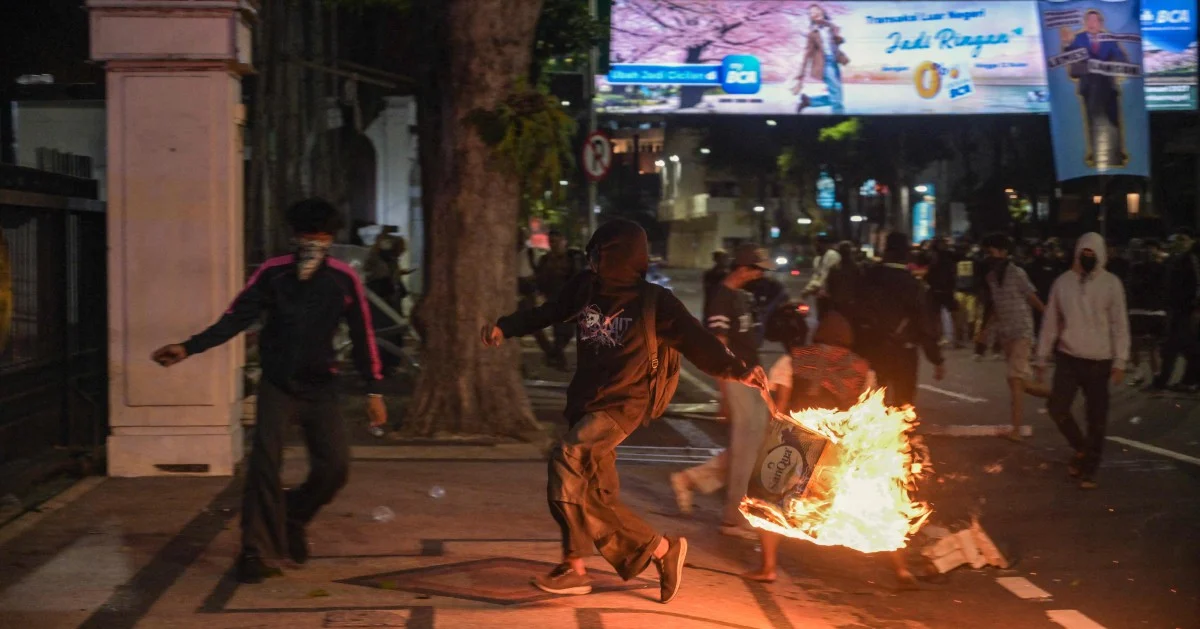
Police in Surabaya, Indonesia's second-largest city, have conducted mass arrests of demonstrators who participated in a rally criticising President Prabowo Subianto's policies, according to reports from human rights monitoring groups. The detentions represent a significant flashpoint in the broader landscape of civic engagement under Subianto's presidency, which commenced earlier this year following his controversial election victory marked by allegations of irregularities.
The timing of these arrests underscores escalating tensions between state authorities and sections of Indonesian society seeking to express dissent. Surabaya, as East Java's capital and a major urban centre with a population of several million, has historically served as a barometer for political sentiment in the archipelago's eastern regions. The concentration of arrests in this municipality suggests that authorities are responding to what they perceive as organised opposition to the government's direction.
President Prabowo Subianto took office amid widespread controversy regarding the election's integrity. His administration has pursued an agenda focused on infrastructure development and military-style discipline, policies that have drawn criticism from civil liberties advocates and sections of the middle class. The protests documented in Surabaya appear connected to broader dissatisfaction with these governance approaches, which have included contentious policy initiatives affecting labour rights, environmental regulations, and educational curriculum.
Human rights organisations have begun systematising documentation of the detentions, a practice essential for accountability in Indonesian contexts where police conduct occasionally lacks transparency. These groups typically monitor arrest procedures, detention conditions, and the legal grounds cited for custody. Their involvement in recording such events creates an independent record that can later inform judicial proceedings or international human rights assessments of state compliance with international humanitarian standards.
The arrests carry particular significance for neighbouring Malaysia and the broader Southeast Asian region, where democratic norms and civil liberties remain contested terrain. Indonesia's handling of political dissent influences regional dynamics, particularly given its status as the Association of Southeast Asian Nations' largest economy and most populous democracy. Malaysian observers of Indonesian affairs note that patterns of police conduct during protests offer insights into the health of democratic institutions across the region.
The Prabowo administration's approach to managing dissent reflects broader patterns emerging in various Asian democracies, where elected leaders employ state apparatus to suppress criticism. Security forces have been deployed repeatedly during recent months to control gatherings critical of government policies. These deployments, while officially framed as crowd management necessities, often result in detentions that critics characterise as politically motivated rather than crime-preventive.
Surabaya's strategic importance as a political laboratory makes these developments worthy of careful analysis. The city has produced significant political movements historically and serves as a testing ground where government responses to dissent establish precedents. The scale of arrests—involving dozens rather than isolated individuals—suggests a deliberate strategy rather than reactive policing. This distinction matters considerably for assessing the government's tolerance for organised opposition.
The detained demonstrators face potential charges ranging from incitement to disturbing public order, categories that Indonesian law enforcement frequently employs to manage political protests. Legal observers note that such charges often lack robust evidentiary foundations and rely heavily on police discretion in interpretation. The outcomes of any prosecutions will illuminate whether authorities intend sustained suppression of anti-government activism or whether the detentions constitute temporary crowd-control measures.
Indonesian civil society's response to these arrests will shape the trajectory of political contestation during Prabowo's presidency. Established human rights networks have begun mobilising legal support for detainees, while documenting government conduct for potential use in international forums. These defensive mechanisms, while important, cannot fully compensate for restrictions on the right to assembly and expression that such mass arrests represent.
The regional implications extend beyond Indonesia's borders, as Malaysia and other Southeast Asian nations observe how Subianto's administration calibrates its relationship with democratic freedoms. Should arrests escalate and broaden in scope, they would signal concerning trends in Indonesia's trajectory toward tighter state control. Conversely, if authorities demonstrate restraint and permit meaningful protest within defined parameters, this would suggest that institutions remain sufficiently robust to constrain executive overreach.
For Malaysian observers particularly, these developments invite reflection on the state of democracy across Southeast Asia. The Indonesian experience demonstrates how elected leaders can gradually narrow civic space through incremental restrictions on assembly and expression, processes that may not register as dramatic but accumulate into systemic shifts. Understanding such patterns helps citizens in other nations recognise early warning signs of democratic erosion in their own contexts.

