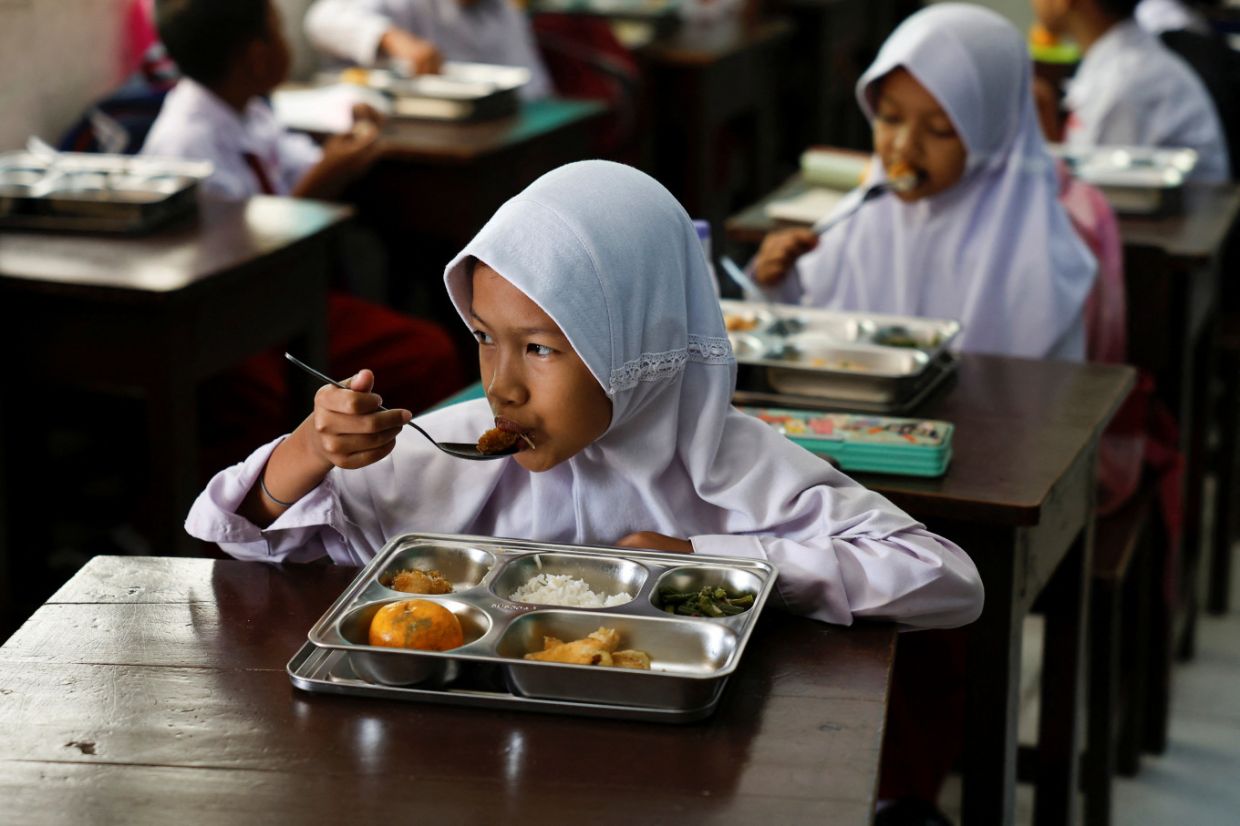
Teachers' representatives in Indonesia have sounded an alarm over proposed amendments to the country's foundational education law, warning that vaguely worded provisions could provide a legal pathway to resurrect funding for President Prabowo Subianto's free nutritious meals initiative from the education budget. The Indonesian Teachers Association, known as P2G, has identified language in the draft bill currently being debated by the House of Representatives that it believes could be weaponised to classify the massive feeding program as a legitimate education expense, thereby circumventing a significant Constitutional Court verdict handed down just months earlier.
The timing of these concerns reflects a deepening constitutional crisis over budget allocation priorities in Indonesia's education sector. On July 30, Indonesia's highest court ruled decisively that the free meals program falls outside the scope of education spending and therefore should not draw on funds earmarked specifically for educational purposes. This judgment arrived after years of tension between those who view the feeding initiative as essential to student welfare and those who argue it dilutes precious resources meant for classrooms, teacher salaries, and pedagogical infrastructure. The court's decision was grounded in a straightforward constitutional principle: at least 20 percent of the annual state budget must be dedicated to education, and that mandate was designed to strengthen teaching and learning systems, not to subsidise nutrition programmes, however worthy.
The financial stakes underscore why this debate matters so profoundly. During the current fiscal year, the government allocated Rp 223 trillion, equivalent to approximately US$12.5 billion, from an education budget totalling Rp 769 trillion to pay for the meals scheme. This represents nearly one-third of mandatory education spending—a colossal diversion that has meant less money for teacher recruitment, classroom construction, curriculum development, and student support services. For a developing nation struggling to improve educational outcomes and teacher compensation across an archipelago of over 17,000 islands, the reallocation sparked heated controversy among educators and civil society organisations who argued that prioritising meals over pedagogical investment undermined the nation's long-term human capital development.
The specific language troubling P2G coordinators appears in a draft provision dated July 8. The text stipulates that government and society, when managing education, shall provide health services including mental health support at schools in a manner integrated with national health policies and educational objectives. At face value, this appears sensible—school-based health initiatives have merit. However, P2G national coordinator Satriwan Salim argues the wording is deliberately open-ended in ways that could accommodate creative legal interpretation. If health policies become a recognised education component, he reasoned, then a national health policy prioritising free meals for students could logically transform the feeding program from a standalone social welfare initiative into an integrated education service, thereby qualifying it for education budget financing.
The debate reflects a broader pattern of institutional tension in Indonesia surrounding the interpretation and implementation of Constitutional Court rulings. Constitutional law expert Feri Amsari has stressed that the court's reasoning establishes binding constitutional norms applicable across all legislation, not merely to a single budget document. In his assessment, no future law—whether it revises the education system statute, adjusts budget nomenclature, or introduces structural budget engineering—can lawfully permit the free meals program to draw from education funds. The ruling, he insisted, is not a technical budgetary adjustment that clever legislative drafting can circumvent; it represents a fundamental constitutional boundary.
Civil society organisations tracking the situation have grown increasingly vocal about the danger of legislative manoeuvres designed to hollow out court decisions. The MBG Watch coalition, which supported the original petitioners, has urged the House to resist attempts to obscure the substance of the court's verdict through bureaucratic relabelling. Agus Sarwono of Transparency International Indonesia, a coalition member, warned that any effort to maintain education funding for meals through budget renaming, accounting adjustments, or regulatory rewording would constitute a brazen denial of the court's authority. For observers concerned about rule of law in Southeast Asia's largest economy, this confrontation symbolises deeper questions about whether courts can enforce their judgements against determined executive and legislative actors.
The broader institutional context compounds these concerns. Indonesia has experienced previous instances of drawn-out or incomplete implementation of Constitutional Court rulings despite their theoretically binding character. A December 2025 ruling banning active-duty police officers from holding concurrent government positions remains only partially executed, suggesting that compliance with high court directives depends partly on political will rather than automatic deference to judicial authority. Against this backdrop, teachers' groups and watchdog organisations fear that a revised education law could represent another episode in which formal compliance masks substantive evasion.
House lawmakers have responded to the emerging criticism with reassurances that sound calibrated to address concerns without surrendering legislative flexibility. Hetifah Sjaifudian, a Golkar Party member chairing the House Commission overseeing education and steering the amendment process, stated that the Sisdiknas bill remains under active development and is not yet finalised for publication. She pledged that every provision would receive careful drafting to eliminate ambiguity and prevent conflict with constitutional principles. Sjaifudian emphasised that the commission recognises the education budget's primary purpose and commits to using those funds for core educational priorities—learning quality, teacher welfare, and school services—rather than programmes sitting at the system's periphery.
The broader revision encompasses several other significant education issues beyond the free meals controversy. Lawmakers are simultaneously discussing explicit regulatory provisions for teacher compensation, student protection from violence, and other foundational education matters. These competing priorities within the amendment process suggest that the free meals question, while symbolically important, occupies only one corner of a sprawling legislative effort. This complexity creates both risks and opportunities: the comprehensive scope of the revision offers multiple entry points for stakeholders to advocate for specific language safeguards, yet it also means that careful scrutiny of each provision becomes essential to prevent problematic language from slipping through amid the legislative traffic.
The situation carries implications extending beyond Indonesia's borders. Throughout Southeast Asia, middle-income nations struggle to balance welfare ambitions against fiscal constraints in education budgets. Malaysia, Thailand, and other regional economies have launched their own school feeding initiatives, and the Indonesian case demonstrates how disputes over budget classification can transform seemingly straightforward policy questions into constitutional crises. The precedent set by Indonesia's Constitutional Court—that social welfare programmes, however aligned with student welfare, cannot be disguised as education spending—may influence how other nations delineate the boundaries of education budgets and guard those boundaries against legislative creep.
The path forward depends on the House Commission's willingness to incorporate public feedback and adopt transparent drafting standards. If lawmakers resist the temptation to preserve the free meals program's education budget access through creative language, the amendment could strengthen Indonesia's education finances and reinforce respect for constitutional limits. Conversely, should the revised law contain provisions susceptible to the interpretation P2G fears, Indonesia risks deepening public cynicism about whether courts matter in a system where determined political majorities can legislatively reverse judicial verdicts. The deliberation process ongoing in Jakarta thus represents a critical test of constitutional governance in one of Asia's most significant democracies.

