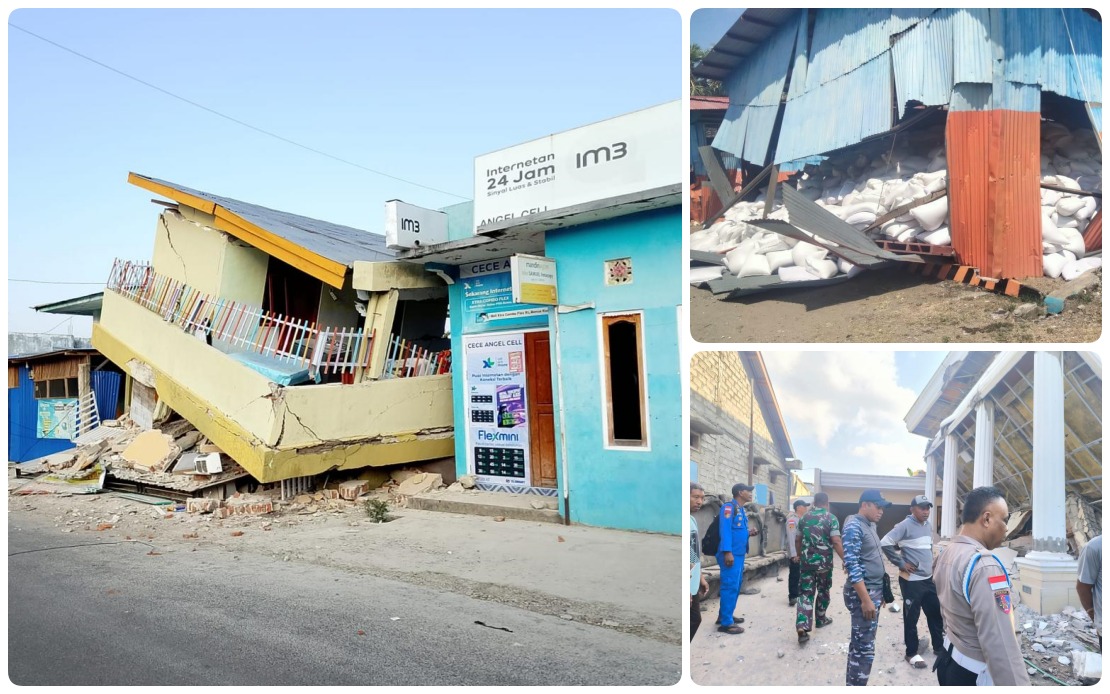
Indonesia's Flores Island confronts a major disaster recovery effort in the wake of a powerful 7.7 magnitude earthquake that struck before dawn on Sunday, killing at least 53 people and triggering an unprecedented swarm of aftershocks that has kept thousands of residents in temporary shelters. The tremor, which originated in the sea approximately 30 kilometres from Mbay in Nagekao district at a shallow depth of 15 kilometres, unleashed seismic energy that has continued reverberating across the vulnerable region for hours after the initial impact.
The scale of the seismic activity following the main earthquake has been extraordinary. The National Disaster Management Agency (BNPB) reported that the Meteorology, Climatology and Geophysics Agency (BMKG) had catalogued 995 aftershocks by Sunday afternoon local time, though most remained imperceptible to the population. This intensity of aftershock activity creates a psychological barrier to residents returning to their homes, compounding the physical damage from the initial quake. Abdul Muhari, the BNPB's Deputy for Prevention, emphasized during a Sunday press conference that while the technical count of aftershocks was substantial, only a fraction were strong enough for people to feel, yet the knowledge of continued seismic activity alone kept many communities cautious.
Memories of historical trauma have intensified the reluctance of evacuees to return to damaged structures. The 1992 Flores earthquake and subsequent tsunami remain etched in the collective memory of islanders, creating a rational wariness among residents who have experienced catastrophic natural disasters within living memory. This historical context explains why 9,290 people remained at officially designated evacuation sites as of late Saturday night, despite authorities' efforts to reassure communities. For many residents, the cost of staying in temporary shelters is a worthwhile price compared to the risk of remaining in structurally compromised buildings while the ground continues to shake.
Casualty figures have climbed as emergency responders conduct systematic assessments across the seven affected regencies and cities. The confirmed death toll reached 53 individuals, with 135 others sustaining injuries ranging from minor to severe. Notably, authorities reported no missing persons, a development that provided some relief to families searching for loved ones in the immediate aftermath. However, Abdul Muhari cautioned that casualty data continued to be verified and updated as rescue operations extended into their second full day, suggesting the final count could yet shift as damaged areas were fully accessed and assessed.
The initial earthquake triggered a tsunami warning that heightened fears of a double disaster. The proximity of the epicentre to the seafloor raised legitimate concerns about coastal communities facing inundation, yet BMKG lifted the warning by 7:31 am after monitoring stations detected that sea levels had stabilized without significant further rise. This relatively swift resolution of the tsunami threat represented a critical turning point in the emergency response, allowing authorities and communities to concentrate resources on earthquake response rather than dual disaster mitigation.
Infrastructure restoration has become a priority as authorities work to reconnect isolated communities and restore essential services. A crucial road section in Reok, Manggarai, that had been rendered impassable by earthquake-triggered landslides, has since been cleared sufficiently to allow fuel tanker trucks through, a development vital for ensuring power generation and transportation can resume. Electricity has been restored in several blackout zones, though substantial areas remain without power as grid damage is assessed and repaired. These incremental improvements in connectivity and energy supply represent essential steps toward normalizing conditions and enabling displaced residents to contemplate returning home.
The disaster response infrastructure established by BNPB demonstrates systematic preparation for large-scale emergencies in Indonesia's seismically active regions. Response posts have been activated in Labuan Bajo and Maumere, serving as coordination hubs for emergency operations, while logistics bases in Jakarta, Labuan Bajo, and Maumere facilitate the organized flow of relief supplies, specialized equipment, and additional personnel to affected zones. This multi-hub approach recognizes the geographic challenges of delivering aid to an island region where roads and ports may be compromised.
Air support capabilities have been mobilized to supplement ground-based relief efforts. Aircraft and helicopters stand ready to intervene if ground-based logistics networks prove insufficient or if particular communities become isolated by continued seismic activity or secondary hazards such as landslides. This aviation backup option reflects Indonesia's experience with disaster management in archipelagic regions where maritime and air transport often prove more reliable than road networks during emergencies.
The earthquake presents broader implications for regional disaster preparedness in Southeast Asia. Flores sits within the Pacific Ring of Fire, a seismically active zone where tectonic plate interactions generate frequent earthquakes. The 7.7 magnitude event underscores the vulnerability of island populations to sudden geological hazards and the cascading impacts—physical displacement, infrastructure damage, psychological trauma—that extend far beyond immediate casualty figures. For Malaysian observers, the Indonesian experience offers lessons about maintaining robust early warning systems, establishing pre-positioned logistics networks, and understanding how historical trauma influences public response to natural disasters, considerations relevant to Malaysia's own seismic zones and tsunami-prone coastlines.
The social dimension of the disaster extends beyond statistics. Thousands of evacuees face uncertainty about when they can safely return to damaged homes, resume livelihoods, and rebuild disrupted communities. The combination of continued aftershocks, housing damage, and psychological anxiety creates a complex humanitarian situation requiring not just immediate emergency response but also longer-term psychosocial support and reconstruction planning. Authorities must balance the desire to allow residents to return with genuine safety concerns, a tension that will likely persist until seismic activity diminishes and structural engineers complete building damage assessments.

