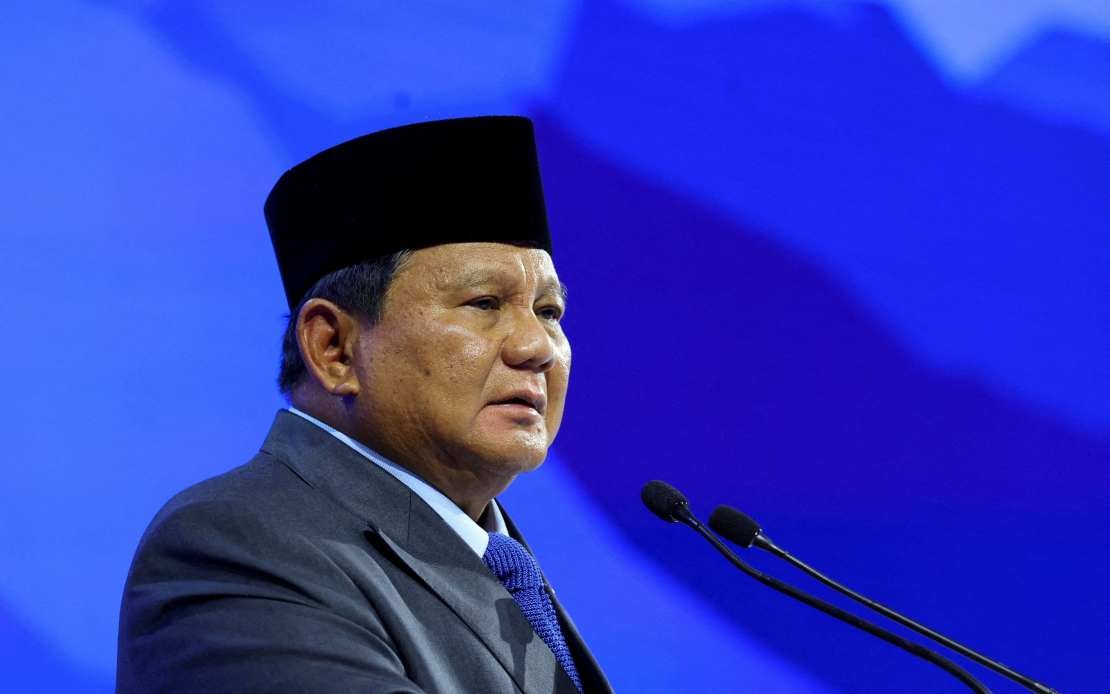
President Prabowo Subianto has declared that Indonesia's escalating forest and land fires are gradually coming under control across several regions, projecting that the crisis could be entirely resolved within the coming fortnight. Speaking at the inauguration of Indonesia's 100-gigawatt solar power initiative and its associated infrastructure projects in Jembrana, Bali on Tuesday, the president outlined an optimistic timeline for containing what has become one of the nation's most pressing environmental challenges during the current dry season.
The containment efforts reflect an unprecedented mobilisation of state resources directed at combating the widespread fires ravaging Indonesian territory. Prabowo's administration has deployed a substantial aerial fleet encompassing dozens of helicopters and more than a dozen fixed-wing aircraft, complemented by hundreds of water extraction systems and mechanical pumps strategically positioned across affected zones. Thousands of personnel from various government agencies, military units, and emergency response services have been coordinated to mount what the president characterises as an effective, multisectoral operation.
The timing of Indonesia's fire crisis carries particular significance given the meteorological conditions currently affecting Southeast Asia. The El Niño phenomenon, already manifesting with unusual intensity this year and projected to rank among the strongest episodes recorded in modern climate history, has exacerbated drought conditions and heightened fire susceptibility across the archipelago. Prabowo acknowledged this climatic reality whilst emphasising the necessity for Indonesia to maintain heightened preparedness against weather-related hazards that could intensify existing vulnerabilities.
Demonstrating direct presidential engagement with the crisis, Prabowo undertook field inspections across multiple regions to assess operational effectiveness firsthand. His itinerary included visits to West and Central Kalimantan on Saturday to review firefighting coordination, followed by a Monday journey to Sumatra to oversee suppression operations in that region. These site visits underscored the administration's commitment to hands-on crisis management and allowed the president to verify claims of interagency collaboration among regional governments, national ministries, military personnel, police forces, and Indonesia's disaster management authority.
The forest fire emergency arrives amid a broader pattern of natural disasters afflicting Indonesia during August. The president drew comparisons between current firefighting efforts and his government's response to the devastating magnitude 7.7 earthquake that struck the Flores region in East Nusa Tenggara on August 15. That seismic event resulted in 103 fatalities, left 1,666 individuals requiring medical attention, and displaced approximately 185,131 people as of Tuesday afternoon. The rapid mobilisation for earthquake relief operations, which Prabowo characterised as exceeding expectations for speed and scale, served as a reference point for evaluating the government's capacity to manage concurrent crises.
The seismic aftermath continues to unfold with continued instability registered across the affected zone. Indonesia's National Disaster Management Agency recorded 7,029 aftershocks in the weeks following the initial earthquake, including 141 tremors significant enough to be registered by residents. This sustained seismic activity compounds the recovery challenge whilst simultaneously straining emergency response infrastructure and personnel availability during a period when resources are simultaneously needed for fire suppression operations.
For Malaysian and Southeast Asian observers, Indonesia's current disaster management trajectory carries multiple implications. The region shares similar climatic vulnerabilities to El Niño-driven drought cycles and forest fire propagation, with transboundary haze affecting neighbouring nations during peak fire seasons. Indonesia's demonstrated capacity to coordinate large-scale emergency response across its vast territory and fragmented administrative structures offers lessons in crisis management effectiveness, whilst simultaneously revealing the resource demands required for comprehensive disaster preparedness in equatorial megadiverse nations.
The president's optimistic two-week resolution timeline warrants careful scrutiny against historical patterns of Indonesian fire management. Previous years have witnessed extended firefighting campaigns extending well beyond initial government projections, frequently compromised by bureaucratic coordination challenges, resource limitations, and unpredictable weather fluctuations. The involvement of Prabowo himself in directing operations represents a political commitment that elevates visibility and potentially resource allocation, though ultimate success remains contingent upon sustained weather patterns and continued operational effectiveness.
Looking forward, the August 2024 crisis underscores structural vulnerabilities in Indonesia's disaster response architecture. The coincidence of multiple major disasters during a single calendar month highlights capacity constraints when simultaneous catastrophes demand competing resource allocation. For regional policymakers including those in Malaysia, Indonesia's experience reinforces the necessity for enhanced preparation frameworks, improved early warning systems, and potentially strengthened cross-border cooperation mechanisms for managing transboundary environmental emergencies that characterise the Southeast Asian geography.
Prabowo's emphasis on government presence and responsiveness reflects broader political messaging regarding his administration's effectiveness following his March 2024 inauguration. The visible presidential engagement with disaster management serves dual purposes of addressing immediate humanitarian needs whilst constructing a narrative of decisive executive action. Success in resolving the forest fire crisis within the stated timeframe would significantly enhance perceptions of governance competence, whereas protracted firefighting operations extending beyond two weeks could generate criticism regarding resource deployment efficiency and interagency coordination quality.

