The political fault lines around President Prabowo Subianto's signature free nutritious meal initiative have crystallised into competing street protests across multiple Indonesian cities, exposing fundamental disagreements about fiscal responsibility, anti-corruption enforcement, and the government's capacity to manage large-scale social programmes. What began as a well-intentioned policy to combat childhood stunting and malnutrition has descended into a contentious battleground where fiscal hawks, food safety advocates, and economic stakeholders find themselves on opposing sides of a increasingly heated national conversation.
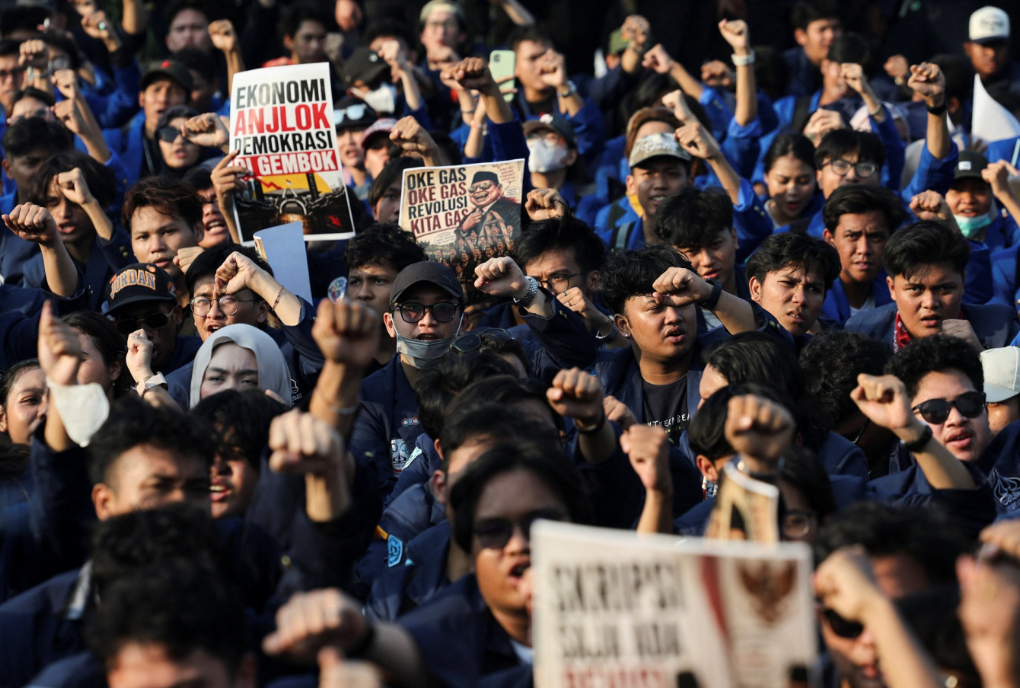
In coordinated demonstrations spanning from Bali to Batam and the eastern regions, student activists have mounted the most visible challenge to the programme's continuation. University students gathering outside the Bali Regional Legislative Council voiced demands that reflect deeper anxieties within Indonesia's educated urban classes—they want the Supreme Audit Agency to conduct a thorough financial and operational review, citing the programme's substantial budget allocation as unjustifiable given the government's broader austerity measures. Beyond the fiscal critique, protesters have seized on specific operational failures: documented food poisoning incidents and the arrest of three senior National Nutrition Agency officials on corruption charges. These tangible failures provide ammunition for those questioning whether state capacity exists to execute such an ambitious intervention effectively.
The Jakarta demonstrations, drawing thousands of students from institutions including Trisakti University, Mercu Buana University and Esa Unggul University, underscore how the meal programme has become entangled with broader anxieties about presidential governance. Affiliated with the Indonesian Islamic Student Movement and the Islamic Students Association, these protesters have framed the programme as symptomatic of wasteful state expenditure, demanding its suspension alongside other costly flagship initiatives. The timing matters: these rallies occurred just days after previous demonstrations at the House of Representatives complex, suggesting sustained momentum among student constituencies intent on constraining executive spending power.
The financial dimensions of the dispute deserve closer examination for Malaysian observers. President Prabowo's administration allocated at least Rp 335 trillion (approximately US$15 billion) to feed approximately 83 million Indonesians—schoolchildren, pregnant women, and nursing mothers. Even after budget cuts reducing the allocation to Rp 228.4 trillion, the programme represents a substantial claim on state resources during a period when Indonesia, like many Southeast Asian economies, faces fiscal pressures. Government officials including Muhammad Qodari of the Government Communications Agency have defended continued funding, arguing that refinement rather than termination represents the appropriate response to identified problems. The compromise position emerging from government circles involves introducing efficiency measures: temporarily halting distribution during the June-July school holidays and eliminating meal provision to students in 76 relatively affluent schools where families presumably possess greater capacity to ensure adequate nutrition independently.
Yet the competing narrative articulated by programme beneficiaries and workers reveals how policy decisions that appear fiscally prudent at the national level translate into immediate economic hardship at the local and household level. In Batam, approximately 1,500 kitchen workers depend on daily wages from meal preparation and distribution. When the government reduces operations from six to five days weekly or halts services during school holidays, these workers face direct income losses that jeopardise their families' survival. The protest coordinator Langga Husein framed this not as ideological opposition to austerity but as a pragmatic concern that efficiency savings shift costs downward to workers lacking alternative employment. This dynamic reveals how seemingly technical budgetary adjustments carry profound distributive consequences.
The agricultural dimension of the programme adds another stakeholder perspective often overlooked in discussions of fiscal efficiency. In Bandar Lampung, supporters of the initiative argued that the meal scheme creates stable demand for local commodities—corn, rice, cassava, fruits and vegetables—thereby supporting farming communities and stabilising agricultural prices. From this vantage point, the programme functions not merely as a nutritional intervention but as an agricultural stimulus that integrates rural production into urban consumption networks. Farmers and rural suppliers, alongside kitchen workers and food vendors, have mobilised to protect a programme that, despite acknowledged implementation weaknesses, generates economic activity throughout supply chains. The coordination of demonstrations across Bandar Lampung, Jakarta, West Nusa Tenggara and East Java suggests that programme support extends considerably beyond its direct beneficiaries.
The corruption dimension warrants particular attention given its capacity to delegitimise even well-designed programmes. The arrest of three National Nutrition Agency officials on alleged corruption charges provided opponents with concrete evidence that institutional safeguards had failed—that the machinery of accountability had not prevented misconduct. Student protesters seized on these failures to argue that the scale of the programme exceeded state capacity for oversight and control. This creates a paradox for the Prabowo administration: demonstrating serious commitment to anti-corruption enforcement necessitates high-profile prosecutions, yet such prosecutions simultaneously undermine confidence in the programmes those institutions manage. The resulting reputational damage extends beyond the individuals prosecuted to the entire bureaucratic apparatus responsible for implementation.
Food safety episodes likewise cut through abstract budgetary debates by anchoring concerns in immediate health risks. Documented food poisoning cases associated with the meal programme triggered visceral responses that transcend ideological positioning—parents and educators naturally prioritise protection of children's health over policy continuity. These incidents exposed potential vulnerability in a system attempting to serve 83 million people while navigating logistical complexities across a vast, geographically dispersed archipelago. The student demand for comprehensive investigation into food safety failures reflects recognition that accountability mechanisms must demonstrate they can identify, isolate, and correct failures before they affect additional beneficiaries.
For Malaysian policymakers and observers, Indonesia's experience offers cautionary insights regarding the governance challenges inherent in attempting transformative social programmes within institutions where capacity constraints, corruption risks, and logistical complexity converge. The Prabowo administration's willingness to implement cost-cutting adjustments while maintaining programme continuation suggests acknowledgment that complete termination risks severe political backlash from beneficiary constituencies, yet continuation without demonstrable improvements in oversight and execution perpetuates the reputational damage that corruption allegations and food safety incidents have inflicted. The competing demonstrations reflect not mere disagreement about policy preference but fundamentally different assessments of what constitutes prudent fiscal stewardship, effective public health intervention, and accountable governance in a complex developing-country context.
Looking forward, the trajectory of Indonesia's free meal programme will depend substantially on whether the government can simultaneously achieve two difficult objectives: demonstrating genuine improvements in anti-corruption enforcement and food safety oversight while maintaining the scale of support necessary to justify continued worker employment and agricultural stimulus. The competing street demonstrations will likely persist until one constituency either achieves policy concessions or concludes that further mobilisation yields diminishing returns. The deeper question facing Indonesia—whether large-scale social programmes can operate effectively under conditions of institutional constraint—extends far beyond nutrition policy and touches fundamental questions about state capacity that Southeast Asian governments must navigate as they attempt to deliver on increasingly ambitious social commitments.