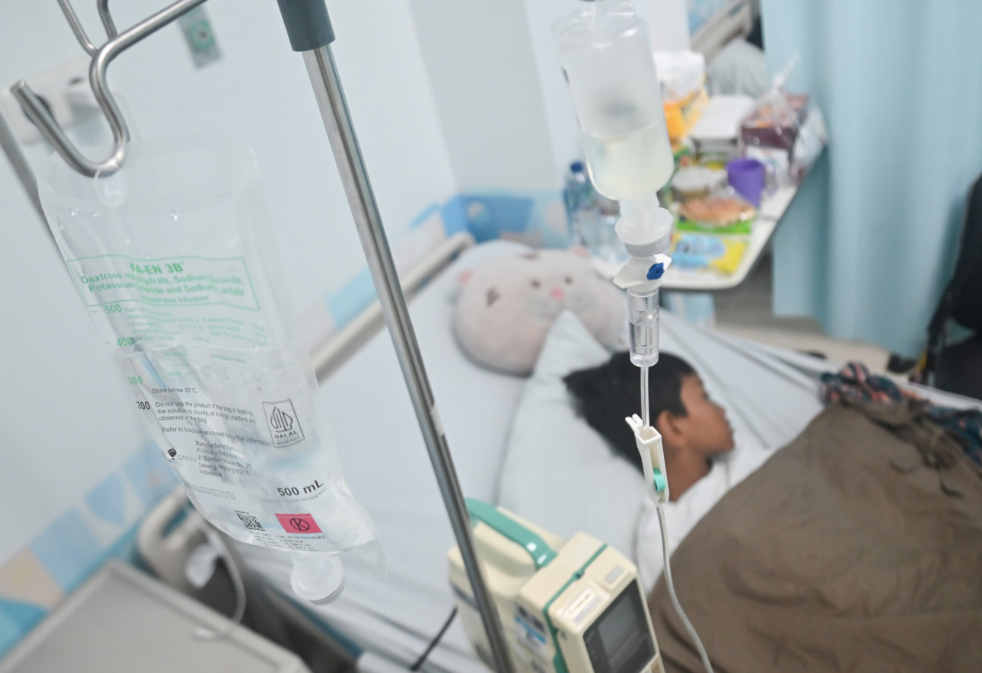
Fresh outbreaks of food poisoning among Indonesian schoolchildren have exposed persistent vulnerabilities in one of the nation's most ambitious social programmes, even as its new administrators attempt to salvage the initiative through sweeping reforms. The incidents, scattered across multiple provinces and affecting hundreds of students within a single week, underscore the formidable challenge of maintaining food safety standards across thousands of distributed meal points serving some of the country's most vulnerable populations.
In Sukabumi, West Java, the clearest evidence of operational failure emerged when 39 elementary schoolchildren at SDN Bojongkoneng became ill shortly after consuming lunches on Tuesday, July 28. Health officials documented a troubling timeline: meals arrived at 8:30am, students consumed them at 9am, and the first poisoning cases materialised at 9:30am—suggesting rapid contamination or ingredient degradation. The children experienced nausea, dizziness, and acute stomach pain severe enough to hospitalise one student. Subsequent investigation by the Sukabumi Health Agency revealed that expired milk, dated from June, had been included in the meal packages alongside rice, eggs, carrots, and corn. The discovery triggered a formal police investigation and food sampling for laboratory analysis, but the damage to public confidence was immediate and substantial.
The Sukabumi incident was neither isolated nor exceptional. Lampung province experienced two separate poisoning events within days. At SDN 22 Tegineneng in Pesawaran regency on July 24, 33 students and one teacher developed nausea, vomiting, and headaches after consuming meals featuring green bean porridge, bread, eggs, and fruit soup. Just two days earlier, neighbouring Tanggamus Regency had recorded another outbreak at SMPN 1 Talangpadang affecting eight junior high school students who suffered similar gastrointestinal symptoms. The pattern—multiple facilities, consistent symptom profiles, rapid onset—suggested systemic rather than isolated failures in food handling, storage, or ingredient quality assurance. Fitra Alfarisi, administrative head of the Nutrition Fulfillment Service Office overseeing Lampung's meal kitchens, acknowledged that at least two facilities had violated standard operating procedures, prompting operational suspensions that underscored the inadequacy of pre-incident oversight.
East Java reported the week's most alarming figures when 211 students from two schools became ill on July 23 after consuming stir-fried vegetables, tofu, eggs, and grapes. Kediri Health Agency officials initiated investigations while acknowledging they were still gathering basic data—a response that revealed how unprepared local health systems are for coordinating rapid assessment of large-scale food safety emergencies. These cascading incidents across geographically dispersed regions indicated that food poisoning was not a localised problem but rather a symptom of systemic weakness throughout the programme's supply chain and preparation infrastructure.
The broader pattern of failures has become impossible to ignore. The Network for Education Watch Indonesia documented that more than 33,600 students suffered alleged food poisoning from the programme's January 2025 launch through April alone—a figure suggesting the true scale of problems extends far beyond the recent incidents receiving media attention. These numbers implicate not merely individual kitchens or careless workers but rather fundamental governance and quality control mechanisms that have failed to function as intended across the entire national system.
The programme itself represents an ambitious attempt to address Indonesia's persistent stunting challenges, launched by President Prabowo Subianto on January 6, 2025, as a cornerstone initiative. Free nutritious meals for school-age children represent sound public health policy in principle, acknowledging the documented links between childhood nutrition and cognitive development, school attendance, and long-term health outcomes. Yet the programme's execution has been catastrophically compromised, transforming what should be a benefit into a source of physical harm and parental anxiety. The political dimension intensified sharply on June 3 when the Attorney General's Office arrested former National Nutrition Agency head Dadan Hindayana alongside deputies Sony Sonjaya and Lodewyk Pusung, alleging they had approved substandard kitchens, interfered with verification processes, and inflated procurement costs—suggesting that corruption rather than mere incompetence had undermined safety standards.
Newly appointed BGN head Sudaryono inherited an initiative haemorrhaging public trust while simultaneously attempting to demonstrate that systemic reform was possible. His response has been characterised by aggressive action designed to signal decisive leadership: nearly 900 kitchens out of 28,000 nationwide were shuttered, representing approximately 3% of the total network. The closures targeted facilities with hygiene violations, substandard operations, and inadequate wastewater infrastructure. Simultaneously, Sudaryono dismissed 261 employees, including 224 contract workers and 37 specialists, citing disciplinary violations ranging from online gambling to misconduct to suspected receipt of improper benefits. These moves conveyed urgency and accountability, yet their sheer scale also revealed how extensively the system had deteriorated under previous management and how limited oversight had been.
Sudaryono's governance overhaul extends beyond mere facility closures and personnel changes. On Wednesday, following the latest poisoning incidents, he convened meetings with ministers responsible for food, health, and education portfolios to pledge enhanced transparency mechanisms. The proposed system allowing parents direct access to meal menus represents a significant acknowledgment that institutional trust had collapsed sufficiently to require public monitoring. This innovation reflects both a practical response to legitimate safety concerns and an implicit admission that the agency could no longer guarantee food safety through internal processes alone. For Malaysian observers, this approach—leveraging parental oversight and digital transparency as mechanisms to substitute for inadequate institutional capacity—offers instructive lessons about the challenges of implementing large-scale welfare programmes in resource-constrained contexts.
For Southeast Asian nations contemplating similar large-scale school feeding initiatives, Indonesia's experience provides sobering evidence of implementation risks. The sheer scale of the programme—serving millions of students daily across thousands of distributed meal points—creates logistical complexity that centralised oversight struggles to manage. Each facility represents a potential point of failure, whether through poor hygiene practices, inadequate refrigeration, spoiled ingredients, or staff negligence. The involvement of corruption alongside operational failures suggests that no amount of administrative restructuring can fully compensate for the underlying challenge of establishing reliable quality control across geographically dispersed, lower-capacity facilities. Malaysia's comparable initiatives warrant examination for similar vulnerabilities, particularly in ensuring that meal quality standards remain consistent across all participating schools regardless of location or institutional capacity.
The timing of these fresh poisoning incidents—occurring during Sudaryono's tenure precisely when the public had been promised improved safety—represents a particular political liability. The perception that the programme remains dangerous even under reformed management threatens to crystallise public opposition that may outlast any specific administrative tenure. Parents face a genuine dilemma: withholding children from meals risks nutritional harm, yet feeding them through the government programme carries documented health risks. This bind between the programme's intended benefits and demonstrated harms creates a form of policy failure that extends beyond operational metrics into fundamental questions about whether the initiative can be salvaged or should be substantially restructured.
Longer-term resolution requires moving beyond reactive closures and dismissals toward preventative systems that address root causes. These include strengthening supply chain oversight, implementing mandatory food safety certification for all kitchen staff, establishing rapid-response laboratory testing protocols, and creating financial incentives for facilities that maintain excellent safety records over sustained periods. Until such systematic improvements embed food safety into the programme's fundamental operating procedures rather than treating it as a periodic crisis requiring emergency intervention, incidents of the scale occurring in July 2025 will likely recur. The stakes extend beyond institutional credibility; they involve the health of millions of children whose nutritional improvement remains necessary for Indonesia's development, but whose food safety cannot continue to be sacrificed in the process.

