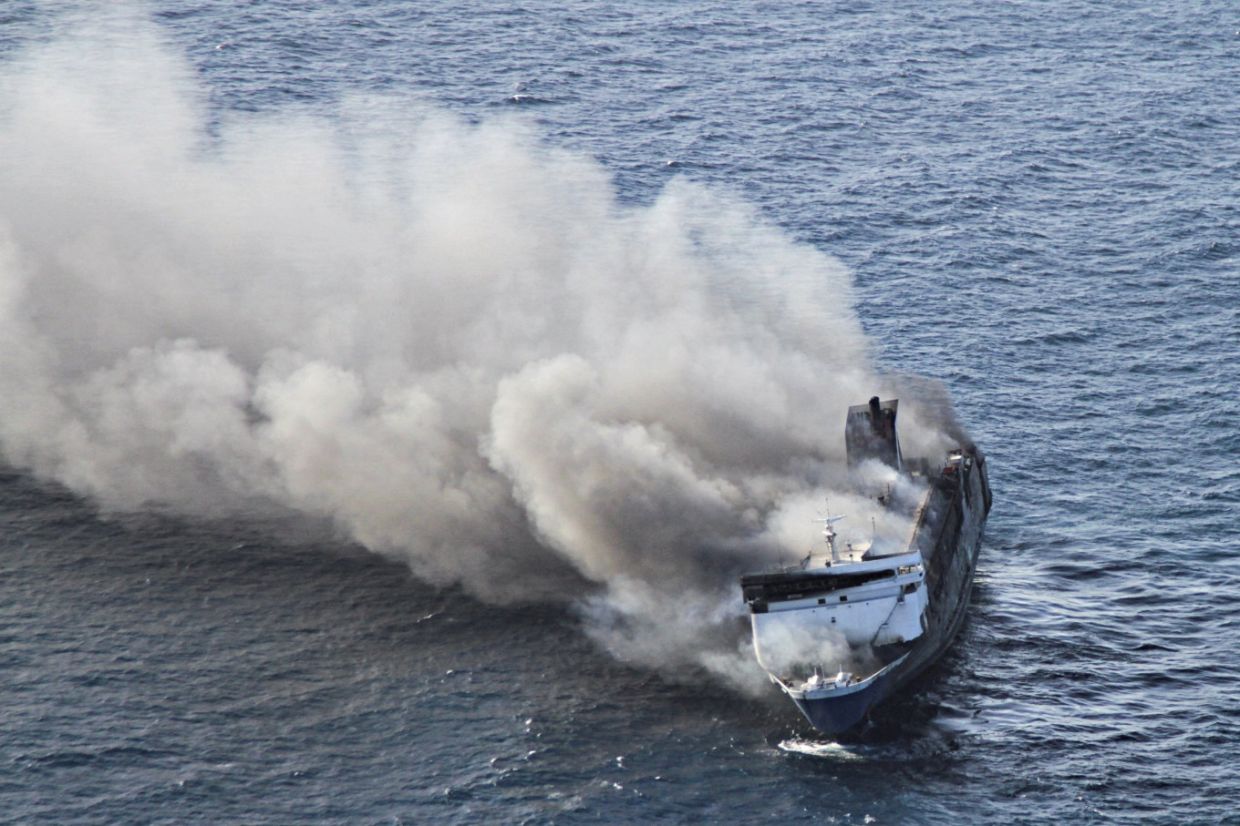
A passenger ferry engulfed in flames off the Madura coast in East Java on Sunday morning has rekindled urgent questions about the effectiveness of Indonesia's maritime safety regime. The KMP Mutiara Sentosa II, operating the Surabaya-to-Makassar route, caught fire around 6am on August 2 while carrying 236 passengers and 39 crew members, resulting in at least five confirmed deaths and two persons still unaccounted for. The disaster underscores a troubling pattern of regulatory failures in Southeast Asia's largest archipelago, where thousands of ferries and cargo vessels transport millions of people annually across treacherous waters.
Accounts from survivors paint a damning picture of how evacuation procedures failed at the moment they mattered most. Udin Karo Karo, chairman of the Makassar–Surabaya Truck Drivers Association, reported that crew members provided little to no guidance as panic spread through the 160-meter-long vessel. Approximately 40 percent of the drivers aboard managed to escape by their own efforts, far below the standard that maritime regulations demand. The absence of visible lifeboats or inflatable rescue rafts during the evacuation forced many passengers to leap into the sea wearing only life jackets, converting what should have been a controlled rescue operation into a desperate scramble for survival. These accounts suggest that either the vessel was inadequately equipped or that crew training had deteriorated to dangerous levels—or both.
What transforms this incident from a tragedy into a systemic warning is the operational history of PT Atosim Lampung Pelayaran, the company operating the ill-fated vessel. The same operator ran the KMP Mutiara Sentosa I, which caught fire near Madura on May 19, 2017, also claiming five lives. That a shipping company responsible for two major incidents within five years continues to operate passenger services raises fundamental questions about Indonesia's certification and monitoring mechanisms. Such repetition ought to trigger automatic suspension or intensive regulatory intervention, yet the company evidently retained its operational license despite the earlier catastrophe. The recurrence suggests that Indonesia's maritime authority lacks either the statutory power or the organizational will to impose meaningful consequences on repeat offenders.
Edi Priyanto, Deputy Chairman of the East Java Occupational Safety and Health Council, diagnosed a deeper malaise than mere technical mishap. He argued that the fire revealed systemic deficiencies in the operator's safety culture, organizational learning capacity, and risk management infrastructure. When identical vessel types operated by the same company burn within years of each other, the common denominator cannot be coincidence or bad luck—it points to institutional practices that tolerate unsafe conditions. Priyanto stressed that investigators should not limit themselves to pinpointing the fire's origin, but must examine why flames spread so rapidly and why emergency systems failed to contain the blaze or facilitate orderly evacuation. This diagnostic approach shifts the focus from incident-specific causation to organizational capability, a crucial distinction that separates superficial compliance from genuine safety governance.
Transportation Minister Dudy Purwagandhi acknowledged that a comprehensive evaluation of PT ALP would follow the National Transportation Safety Committee's investigation, but his cautious language suggested bureaucratic hesitation rather than decisive action. The minister noted that the company had been involved in at least two prior maritime accidents, yet he framed the government's response as awaiting findings rather than implementing preventative measures immediately. This sequential approach—investigate first, then evaluate—wastes valuable time when evidence of systemic danger is already visible. For passengers contemplating ferry travel on Indonesian routes, the interval between a disaster and regulatory response represents unacceptable exposure to known risks.
The context of this incident extends beyond a single company's failings. Just one month prior, a ferry carrying more than 70 passengers sank near Selayar island off South Sulawesi, killing at least four people and leaving 14 missing when search operations concluded. Within such a compressed timeframe, multiple fatal maritime disasters signal that isolated incident management is insufficient; the nation's entire regulatory architecture requires restructuring. Abdul Hadi, a House of Representatives member from Commission V on transportation and infrastructure, articulated this concern bluntly, characterizing the KMP Mutiara Sentosa II fire as a systemic warning rather than an anomaly. His statement reflects growing recognition among legislators that Indonesia's maritime safety cannot be remedied through incremental adjustments to existing protocols.
Hadi emphasized that safety inspections and certification procedures have deteriorated into administrative routines disconnected from genuine seaworthiness assessment. Seaworthiness certificates, he argued, should represent verified evidence that a vessel meets rigorous safety standards, not bureaucratic checkmarks obtained through perfunctory compliance. When inspections become formalities, they lose their protective function entirely; a certificate becomes meaningless paper rather than a guarantee of safety. For Malaysian and other regional passengers transiting Indonesian waters, this distinction carries immediate practical significance. An inspection regime that fails to identify missing lifeboats or inadequately trained crews endangers not only Indonesian nationals but all travelers using these routes.
The tragedy aboard KMP Mutiara Sentosa II exposes Indonesia's struggle to enforce maritime safety standards despite possessing formal regulations on paper. Indonesia is a signatory to international maritime conventions, including those administered by the International Maritime Organization, yet these international frameworks depend on national authorities for implementation and enforcement. When port state control mechanisms are weak, when vessel operators calculate that the costs of non-compliance remain manageable, and when regulatory agencies lack resources or political support to conduct thorough inspections, international standards become hollow aspirations.
For Malaysia and other Southeast Asian neighbors, Indonesia's maritime safety lapses carry regional implications. Indonesian-registered ferries occasionally operate cross-border routes, and cargo vessels registered in Indonesia traverse shared waterways. A breakdown in safety culture aboard Indonesian vessels creates hazards for passengers and crews regardless of nationality. Moreover, the patterns evident in Indonesia's maritime sector—weak enforcement, operator recidivism, inadequate emergency procedures—are not unique to that nation; they reflect challenges common across the region where maritime traffic volumes exceed regulatory capacity.
The investigation ahead must address not only the immediate cause of the August 2 fire but also structural failures in Indonesia's maritime safety governance. Why did PT ALP retain its operating license after the 2017 incident? What specific deficiencies did regulators identify, and why were they not remedied? How many other vessels operate with similar safety culture problems? These questions demand answers that penetrate beyond surface-level blame. Without genuine institutional reform—including adequate funding for inspectors, consequences that exceed merely suspending licenses, and mandatory safety management system audits—Indonesia will inevitably witness another catastrophe. For passengers dependent on ferry transportation across the archipelago, the stakes could not be higher.

