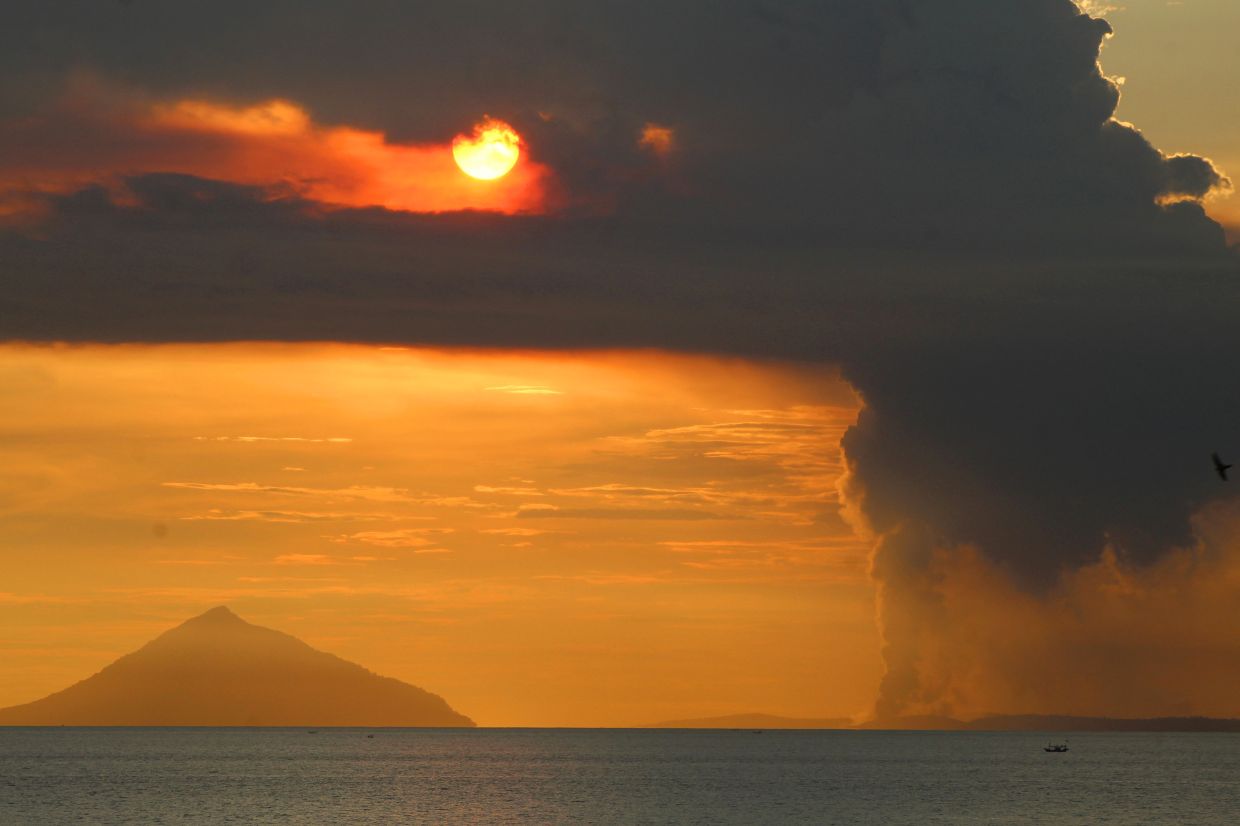
Mount Anak Krakatau, located in the Sunda Strait between Sumatra and Java, unleashed a significant eruption on Tuesday, July 7, with an ash column reaching 100 metres above the crater. The event, recorded at 8:21 a.m. local time, demonstrated the ongoing volatility of this young and historically active volcano. The Geological Agency of the Energy and Mineral Resources documented the eruption with precision, noting that seismic instruments registered a maximum amplitude of 11 millimetres with a duration of approximately 15 seconds, while a dense gray ash plume drifted toward the north-west from the crater opening.
The volcano's recent behaviour marks a dramatic shift from relative dormancy. Beginning June 10, Mount Anak Krakatau entered an active phase characterised by rapidly escalating tremors and low-frequency seismic events. Between June 18 and 19, monitoring stations recorded an average of more than 50 eruption tremors daily. As activity intensified through late June and early July, the frequency surged dramatically, with average daily events reaching 97 by July 2. This escalating pattern prompted Indonesia's geological authorities to take decisive action, upgrading the volcano's alert status from Level II (Alert) to Level III (Watch) on Friday, positioning it at the second-highest tier in the nation's four-tier volcanic alert system.
Andi Suwardi, head of the Mount Anak Krakatau Observation Post in South Lampung, emphasised that despite the escalating eruptions, the volcano's status remained at its previous level when he spoke on Tuesday. The distinction reflects Indonesia's structured approach to volcanic monitoring, where alert classifications depend on multiple factors beyond eruption frequency alone. Observation teams maintain constant vigilance, with 24-hour surveillance now standard protocol. Key metrics—ash plume altitude, seismic signatures, and tremor patterns—are continuously assessed to identify any dramatic shifts that might warrant further escalation or de-escalation of the alert status.
Authorising a three-kilometre exclusion zone around the volcano's crater, authorities have attempted to restrict human activity in the immediate danger area. However, the economic realities of communities dependent on fishing and tourism in the Sunda Strait have created tension between safety directives and livelihood needs. Some fishermen and tourism operators have persisted in venturing into restricted waters, employing tactics to evade monitoring. South Lampung Regent Radityo Egi Pratama acknowledged this challenge directly, appealing to local communities to temporarily abandon operations near the volcano. His statement recognised both the hardship caused by volcanic restrictions and the paramount importance of human safety, positioning the temporary prohibition as a necessary sacrifice rather than permanent prohibition.
The history of Mount Anak Krakatau provides crucial context for understanding current concerns. The volcano emerged from the sea in 1927, arising within the massive caldera created by the catastrophic 1883 eruption of Mount Krakatau, one of history's deadliest natural disasters. That explosion killed an estimated 36,000 people and sent atmospheric debris across the globe, affecting weather patterns and climate for years afterward. More recently, on December 22, 2018, Mount Anak Krakatau's partial flank collapse triggered a devastating tsunami that claimed at least 429 lives and injured over 7,200 people across southern Sumatra and western Banten. This tragic precedent underscores why authorities exercise extreme caution when volcanic activity accelerates.
For Malaysian readers and other Southeast Asian observers, Mount Anak Krakatau's activity carries regional significance. Located in the Sunda Strait, a critical shipping corridor between the Indian and Pacific Oceans, any major eruption could potentially affect maritime traffic and potentially influence coastal communities across the region. The volcano's position between two of Indonesia's most densely populated islands means that escalating activity demands international attention and cooperative monitoring. Furthermore, the tsunami risk demonstrated in 2018 has prompted regional interest in early warning systems and disaster preparedness protocols that extend beyond Indonesia's borders.
The scientific challenge of predicting Mount Anak Krakatau's behaviour remains substantial. Young volcanic systems like Anak Krakatau, which has existed for less than a century, often display erratic patterns that complicate forecasting. The volcano's activity since June 10 reflects this unpredictability—the sudden onset of elevated tremors without obvious precursor signals, combined with the fluctuating intensity of events, creates genuine uncertainty about future developments. Indonesian volcanologists continue to analyse real-time data, seeking patterns that might indicate whether the current phase will stabilise, intensify further, or decline over coming days and weeks.
The economic implications of the alert status elevation extend beyond fishermen and tourism operators in the immediate vicinity. The Sunda Strait region supports various maritime industries, and restrictions affecting vessel movements near the volcano could ripple through broader trade networks. Temporary displacement of fishing communities and tourism workers represents real hardship, particularly in rural areas where alternative income sources remain limited. Yet authorities and local officials have articulated a unified message: safety transcends economic considerations, particularly given the destructive precedent of the 2018 tsunami and the 1883 eruption's historical impact.
Looking forward, monitoring teams face the crucial task of detecting whether current volcanic activity will stabilise or escalate further. The gap between Level III (Watch) and Level IV (Danger) represents a critical threshold that would trigger even stricter evacuation procedures and broader restrictions. Continued surveillance of seismic patterns, gas emissions, and ground deformation will provide essential data for determining whether alert levels require adjustment. International volcanological networks have expressed solidarity with Indonesian monitoring efforts, reflecting the shared interest in tracking this strategically significant volcano.

