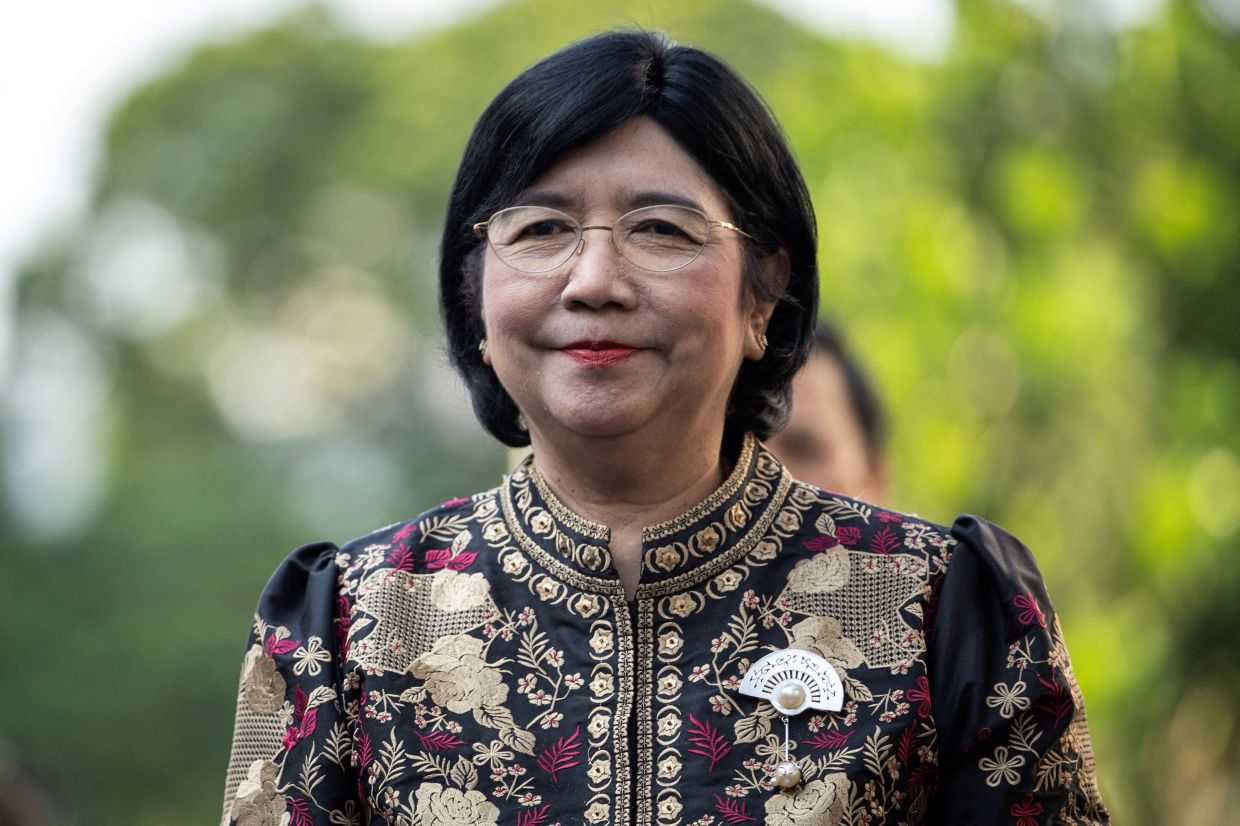
President Prabowo Subianto has formally nominated Destry Damayanti as the exclusive candidate to lead Bank Indonesia, according to a statement issued by the presidential office on Monday. The move comes after the abrupt resignation of previous governor Perry Warjiyo, who stepped down in late November citing personal circumstances. Destry, who holds the position of senior deputy governor and has been steering the institution in an interim capacity, now faces parliamentary review before assuming the top role.
The financial markets have reacted positively to the announcement, with the rupiah strengthening against the United States dollar to its most robust position since June 18th. This currency appreciation reflects investor sentiment that Destry's appointment signals continuity and stable monetary policy management at the central bank. The nomination has effectively resolved a period of uncertainty that had unsettled financial markets since Warjiyo's departure, as investors sought clarity about the institution's future direction and leadership priorities.
Destry has held the senior deputy governor portfolio since 2019, making her the second-highest ranking official within Bank Indonesia's organisational structure. Her elevation to the top position represents a natural progression within the institution's hierarchy and suggests the government is pursuing institutional stability rather than introducing radical policy shifts. The fact that she has been acting as interim governor during the transition period means market participants have had an opportunity to assess her operational approach and decision-making style.
The confirmation process now moves to parliament, which is dominated by Prabowo's broad coalition of political parties. Constitutional rules grant the legislature one month to deliberate on the nominee and render a decision. Historically, this approval stage has proven largely procedural, with parliament not rejecting a sitting president's gubernatorial nominee since 2008. This precedent suggests Destry's confirmation is highly probable, barring any unforeseen circumstances or revelations that might trigger legislative opposition.
The timing of the nomination matters significantly for Indonesia's economic standing. The country has experienced a notable erosion in investor confidence over recent months, driven by multiple concerns that have made the G20 economy increasingly vulnerable to capital outflows. Beyond the central bank leadership question, foreign investors have grown anxious about the government's fiscal management practices, the credibility of monetary policy independence, institutional transparency at the equity market regulator, and broader geopolitical risks stemming from Middle East tensions.
Warjiyo's departure had amplified these concerns considerably, raising questions about whether the central bank could maintain its operational autonomy under the new administration. This anxiety is particularly acute because Bank Indonesia faces competing pressures that require deft management. The institution must simultaneously support the president's economic growth agenda—which targets an acceleration to 8 percent annually from the current five percent level—whilst maintaining inflation control and supporting the rupiah's stability. These objectives are not always compatible, and balancing them requires both technical expertise and institutional independence.
Under Warjiyo's tenure, Bank Indonesia implemented a series of measures aimed at stabilising the rupiah and attracting capital inflows. The central bank increased its benchmark interest rate by a cumulative 100 basis points during the current year, introduced incentive structures for rupiah hedging transactions, and issued high-yielding short-term securities to encourage foreign investors to channel funds into the Indonesian market. These mechanisms attempted to prevent further currency depreciation whilst acknowledging the broader economic environment.
Destry will inherit this complex landscape and must quickly establish confidence that she can navigate the tensions between supporting growth and maintaining macroeconomic stability. Her background as a long-serving deputy governor suggests familiarity with the institution's institutional constraints and technical capabilities. However, her first months in office will be scrutinised closely by both international investors and domestic stakeholders seeking assurances about central bank independence.
For Malaysia and other Southeast Asian economies, Indonesia's central bank leadership transition carries regional significance. As the largest economy in the region, Indonesian monetary policy decisions ripple across ASEAN financial markets, affecting currency movements, capital flows, and economic coordination. A well-functioning and credible Bank Indonesia is essential for regional economic stability. Investors will be watching whether Destry can rebuild the confidence that has eroded over recent months and demonstrate that the central bank retains the autonomy to make decisions in the interest of financial stability rather than solely in service of government growth targets.
The nomination process also reflects broader questions about institutional governance in Indonesia under the Prabowo administration. The new president has signalled aggressive growth ambitions and a more active role for the state in economic management. How the central bank navigates these expectations whilst maintaining its mandate for price stability and financial system integrity will set important precedents for other institutions. Destry's appointment represents an opportunity for the Prabowo government to demonstrate commitment to institutional professionalism, even as it pursues more expansionary economic policies.

