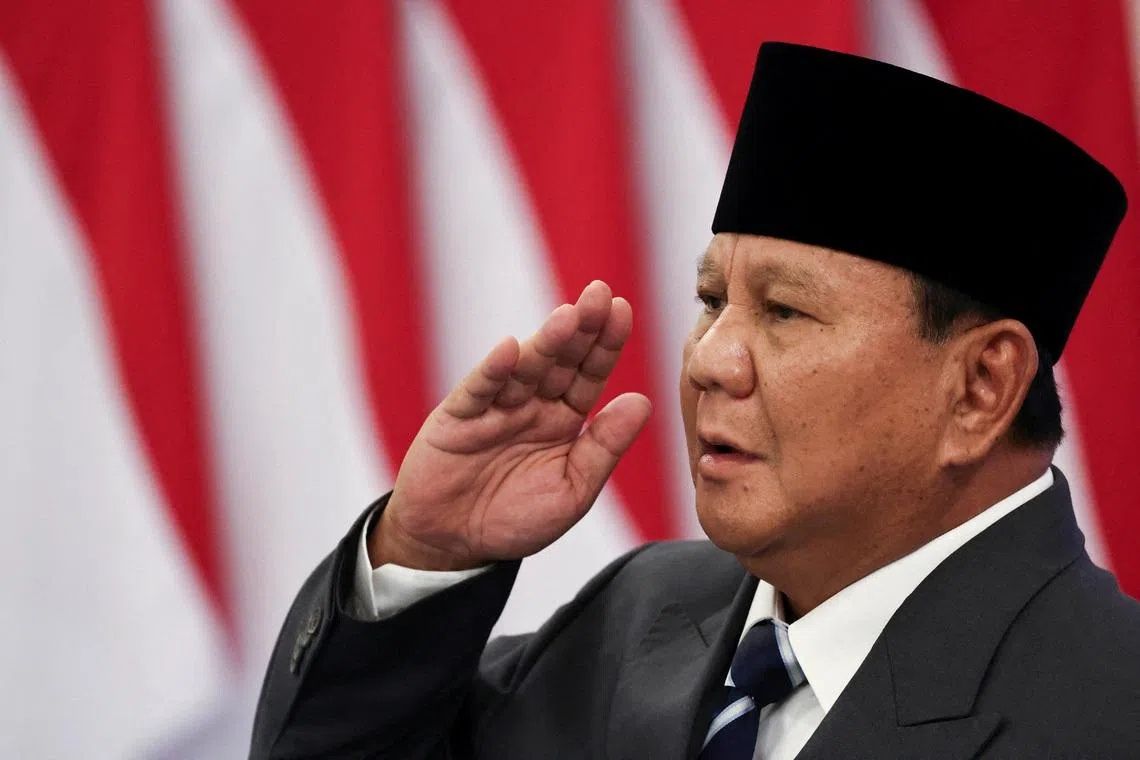
Indonesia's human rights commission has moved to halt military-led training for prospective managers within President Prabowo Subianto's flagship Red and White Cooperatives initiative, following the deaths of five participants just ten days into a planned 45-day military course that began on June 14. The deaths, which occurred between June 17 and June 26, have triggered sharp questions about the appropriateness of integrating military instruction into what officials describe as a civilian economic development programme designed to establish approximately 80,000 village cooperatives nationwide.
The Red and White Cooperatives programme, launched in July of the previous year, stands as a centrepiece of Prabowo's economic strategy, targeting the creation of employment opportunities and supporting the government's ambitious objective of achieving 8% economic growth by 2029. These cooperatives are intended to operate as grassroots commercial entities, offering essential household goods, subsidised cooking gas, and agricultural inputs such as fertiliser to rural communities. The initiative reflects a broader approach to economic development through localised cooperative structures rather than larger commercial enterprises, positioning village-level organisations as engines for economic participation and job creation.
The military training component involves nearly 35,000 future cooperative managers across several regional military training facilities, raising fundamental questions about whether such instruction serves a legitimate purpose within an economic development framework. Pramono Ubaid Tantowi, a senior official at the human rights commission, articulated this concern explicitly, noting that cooperatives operate fundamentally as economic institutions centred on business management, member services, and organisational governance—areas for which military training provides no direct pedagogical benefit.
Defence Ministry officials sought to contextualise the deaths as resulting from pre-existing medical conditions rather than training methodology itself. Major General Ketut Gede Wetan, heading the ministry's human resource development division, reported that the five fatalities stemmed from diverse causes including cardiac arrest, heat stroke, tuberculosis, and pneumonia. The ministry maintained that all participants underwent medical screening before enrollment and that all received clearance to participate, suggesting the deaths reflected underlying health vulnerabilities rather than negligence in training administration.
However, the rights commission has rejected this explanation, arguing that the military training approach fundamentally misaligns with cooperative development objectives. Rather than combat proficiency or physical conditioning, the commission contends that cooperative managers require strengthened competencies in business administration, leadership development, and financial literacy—competencies entirely distinct from military instruction. This technical argument strikes at the heart of the programme's design philosophy, questioning whether military involvement represents a legitimate governance approach or an overreach of armed forces authority into civilian economic space.
In response to mounting criticism, the Defence Ministry announced plans for comprehensive evaluation procedures, incorporating enhanced health monitoring systems, early identification protocols for participants with medical vulnerabilities, and adjusted activity intensity levels. The ministry also signalled increased collaboration with the Health Ministry, suggesting recognition that the current framework requires modification to address participant safety. These measures appear reactive rather than proactive, implemented only after fatalities rather than as precautionary safeguards embedded in initial programme design.
The human rights commission has simultaneously demanded criminal investigation into the deaths, urging police to commission forensic autopsies to establish precise causation and determine whether criminal liability attaches to any ministry officials or medical personnel. This escalation from administrative criticism to potential criminal inquiry indicates that the commission views the fatalities not merely as isolated medical incidents but as potentially preventable deaths that warrant prosecutorial scrutiny and potential accountability measures.
Prabowo's expanded incorporation of military personnel into civilian governance structures—evident not only in the cooperatives programme but across multiple government initiatives—reflects a distinctive approach to executive authority since his 2024 assumption of the presidency. The former general's background in military affairs has translated into policies that blur traditional boundaries between defence and civilian administration, with armed forces involvement extending into economic development, infrastructure projects, and social programmes. This pattern has generated debate within Indonesian civil society about appropriate military roles within democratic governance frameworks.
For Malaysia and other Southeast Asian nations observing Indonesian policy developments, the cooperatives controversy illustrates broader tensions between military institutional interests and civilian-led development priorities. The incident raises questions about how countries balance security sector involvement in development initiatives against the principle that economic and social programmes function most effectively under civilian technical expertise. Malaysia's own experience with cooperative movements and rural development suggests that sustainable economic outcomes emerge through focused training in business skills, market access, and financial management rather than through military discipline frameworks.
The diplomatic implications extend beyond Indonesia's borders, as regional governance observers assess whether militarised approaches to cooperative development represent a viable model or a cautionary example. The focus on protecting participant safety while maintaining programme objectives reflects universal concerns about duty of care in training environments, particularly when governmental authority compels participation. For Southeast Asian nations developing rural economic initiatives, the Indonesian experience underscores the importance of evidence-based programme design, appropriate personnel selection, and professional training methodologies aligned with substantive programme objectives rather than organisational preferences.
The continuing investigation into these deaths will likely produce recommendations affecting not only the cooperatives programme but potentially Prabowo's broader strategy of military integration into civilian governance. Whether the Defence Ministry successfully implements remedial measures or whether political pressure forces structural programme redesign remains uncertain, but the human rights commission's intervention signals that civil society institutions retain capacity to scrutinise executive policies and demand accountability for outcomes affecting ordinary Indonesian citizens participating in government-sponsored initiatives.

