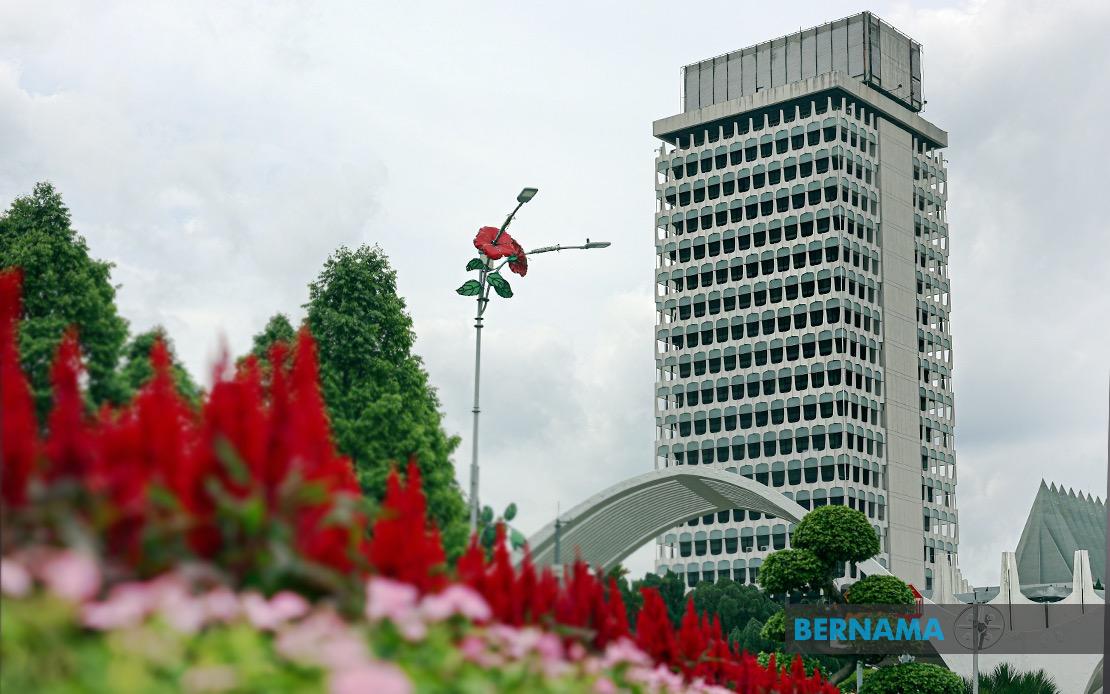
Parliament resumed its sitting on July 15 with lawmakers primed to scrutinise three major challenges confronting the nation: persistent internet service disruptions despite strong signal indicators, the fiscal implications of Middle Eastern tensions on Malaysia's fuel subsidy programme, and financial inclusion for non-traditional workers seeking home ownership. The parliamentary agenda reflects mounting public frustration with digital infrastructure reliability alongside deepening concerns about how regional instability could strain the government's fiscal commitments.
The communications sector will face particular pressure during question time when GPS parliamentarian Datuk Anyi Ngau raises concerns about a perplexing technical failure affecting Malaysian consumers and businesses. The issue involves mobile devices displaying full signal strength while users experience complete internet unavailability, a phenomenon that suggests deeper structural problems within network infrastructure or service provisioning rather than simple coverage gaps. Anyi Ngau will specifically demand that the Communications Minister detail the Malaysian Communications and Multimedia Commission's roadmap for identifying and resolving this disconnect between signal indicators and actual service delivery, a distinction that has clearly escaped previous government attention.
The fuel subsidy trajectory has become substantially more precarious as geopolitical tensions escalate in West Asia, directly threatening Malaysia's budgetary planning for the current financial year. PN backbencher Mohd Syahir Che Sulaiman will push the Finance Minister to provide the government's latest assessment of how the ongoing conflict affects global oil prices and, consequently, Malaysia's subsidy commitments. This line of questioning cuts to the heart of fiscal sustainability; rising subsidy costs could derail the year's deficit reduction targets, forcing difficult policy choices between maintaining the subsidy cushion for consumers or accepting larger budget shortfalls that complicate debt management and credit ratings.
The subsidy question carries particular weight for Malaysia because the nation maintains one of Asia's most generous fuel subsidy regimes, designed to shield lower and middle-income households from petroleum price volatility. However, this protection comes at enormous cost to government finances, particularly when international crude prices spike due to supply disruptions or regional conflicts. Analysts watching Parliament will focus intently on how candid the Finance Minister becomes regarding scenarios where subsidy expenditure overshoots projections, as this transparency directly influences bond markets and investor confidence in Malaysia's economic management.
Parallel to these macro-economic concerns, lawmakers will confront the growing challenge of financial inclusion for Malaysia's expanding informal workforce. Jamaludin Yahya from Pasir Salak will interrogate the Finance Minister about mechanisms enabling self-employed individuals, petty traders, street hawkers, and gig economy workers to access home financing without conventional salary documentation. This demographic faces a fundamental banking paradox: their income is genuine and often substantial, yet the absence of formal payslips renders them ineligible for conventional mortgage products, effectively locking them out of property ownership despite financial capacity.
The rise of gig economy participation across Southeast Asia, including Malaysia, has created a growing cohort of economically productive citizens whom traditional financial systems inadequately serve. Home ownership represents both a wealth-building opportunity and a social stability anchor, yet conventional lending criteria exclude these workers despite their increasing economic significance. The government's response to this question will signal whether policymakers recognise the gig economy as a permanent structural feature of modern Malaysian employment or continue treating it as a temporary phenomenon unworthy of regulatory innovation.
Women, Family and Community Development will also face parliamentary scrutiny regarding confinement centres, the facilities where postpartum women traditionally recover under managed care regimens. Puchong MP Yeo Bee Yin will seek clarification on whether the government has progressed toward establishing comprehensive regulatory frameworks and enacting legislation specifically governing these establishments. Confinement centres currently operate in a semi-regulated space, raising questions about hygiene standards, practitioner qualifications, and consumer protection mechanisms. As these facilities become increasingly commercialised and proliferate across urban areas, the absence of clear statutory oversight creates potential public health vulnerabilities and consumer fraud opportunities.
Following the question and answer session, Parliament will advance to the substantive legislative agenda by tabling two communications-sector bills for second reading. The Communications and Multimedia (Amendment) Bill 2026 and the Malaysian Communications and Multimedia Commission (Amendment) Bill 2026 represent the government's first major legislative intervention in this portfolio since their introduction for first reading on July 13. The timing of these bills alongside internet connectivity questioning suggests Parliament recognises that existing legislative and regulatory frameworks may inadequately address contemporary digital infrastructure challenges.
The current parliamentary sitting extends through July 16, providing a compressed 16-day legislative window for debating and potentially passing multiple bills while managing ministerial accountability through question time. This compressed schedule reflects Malaysia's parliamentary calendar, which traditionally features shorter sitting periods dispersed across the year rather than extended continuous sessions. The concentration of multiple policy pressures within a single sitting—digital infrastructure, fiscal sustainability, financial inclusion, and public health regulation—illustrates the interconnected nature of contemporary governance challenges that resist neat categorisation into isolated policy domains.
For Malaysian business and consumer constituencies, Parliament's focus on internet reliability carries immediate practical implications, particularly for the growing digital economy that increasingly depends on consistent connectivity for everything from e-commerce to teleworking arrangements. Similarly, the fuel subsidy discussion will influence petrol prices and inflation trajectories that affect household budgets across income levels. The gig worker financing question opens a window onto whether policymakers understand that traditional employment structures no longer dominate Malaysian economic participation, requiring corresponding updates to financial services architecture.

