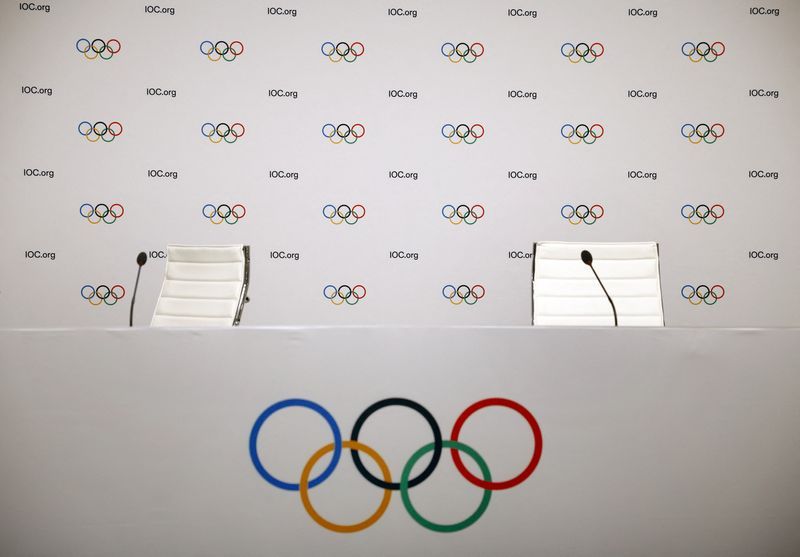
The International Olympic Committee is poised to vote on substantial modifications to the Olympic Charter during its June 24 session in Geneva, seeking to embed stronger language around political neutrality within international sporting competitions. The proposed amendments would explicitly reinforce the principle that sport must operate independently from governmental, cultural, societal and economic pressure, positioning the IOC as the principal guardian of this neutrality across all Olympic activities and decision-making processes. Officials argue these changes are essential safeguards designed to insulate athletes and competitions from external manipulation and to prevent the Olympic Games from becoming a vehicle for advancing political agendas.
Yet the timing and framing of these neutrality reforms has triggered considerable controversy among sports governance observers, particularly given the geopolitical circumstances surrounding Russia's complicated relationship with the Olympic movement. Advocacy groups and transparency advocates perceive these amendments less as neutral technical adjustments and more as a potential mechanism to facilitate Russia's rehabilitation within international sports without requiring it to satisfy the concrete conditions currently restricting its participation. The move reflects a broader tension within the IOC between embracing inclusive sporting values and maintaining principled positions on conduct violations.
Russia's complicated Olympic history provides essential context for understanding why these Charter modifications have become so contentious. The nation remains entangled in multiple accountability issues stemming from the systematic state-backed doping programme exposed in connection with the 2014 Sochi Winter Games, sanctions that have persisted as a lingering consequence of that scandal. Additionally, the IOC recommended in 2022 that both Russian and Belarusian athletes face competition bans following the invasion of Ukraine, a geopolitical intervention that fundamentally altered the sports landscape and prompted the Olympic body to take ostensibly principled stances.
The Russian Olympic Committee itself was formally suspended in October 2023 after it recognised regional Olympic councils operating in Russian-occupied Ukrainian territories, a move the IOC determined violated both the Olympic Charter and Ukraine's territorial integrity. This suspension represented an escalation in consequences, suggesting the Olympic movement was serious about enforcing constitutional principles and respecting national sovereignty. Yet subsequent IOC decisions suggest a gradual shift toward de-escalation and reintegration.
Despite the official suspension, the IOC has already begun implementing measures that suggest a pathway toward easing restrictions on Russian participation. In December, the Olympic body announced that Russian and Belarusian youth athletes should be permitted to return to international competitions without restrictions, representing a meaningful first step toward normalisation. This decision particularly benefits young athletes who had little involvement in doping conspiracies or geopolitical decisions, yet it simultaneously signals potential receptiveness to broader reintegration.
The trajectory became even clearer last month when the IOC lifted all restrictions on Belarusian athletes, a move that explicitly cleared the way for their participation in international events and qualifiers leading toward the 2028 Los Angeles Olympics. However, the IOC was notably careful to specify that this lifting of restrictions would not automatically extend to Russian athletes, suggesting the Committee recognises meaningful distinctions between the two nations' Olympic standing. Nevertheless, observers have begun speculating that analogous decisions regarding Russian athletes could emerge within coming months, particularly if the Charter neutrality amendments pass.
Rob Koehler, director general of Global Athlete, an international advocacy organisation focused on athlete welfare and governance, articulated the core concern with exceptional clarity. He warned that the proposed reforms risk fundamentally undermining the Olympic movement's credibility by appearing to signal that warfare, systematic doping programmes and repeated Charter violations no longer constitute genuine barriers to full international sporting participation. This critique strikes at the heart of whether the IOC maintains enforceable standards or whether neutrality rhetoric ultimately obscures selective application of rules.
The IOC's legal affairs commission has been actively reviewing information regarding the Russian Olympic Committee while simultaneously examining Russia's anti-doping systems, with investigations conducted by the World Anti-Doping Agency continuing to generate concerns about compliance. This parallel process suggests the Committee is not ignoring accountability mechanisms entirely, yet the pace of these reviews appears considerably slower than the momentum toward reintegration. The opacity surrounding these examinations makes it difficult for external observers to assess whether genuine progress toward improved governance is occurring.
Russia's sports ministry and the ROC leadership, under chairman Mikhail Degtyarev, have made their intentions unmistakable. Degtyarev stated in April that Russian authorities were undertaking comprehensive efforts to ensure the national team's full return to international competitions under the Russian flag, indicating that reintegration remains a strategic priority for the Kremlin. Vladimir Putin himself commented in April that he anticipated a fresh approach from the IOC's new leadership, suggesting Russia views recent leadership transitions as potentially favourable to its sporting rehabilitation.
Beyond the Russia situation, the proposed Charter amendments would also remove the fixed list of international federations from Olympic governance documents, granting the IOC substantially greater discretionary power to shape the Olympic programme based on criteria including cost, logistics and global appeal. This operational flexibility could allow the Committee to respond more dynamically to changing sporting landscapes, yet it simultaneously concentrates decision-making authority within the IOC while potentially reducing structured athlete and federation input into programme composition.
For Southeast Asian nations and their athletes, these developments carry meaningful implications. Should Russia secure full reintegration under a neutrality-focused framework, it could establish precedents affecting how the IOC addresses future geopolitical conflicts involving other sporting nations. Additionally, the increased IOC flexibility regarding sport selection could influence which Asian disciplines receive Olympic recognition and resources. Malaysia and regional peers should monitor these Charter amendments closely, as they reshape the institutional architecture governing international Olympic participation.
The Charter vote scheduled for June 24 will reveal whether the Olympic movement genuinely intends to reinforce neutral principles or whether it is creating institutional justification for selective reintegration of powerful sporting nations. The distinction between these outcomes will significantly influence the Olympics' credibility as an apolitical sporting institution and determine whether consequences for violations remain meaningful or become increasingly negotiable.