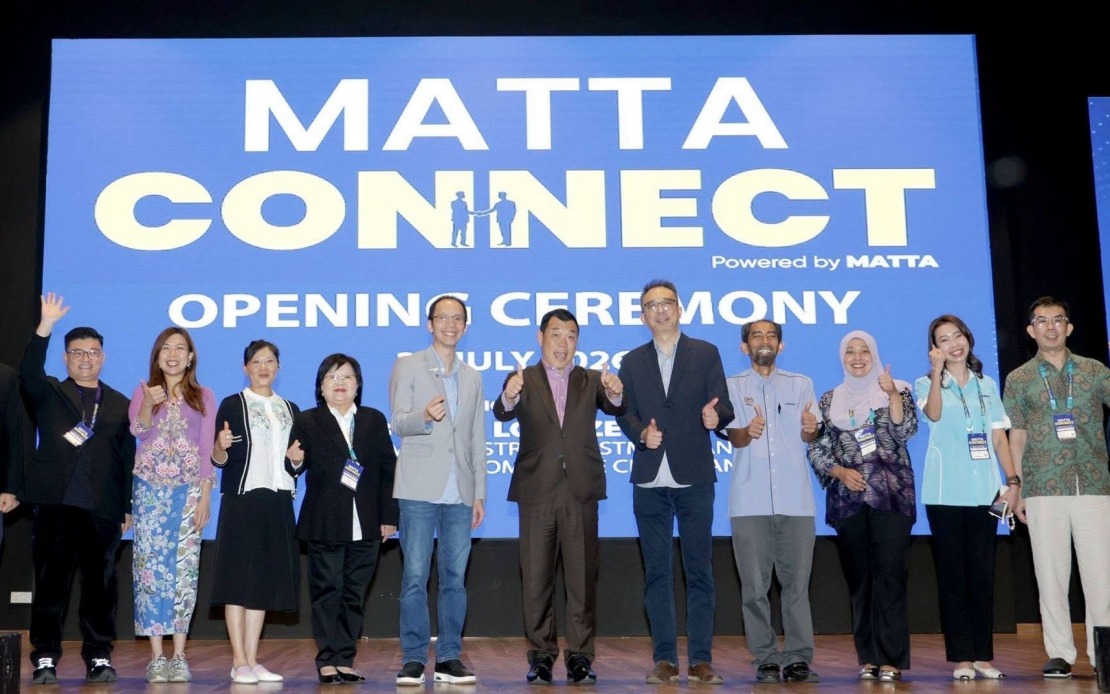
The selection of Ipoh to host MATTA Connect 2026 represents a deliberate pivot in Malaysia's tourism strategy, signalling that premier international events need not remain anchored to the capital or established metropolitan centres. This choice carries symbolic weight, challenging the conventional assumption that only Kuala Lumpur possesses the infrastructure and appeal to attract global tourism stakeholders. Tourism, Arts and Culture Minister Datuk Seri Tiong King Sing, whose remarks were delivered by Deputy Minister Chiew Choon Man at the event's closing dinner, emphasised that Perak's selection reflects genuine institutional confidence in the state's capacity to compete on the international stage whilst simultaneously showcasing lesser-known Malaysian destinations to the world's tourism industry.
The strategic importance of hosting such events in secondary cities extends beyond mere ceremony or symbolic gestures. When international buyers and tourism operators travel to Ipoh for MATTA Connect, they engage with the destination through lived experience rather than sales presentations alone. They occupy hotel rooms, patronise local restaurants, visit heritage sites, and interact with communities—transactions that generate immediate economic activity whilst building authentic commercial relationships. This ground-level exposure becomes the foundation upon which future travel package development rests, as international tour operators who have personally experienced Perak's offerings become natural advocates for the destination within their home markets.
Perak's tourism portfolio is demonstrably diverse and substantial. The state encompasses Royal Belum, one of Southeast Asia's oldest rainforests, and Lenggong Valley, a UNESCO World Heritage Site recognised for its archaeological significance and natural splendour. Ipoh itself carries historical resonance as a colonial-era city, whilst nearby Kuala Kangsar embodies royal heritage. The beaches of Pangkor Island provide coastal attractions, and the state's limestone cave systems remain globally significant geological formations. Beyond these flagship destinations, Perak has cultivated a culinary reputation that reaches international audiences, whilst its adventure tourism, ecotourism, and community-based initiatives address contemporary traveller preferences for authenticity over mass-market experiences.
This diversification responds to a fundamental shift in global tourism demand. Travellers increasingly seek genuine cultural encounters, natural environments, and locally-rooted experiences rather than standardised resort-based holidays. Perak's attractions align precisely with this trajectory, yet they remained underexposed to international market decision-makers prior to platforms like MATTA Connect. The event functions as an accelerator, compressing the timeframe required for international tourism professionals to develop confidence in these destinations and translate familiarity into commercial offerings.
The Visit Malaysia 2026 campaign provides the overarching framework within which MATTA Connect operates. Rather than concentrating tourism growth within established metropolitan hubs—Kuala Lumpur, Penang, Melaka, Langkawi, and Sabah—the campaign explicitly targets more equitable geographic distribution of tourism revenues and visitor flows. This reflects both economic logic and spatial justice concerns. Concentrating tourism activity in established centres generates congestion, infrastructure strain, and environmental pressures whilst limiting opportunities for peripheral states to develop economically through tourism receipts. Dispersal strategies create multiplier effects across broader regions, distribute employment more widely, and reduce vulnerabilities to over-dependence on particular destinations.
For Malaysia specifically, decentralised tourism growth carries particular relevance. The country's tourism sector substantially contributes to foreign exchange earnings and employment, yet the concentration of international visitor flows in a handful of destinations masks significant potential in secondary cities and regions. Perak historically underperformed in international visitor arrivals relative to its asset base, partly because international travel intermediaries lacked familiarity with offerings beyond established circuits. MATTA Connect physically embeds Perak into those intermediaries' mental maps and operational considerations, converting latent competitive advantages into market-recognised attractions.
The ministry's commitment to infrastructure strengthening, product enhancement, and intensified international promotion represents the essential complement to hosting MATTA Connect. An event that generates international interest must be followed by sustained investment in destination readiness. Enhanced transport connectivity, improved accommodation standards, professional tourism management, and quality control mechanisms ensure that international visitors and operators who commit to Perak deliver successful experiences that generate repeat business and word-of-mouth endorsement. Without such follow-through, even successful events generate interest that dissipates without commercial translation.
Cross-stakeholder collaboration emerges as critical to realising MATTA Connect's potential. The Perak state government, Tourism Perak, industry associations, hotel operators, attraction management bodies, and community organisations must align efforts towards coherent destination branding and experience delivery. Fragmented or competing messaging dilutes impact, whilst siloed development fails to generate the integrated product ecosystem that international operators require. Platforms like MATTA Connect facilitate the trust-building and relationship development necessary for such coordination, creating spaces where industry professionals share market intelligence and identify collaborative opportunities that individual organisations lack incentive to pursue alone.
The broader implications for Southeast Asia merit consideration. Regional tourism remains concentrated in established destinations such as Bangkok, Singapore, and Bali, with secondary cities struggling for international recognition despite substantial attractions. Malaysia's explicit strategy to develop alternative destinations through events like MATTA Connect provides a template potentially applicable across the region. It demonstrates that competitive tourism intermediaries can be brought to unfamiliar destinations through well-organised, professionally executed events, and that first-hand destination experience proves more persuasive than conventional marketing. Other Southeast Asian nations facing similar geography-of-tourism concentration challenges might observe Malaysia's approach with strategic interest.
The Ipoh event also reflects maturation in Malaysian tourism governance. Rather than assuming tourism growth automatically concentrates in capitals, policymakers actively engineer alternatives. This requires confidence that secondary cities possess genuine competitive advantages worth developing, sophisticated understanding of international tourism market dynamics, and political will to redirect promotional resources. The decision to host a marquee tourism industry event outside the capital demands institutional support that transcends typical capital-city promotional bias.
Moving forward, success will be measured not merely by event attendance or immediate post-event publicity, but by observable changes in international travel itineraries and tour operator product portfolios. If international operators genuinely incorporate Perak destinations into regularly marketed packages, and if visitor arrivals from MATTA Connect participating countries increase measurably, the event will have justified its strategic placement. Conversely, if interest peaks at the event itself without subsequent commercial translation, MATTA Connect becomes a pleasant gathering rather than a transformative market intervention.
The hosting of MATTA Connect in Ipoh ultimately represents tourism policy as spatial redistribution strategy. It acknowledges that natural and cultural endowments exist across Malaysia, but require deliberate institutional action and market engineering to achieve economic realisation. By bringing international decision-makers to Perak rather than expecting them to seek out the state independently, Malaysia amplifies the visibility of destinations that commercial forces alone might overlook. This approach combines pragmatic recognition of market failures with constructive intervention designed to unlock genuine but latent competitive advantages, positioning Malaysia's tourism sector for more geographically balanced and resilient growth.

