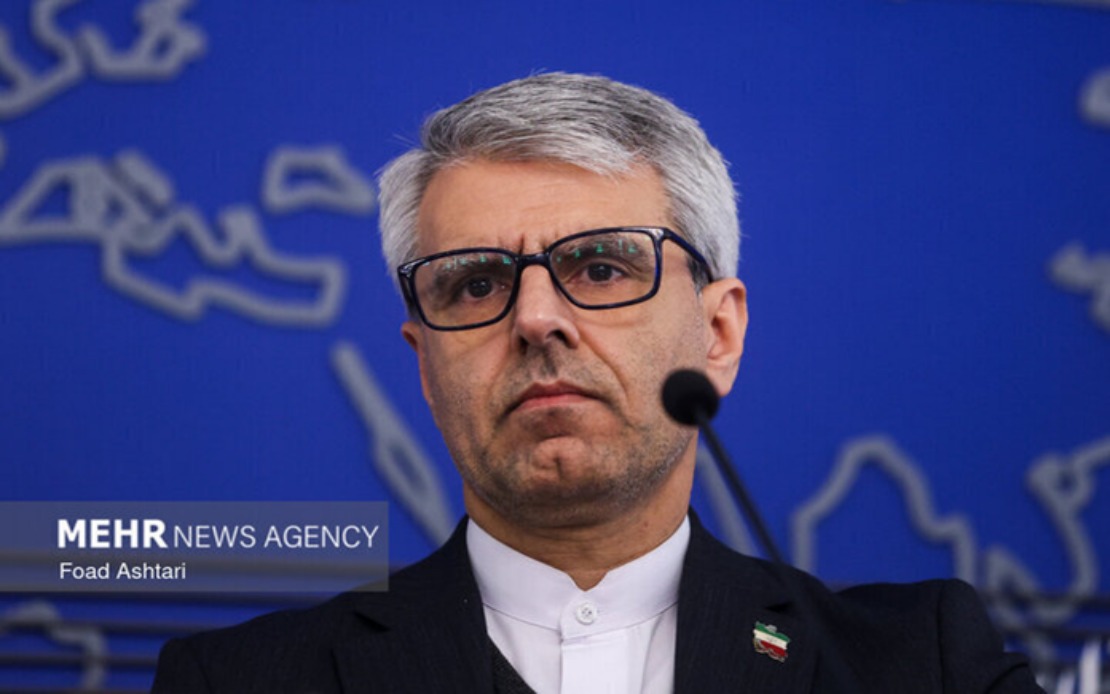
Iran and Oman have pledged to sustain coordinated discussions aimed at developing a shared framework for maintaining safe passage through the Strait of Hormuz, one of the world's most strategically vital waterways. The commitment emerged following high-level talks in Muscat on Saturday, when Iranian Foreign Minister Abbas Araghchi travelled to the sultanate to address mounting tensions surrounding the critical shipping corridor. Iranian Foreign Ministry spokesman Esmaeil Baghaei confirmed on Sunday that both nations intend to engage in multilayered consultations spanning political, legal, and technical dimensions to forge common ground on navigation security.
The diplomatic initiative carries particular significance given the volatile regional environment. Iran's Islamic Revolutionary Guard Corps had previously announced intentions to close the Strait of Hormuz, declaring that no vessels would transit through the channel until United States interference in the region ceases. Such rhetoric underscores the intensity of escalating hostilities between Tehran and Washington, with Israeli military operations against Iran further complicating the security landscape. The strait, which connects the Persian Gulf to the Gulf of Oman, facilitates passage of roughly one-third of the world's traded oil, making its unobstructed operation a matter of global economic consequence.
Baghaei emphasised that future stewardship of the Strait of Hormuz should reflect consultations exclusively between Iran and Oman, taking into account recent military developments and actions undertaken by both the United States and Israel. This positioning suggests Tehran seeks to establish a bilateral framework rather than involving broader international mechanisms, potentially allowing greater Iranian influence over maritime administration. The emphasis on regional consultations rather than global maritime bodies represents a notable shift in rhetoric, implying willingness to engage in direct negotiations with Gulf neighbours despite broader geopolitical confrontations.
Oman's role as intermediary merits close attention. The sultanate has historically maintained relations with multiple regional and international actors, positioning itself as a neutral ground for dialogue when broader tensions preclude direct engagement. By hosting Araghchi and agreeing to structured discussions, Oman signals its commitment to preventing the Strait of Hormuz from becoming a flashpoint that could severely disrupt global energy markets and maritime commerce. The sultanate's geography and diplomatic tradition make it uniquely positioned to facilitate such conversations without appearing to favour any particular side.
Qatar's participation in the consultation process adds another diplomatic dimension. Doha has previously served as a channel for communication between Iran and the United States, hosting indirect negotiations when direct diplomacy proved infeasible. Its involvement in these maritime discussions suggests that efforts to prevent catastrophic escalation in the Persian Gulf extend beyond bilateral Iranian-Omani engagement. Qatar's willingness to participate indicates broader regional recognition that uncontrolled conflict carries unacceptable costs for the entire Gulf economy and beyond.
For Malaysia and other Southeast Asian nations, the stakes surrounding Strait of Hormuz stability are substantial. Many regional economies depend significantly on petroleum imports transiting through the waterway, and any disruption to shipping would drive up energy costs, inflate inflation rates, and dampen economic growth across the region. Malaysian shipping companies and industries reliant on reliable energy supplies face genuine exposure to any prolonged corridor restrictions or security incidents that might deter insurers and shipping firms from operating in the area.
The diplomatic track being pursued represents a measured attempt to manage competing interests without capitulating to maximalist demands from any party. Rather than implementing the threatened blockade, Iran has chosen engagement with Oman, suggesting that despite tough public rhetoric, space exists for negotiated solutions. Conversely, the insistence that any arrangement reflect consultations between Iran and Oman rather than international bodies reflects Tehran's determination to exercise substantial say over regional maritime governance.
The structured approach involving political, legal, and technical discussions suggests the parties recognise that sustainable solutions require careful attention to navigational safety mechanisms, legal liability frameworks, and practical implementation procedures rather than mere political agreement. Technical dimensions might address vessel monitoring systems, communication protocols, and emergency response procedures that enhance safety while accommodating Iranian security concerns. Legal consultations could clarify rights and responsibilities of transit nations versus territorial states, drawing potentially on principles established through the United Nations Convention on the Law of the Sea.
These negotiations unfold against a backdrop of heightened uncertainty regarding broader US-Iran relations and Israeli actions in the region. The outcome of these Oman-mediated talks could establish precedent for whether regional powers prioritise confrontation or compromise when vital shared interests hang in the balance. Should Iran and Oman successfully establish collaborative maritime frameworks, the model might extend to other Gulf disputes and demonstrate that even deeply antagonistic regional relationships can be managed through structured dialogue and willing intermediaries.

