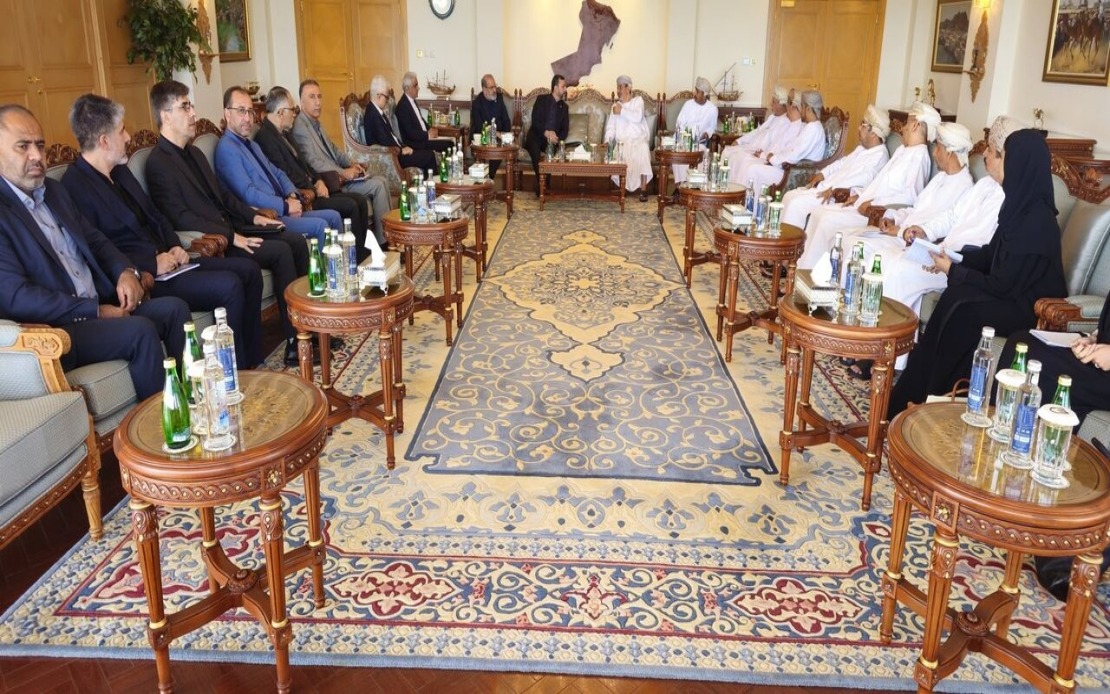
Tehran and Muscat have taken a significant diplomatic step by convening the inaugural session of their Joint Hormuz Committee, marking a formal bilateral effort to address governance issues affecting one of the world's most critical maritime passages. Iranian Deputy Foreign Minister Kazem Gharibabadi announced the milestone during his visit to Oman on Monday, where he engaged with the sultanate's Ambassador-at-Large Abdulaziz Al Hinai to inaugurate the specialized negotiating body.
The committee's establishment represents a structured approach to resolving longstanding questions about stewardship of the Strait of Hormuz, through which roughly one-third of the world's seaborne traded oil transits annually. Rather than relying on ad hoc diplomatic exchanges, both nations have committed to an institutionalized dialogue mechanism that can address complex maritime, commercial, and strategic issues with continuity and systematic review.
During their discussions, the two officials examined pressing concerns facing the strategic waterway and explored pathways for its responsible long-term administration. The dialogue drew its framework from Paragraph 5 of the Islamabad Memorandum of Understanding, a foundational regional agreement, and from the principle that littoral states—those whose territories border the strait—retain inherent sovereign rights over its management and use. This emphasis on sovereignty reflects both nations' determination to reject external interference in regional maritime governance.
The timing of this inaugural meeting followed a diplomatic visit to Oman by Iran's Foreign Minister Abbas Araghchi and negotiating head Mohammad Bagher Ghalibaf on June 23, during which both capitals issued a joint statement reaffirming their commitment to the strait's stability. That statement underscored that any future arrangements governing the passage must fully honour the sovereignty and prerogatives of Iran and Oman as the strait's primary littoral custodians—a position asserting their collective authority against any third-party claim to influence maritime regulations affecting their territories.
For Southeast Asian observers, particularly Malaysia, this bilateral initiative carries broader implications for regional maritime governance. The Strait of Hormuz's strategic importance extends beyond Iranian-Omani interests; disruptions or disagreements over its management could affect shipping routes and energy supplies throughout Asia. Malaysia, as a major trading nation dependent on stable sea lanes and as a participant in regional security dialogues, has a vested interest in seeing Iran and Oman maintain cooperative frameworks that prevent unilateral action or escalation in the gulf.
The committee's mandate encompasses reaching consensus on future governance models for shipping through the strait, including how essential services will be provided and what financial arrangements will apply. These pragmatic concerns—often overlooked in geopolitical analyses—are fundamental to maintaining commercial confidence in the waterway's safety and accessibility. By negotiating these specifics bilaterally and transparently, Iran and Oman demonstrate willingness to establish rules-based rather than coercive approaches to maritime administration.
International maritime standards feature prominently in the committee's framework, signalling that both nations intend their arrangements to align with globally recognized conventions and practices. This commitment to compatibility with international norms, rather than developing parallel or idiosyncratic systems, should reassure international shipping interests and flag states concerned about potential disruptions or unfair treatment. The emphasis on standards-based governance also creates opportunities for eventual multilateral participation or arbitration should disputes emerge.
The establishment of this joint committee under the auspices of both foreign ministries ensures high-level political commitment and access to diplomatic resources necessary for sustained negotiations. Rather than relegating maritime issues to technical or operational bodies, Iran and Oman have elevated the discussion to a level where foreign policy considerations, bilateral relations, and strategic interests can be comprehensively weighed. This institutional architecture suggests both countries view the committee's work as central to their broader relationship, not merely as a narrow sectoral negotiation.
For regional security dynamics, this bilateral cooperation offers a potentially stabilizing precedent. If Iran and Oman can build a cooperative mechanism addressing one of the world's most sensitive maritime zones without external pressure, the model might extend to other contentious issues or eventually expand to include other gulf stakeholders. Conversely, should the committee falter or deadlock, the failure could signal that even neighbouring littoral states struggle to find common ground on maritime governance, with implications for broader gulf stability initiatives.
Malaysia and other Southeast Asian nations monitoring gulf developments should recognize this committee as a positive signal, indicating Iran's preference for multilateral or bilateral institutional dialogue over unilateral assertion of control. The strait's security and accessibility remain essential to Asian energy supplies and trade flows, making Iran's diplomatic choices consequential for regional economics. A functioning, rule-based governance framework negotiated between Tehran and Muscat serves Asian interests by reducing uncertainty and the risk of sudden policy shifts affecting maritime traffic.
The road ahead for the Joint Hormuz Committee will test whether Iran and Oman can translate diplomatic declarations into substantive agreements on operational matters. The committee's first meeting established the foundation and confirmed both nations' commitment to serious engagement, but determining specifics of service provision, cost allocation, and dispute resolution will require further deliberation. The committee's success or failure over coming months will signal to the international community whether the gulf's primary stakeholders are prepared to manage their maritime commons cooperatively or whether external powers will need to become more directly involved in preserving stability.

