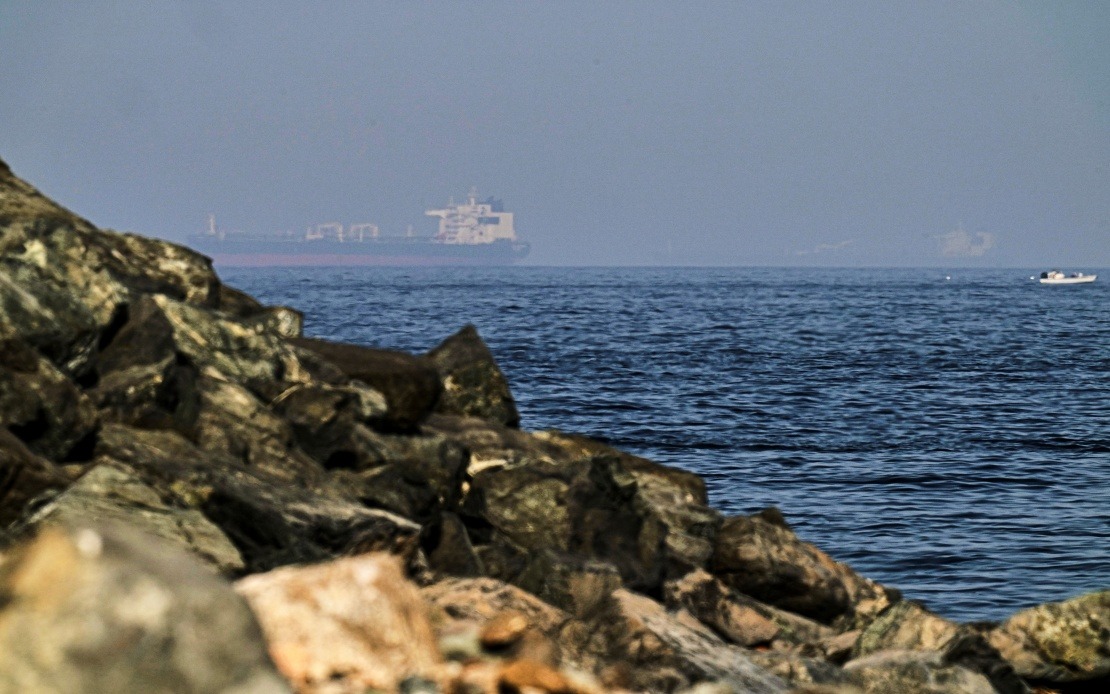
Iran and Oman have reached an agreement to establish a temporary shipping corridor through the Strait of Hormuz, according to Major General Mohsen Rezaei, Secretary of Iran's Supreme National Security Council. The announcement, made in an exclusive television interview, signals a coordinated effort by the two nations to manage maritime traffic through one of the world's most strategically vital waterways at a moment of heightened regional tensions.
The proposed corridor bisects the Strait of Hormuz along its centre line, with one section traversing Iranian territorial waters while the other segment passes through Omani waters. The arrangement requires joint management from both countries, with clearly demarcated boundaries and established protocols governing vessel entry and exit procedures. This cooperative framework represents a significant development in regional maritime governance, particularly given the Strait's importance as a chokepoint through which roughly one-fifth of global oil trade flows.
However, the establishment of this temporary passage carries substantial conditions. Rezaei explicitly tied the corridor's expansion into a permanent, fully operational shipping lane to Washington's acceptance and implementation of a comprehensive list of Iranian demands. The most critical of these conditions involves United States involvement in resolving active conflicts across West Asia, particularly the ongoing situations in Lebanon and Gaza. Iran views these regional conflicts as inseparable from maritime security arrangements in the Strait, adopting an integrated approach to diplomacy that links shipping corridors to broader geopolitical settlements.
The Iranian security chief emphasized that the current arrangement represents only a limited and temporary measure, functioning essentially as a confidence-building gesture that demonstrates the feasibility of expanded maritime cooperation. The full reopening and normalization of shipping traffic through the Strait would require American demonstration of genuine commitment to implementing Iran's conditions. This conditional framework reflects Tehran's position that meaningful trust cannot be rebuilt without concrete American action addressing regional conflicts, bridging what Rezaei characterized as a "deep chasm of mistrust" between Washington and Tehran.
Beyond the Strait of Hormuz issue, Rezaei addressed Iran's military posture and strategic planning. He underscored that while Iran does not seek military confrontation, the country has undertaken comprehensive preparations for a potential escalation should hostilities resume. Significantly, he indicated that any future conflict would differ markedly from previous engagements, suggesting Iran has refined its strategic approach based on lessons learned from past regional military operations.
Rezaei outlined Iran's incremental approach to military responses, noting that Tehran initially exercised restraint in targeting American military installations in the Persian Gulf before subsequently broadening its response options to include American bases and facilities across other regions. This graduated methodology, according to the Iranian official, reflects an effort to incorporate humanitarian considerations into military operations while simultaneously building regional and international support for Iranian actions. The strategy prioritizes legitimacy and coalition-building alongside military effectiveness.
The official further characterized recent American shifts toward economic pressure tactics as reflecting the limited effectiveness of military approaches alone. He issued explicit warnings that Tehran would respond symmetrically to any economic escalation, targeting American economic interests and assets within the region. This threat reflects Iran's assessment that economic competition and sanctions regimes may dominate future confrontations in lieu of direct military engagement.
Regarding Iran's relationship with Turkey, Rezaei emphasized the substantial depth of bilateral trade connections and explicitly dismissed concerns about potential Turkish economic pressure on Tehran. He invoked historical precedent, recalling Turkey's critical role as a trade corridor enabling Iranian commerce during the Iran-Iraq War throughout the 1980s. This historical reference underscores Iran's confidence in maintaining economic partnerships across the region despite international isolation and sanctions.
Rezaei articulated Iran's comprehensive conditions for any potential understanding with the United States, encompassing far more than maritime arrangements. These demands include complete cessation of warfare across West Asian theatres, Israeli withdrawal from Lebanese territory, termination of the Gaza conflict, and suspension of Israeli military operations targeting Syria. The Iranian official framed these regional conflicts as components of an interconnected geopolitical system in which instability in one location directly undermines security and development prospects elsewhere, justifying his linkage of various conflicts to the Strait of Hormuz agreement.
The Iranian security chief characterized Iran's relationship with Lebanon as historically profound and deeply rooted, citing centuries-old scholarly and cultural connections between Jabal Amel communities and Iran. He pledged Iran's continued support for Lebanon utilizing all available resources and capabilities, indicating unwavering commitment to regional allies despite international pressure. This declaration reflects Iran's strategic prioritization of its influence network throughout the Levant and broader Middle East.
On the military situation specifically, Rezaei claimed the Israeli military has lost capacity to advance toward Beirut or its southern suburbs, attributing this assessment to significant losses inflicted by Hezbollah over recent months combined with what he termed the comprehensive impact of the "Iranian threat." This characterization, while contested by Israeli military analysts, reflects Iranian confidence in allied resistance forces and their capability to constrain Israeli operational freedom in Lebanon.
For Malaysian and Southeast Asian observers, these developments carry important implications. The Strait of Hormuz remains critical infrastructure for regional energy security and trade flows. Any prolonged disruption to shipping through this waterway would raise oil prices globally and destabilize energy supplies for import-dependent economies throughout Asia. Furthermore, Iran's insistence on linking maritime access to broader regional political settlements suggests that resolution of Middle Eastern conflicts will prove essential preconditions for normalized global energy markets. Southeast Asia's trade-dependent economies have strong interests in seeing rapid stabilization across these disputed regions.

