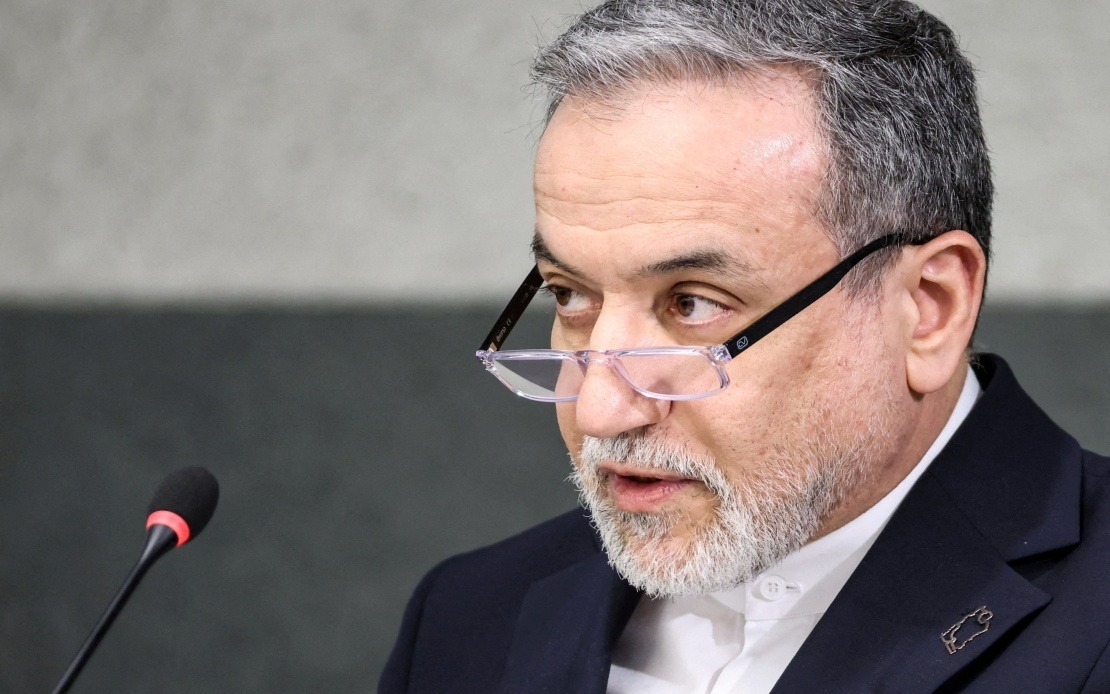
Iran has pushed back against US President Donald Trump's proposal to charge ships a 20 per cent fee for safe passage through the Strait of Hormuz, with Foreign Minister Abbas Araghchi on Monday reasserting Tehran's claim to stewardship of one of the world's most critical maritime chokepoints. Speaking on social media, Araghchi acknowledged the principle that entities providing secure transit deserve compensation, but rejected the scale of Trump's proposed toll as excessive and unreasonable.
The Strait of Hormuz represents one of global commerce's most strategically vital passages, with roughly one-fifth of the world's seaborne oil transiting through its waters annually. The waterway connects the Persian Gulf to the Gulf of Oman and the Arabian Sea, making it a lifeline for energy exports from major producers including Saudi Arabia, the United Arab Emirates, and Iraq. Any disruption to shipping lanes through this corridor sends ripples through global energy markets and has immediate implications for Southeast Asian economies heavily dependent on oil imports, including Malaysia, Singapore, and Thailand.
Trump's announcement early Monday that the United States would blockade Iran in the Strait and impose the substantial toll represents a significant escalation in rhetoric surrounding the waterway's control and commerce. The proposal reflects broader tensions between Washington and Tehran over regional influence and maritime security. However, Araghchi's response demonstrates Iran's intent to position itself as the legitimate custodian of the strait's stability rather than acknowledge American claims to policing the region's shipping lanes.
The Iranian foreign minister's assertion that Tehran "will remain" the guardian of the Strait of Hormuz "forever" underscores the deep historical and geopolitical dimensions of this dispute. Iran's geographic position, controlling the strait's northern littoral, gives Tehran substantial leverage over traffic through the waterway. This positioning has long informed Tehran's strategic calculations and its willingness to use threats of disruption as a bargaining tool in negotiations with the West.
The current confrontation emerges within a broader context of deteriorating US-Iran relations. Despite Pakistani-mediated diplomatic efforts aimed at establishing a memorandum of understanding between the two nations, tensions have instead escalated with both sides engaging in tit-for-tat attacks and provocative statements. The previous framework for conflict resolution appears to have yielded limited results, leaving both Washington and Tehran locked in a cycle of accusation and counter-threat.
Araghchi's calibrated response—accepting the logic of compensation while rejecting Trump's specific rate—suggests Iran may be attempting to maintain a veneer of reasonableness in this dispute. By adopting this stance, Iran can position itself as the pragmatic actor willing to discuss terms while portraying the Trump administration as unrealistic and provocative. This rhetorical positioning matters considerably for how regional and international observers assess responsibility for any future confrontations.
The implications for Southeast Asia are substantial. Malaysia, as both a maritime nation and an economy dependent on stable shipping routes and affordable energy imports, has vested interests in the peaceful resolution of disputes over the Strait of Hormuz. Any escalation of tensions between the US and Iran risks disrupting the flow of oil that fuels regional economies and potentially drawing other nations into the conflict through increased naval presence or security concerns.
The dispute also reflects broader questions about how maritime routes should be governed in an era of great power competition. Traditional international law establishes that straits used for international navigation should permit freedom of passage, yet the increasing militarization of global shipping lanes and the weaponization of maritime commerce suggest these principles face serious challenges. The Strait of Hormuz has long been a flashpoint where these tensions crystallize.
Trump's blockade threat and toll proposal, if seriously pursued, would represent an unprecedented assertion of American unilateral authority over commerce in international waters. Such an approach would likely provoke not only Iranian resistance but also international backlash from trading nations dependent on free passage. The economic consequences of any actual blockade or toll implementation would extend far beyond Iranian and American interests to affect global energy prices and maritime commerce.
The standoff underscores how competing visions of regional order—American calls for hegemonic control versus Iranian assertions of sovereign rights based on geographic positioning—remain fundamentally at odds. Without diplomatic breakthrough, the Strait of Hormuz will likely remain a focal point of US-Iran tensions, with occasional crises and escalations keeping regional security precarious and global energy markets volatile.
For Malaysian policymakers and regional observers, this dispute demands careful attention. Any major disruption through the Strait would have cascading effects on energy costs, supply chain stability, and the broader regional security environment that ASEAN nations depend upon for prosperity and stability.

