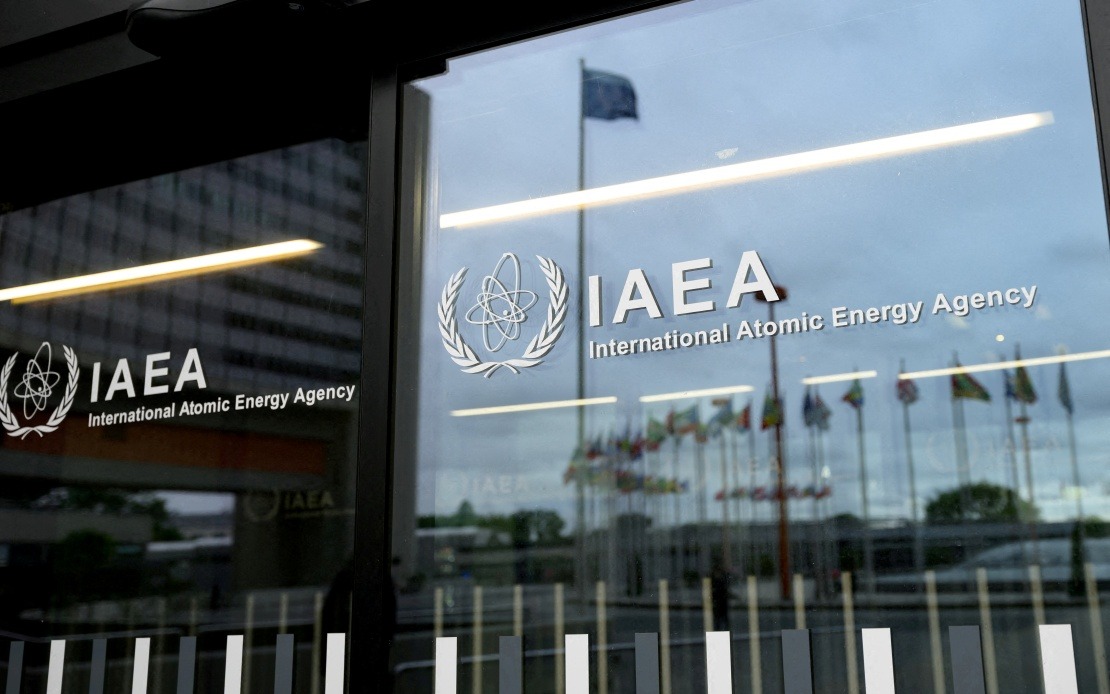
Iran has firmly rejected near-term inspections by the International Atomic Energy Agency of its nuclear installations, signalling that such verification measures will feature only as part of a broader settlement with Washington rather than as a precondition to deeper talks. The stance, articulated by Iranian Deputy Foreign Minister for Legal and International Affairs Kazem Gharibabadi on Wednesday, represents a significant hardening of Tehran's negotiating position as the two countries enter the second phase of nuclear diplomacy under a freshly inked memorandum of understanding signed just over a week ago.
Gharibabadi's statement, delivered via the social media platform X, made explicit that access by the IAEA to Iran's nuclear materials and facilities—including those that sustained damage during recent military operations—would be "reviewed and resolved solely within the framework of the final agreement and as a result of the other party's practical action to terminate all sanctions." The linkage between inspections and sanctions relief effectively transforms IAEA verification from an immediate confidence-building mechanism into a final-stage bargaining chip, complicating the already delicate process of rebuilding trust between Tehran and Washington after years of escalating military and economic confrontation.
The Iranian position emerged in direct response to statements by IAEA Director General Rafael Grossi, who indicated that the agency would proceed with scheduled inspections in Iran in light of the memorandum of understanding reached on June 18. That agreement established a 60-day negotiating window, during which both sides are to work toward a comprehensive nuclear accord and the lifting of international sanctions targeting Iran's economy. The first round of substantive talks took place in Switzerland over the weekend, reflecting what both parties have publicly described as a genuine willingness to bridge longstanding disputes.
Yet the Iranian deputy foreign minister also disclosed that Grossi had sought a meeting with Iran's negotiating delegation during recent contacts in Switzerland but that no such encounter materialised. This absence of engagement between the IAEA leadership and the Iranian negotiating team underscores the current temperature of discussions and hints at deeper disagreements over the sequencing and scope of verification measures that may prove difficult to resolve within the compressed 60-day timeframe.
The backdrop to these diplomatic manoeuvres involves Iran's three principal nuclear complexes—Fordow, Natanz, and Isfahan—which all sustained considerable damage during a 12-day military campaign in June 2025. Those facilities subsequently became flashpoints again following the outbreak of broader regional hostilities on February 28 this year, when both the United States and Israel conducted extensive strikes against Iranian nuclear and military infrastructure. The physical destruction of key installations has complicated the technical aspects of any future inspections regime, as IAEA teams would need to assess both the extent of damage and the current operational status of enrichment and processing equipment.
For Malaysian and Southeast Asian observers, the renewed tensions in the nuclear negotiations carry implications that extend well beyond Tehran and Washington. Any failure to conclude a sustainable agreement could reignite military escalation in the Middle East, disrupting shipping lanes through the Strait of Hormuz and Persian Gulf that remain critical to regional energy supplies and global commerce. Malaysia, as a significant importer of crude oil and liquefied natural gas, faces direct economic exposure to renewed instability in that theatre. Sustained high oil prices or supply disruptions would ripple through the region's economies, affecting inflation, currency stability, and investment flows that Southeast Asian nations depend upon for growth.
The Iranian insistence on coupling inspections to sanctions removal also reflects a calculation that economic relief must be concrete and irreversible before Tehran permits unfettered access to sensitive nuclear facilities. Previous experience with the 2015 Joint Comprehensive Plan of Action, which the United States withdrew from unilaterally in 2018, has left Iranian leadership wary of verification commitments that might be rendered moot by political reversals in Washington. This historical grievance helps explain the current demand that sanctions be dismantled in parallel with, or even ahead of, rigorous inspections rather than vice versa.
The compressed timeline of the memorandum presents additional complications. Resolving the sequencing of inspections and sanctions relief within 60 days requires both sides to move beyond preliminary posturing and into substantive horse-trading. The absence of IAEA-Iranian delegation meetings suggests that preliminary technical discussions may not yet have begun. Should the two parties fail to break the current impasse over verification mechanisms, the remainder of the negotiating period could be consumed by disputes over the basic framework rather than substantive nuclear commitments.
For the broader international community, including Southeast Asian governments with stakes in regional stability, the outcome of these negotiations carries weight in determining whether the Middle East moves toward managed competition or renewed confrontation. A successful deal would reduce the risk premium embedded in oil prices and ease supply anxieties that periodically roil Asian markets. Conversely, a breakdown—whether through disagreement over inspections, sanctions sequencing, or other sticking points—could set the stage for another cycle of military action that would prove far more destabilising than recent operations.
Iran's hardline stance on inspections may also be calibrated to manage domestic political pressures. Iranian hardliners, particularly within the Islamic Revolutionary Guard Corps and ideological establishment, have long resisted external verification of nuclear activities as an infringement on national sovereignty. By conditioning inspections on final agreement rather than accepting them as an immediate confidence-builder, Gharibabadi signals to these constituencies that Tehran is not capitulating to international pressure. The deputy foreign minister's framing emphasises reciprocal American action—the removal of sanctions—as the prerequisite for Iranian concessions, a narrative that allows Iranian leadership to claim that any nuclear transparency is being purchased, not imposed.
The diplomatic chess moves evident in recent days also highlight the fragility of the memorandum itself. While the agreement to negotiate for 60 days represents progress after months of escalating tensions, the fundamental positions of both sides remain far apart on critical modalities. The United States and its partners view IAEA inspections as non-negotiable safeguards to verify Iranian compliance with any nuclear accord. Iran, conversely, sees such inspections as symbols of external control and insists they be balanced by equivalent American concessions.
As negotiations proceed in Switzerland and elsewhere, the question of IAEA access will likely emerge as one of the defining challenges. The agency's role as guardian of nuclear non-proliferation norms means it cannot compromise on its core prerogatives; equally, Iran's security concerns and nationalist sensibilities cannot be dismissed as merely rhetorical. How the two sides navigate this tension will determine whether the 60-day window yields a sustainable accord or merely delays the next round of confrontation. For Southeast Asia and the broader international community, watching this negotiation unfold carries profound implications for regional security, energy security, and the architecture of global nuclear governance itself.

