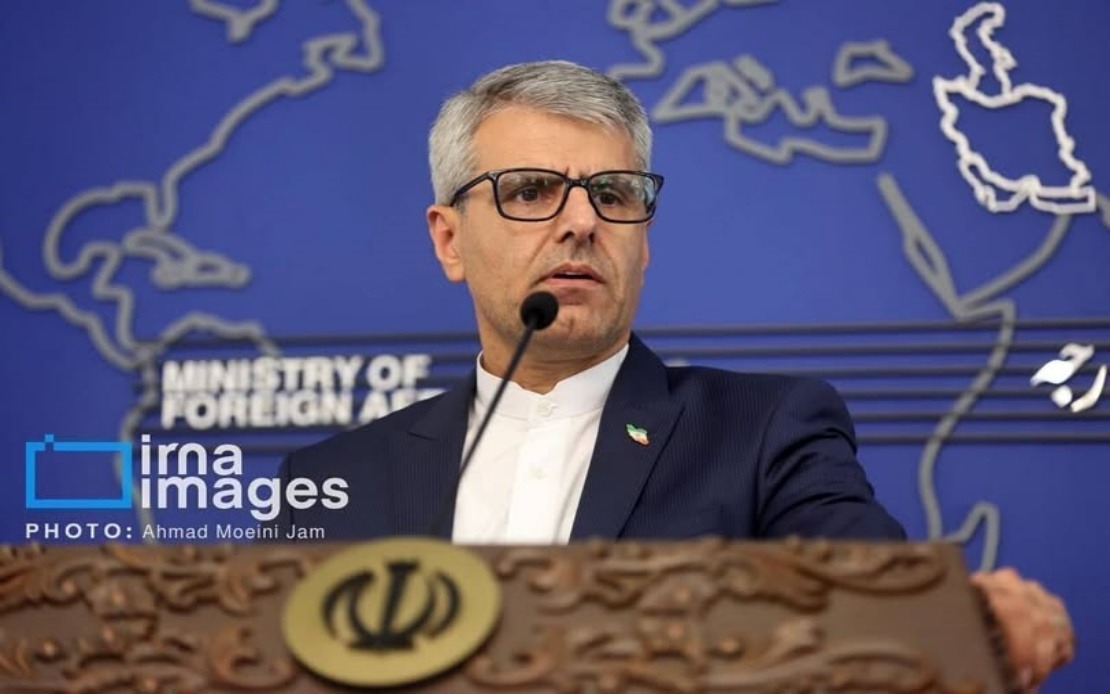
Iran has intensified diplomatic pressure on Washington to commit to a specific timeline for Israel's complete military withdrawal from Lebanon, casting the demand as a cornerstone requirement for long-term Middle Eastern stability. Speaking in Istanbul on Sunday, Iranian Foreign Ministry spokesman Esmaeil Baqaei articulated Tehran's position that ending Israeli military operations and removing occupation forces from all Lebanese soil represents a non-negotiable prerequisite for achieving what Iran characterises as a "final and sustainable agreement" capable of restoring regional equilibrium. This declaration underscores how the Lebanese dimension has become central to the broader nuclear and security negotiations between Tehran and Washington.
The timing of Iran's renewed emphasis reflects the June 18 memorandum signed between the two countries, which followed weeks of escalating regional tensions and intensive diplomatic engagement. Baqaei stressed that Iran views the preservation of Lebanese sovereignty and territorial integrity—alongside the safety and dignity of the Lebanese population—as fundamental to any agreement's long-term credibility. By framing these concerns in language emphasising stability and legitimacy rather than purely sectarian interests, Tehran is attempting to broaden the appeal of its position beyond its traditional allies in the region.
Remarking on Iran's negotiating stance, Baqaei revealed that Tehran has consistently prioritised ending Israeli military campaigns against Lebanon alongside concluding its own conflict with Israel. This dual-track approach was embedded in both the April ceasefire understanding and the June memorandum, demonstrating how Lebanon's security situation has become inseparable from Iran's own strategic calculations. The spokesman further called upon Washington to assume responsibility for compelling Israel to cease all military aggression and operations throughout Lebanese territory, effectively requesting that the United States use its considerable leverage with Tel Aviv to enforce Iranian demands.
Meanwhile, Iran's Parliament Speaker and chief negotiator Mohammad Bagher Qalibaf engaged in direct discussions with Lebanese Parliament Speaker Nabih Berri, conveying Tehran's commitment to pursuing an end to Lebanon's ongoing conflict. Qalibaf indicated that the Lebanon question featured prominently during recent US-Iran negotiations held in Switzerland, particularly regarding the restoration of Lebanese sovereignty and territorial integrity. He emphasised that these objectives represent core elements of the initial clause within the Islamabad memorandum, signalling the formal status these demands hold in the bilateral agreement.
Since Iran raised objections concerning alleged violations of ceasefire provisions, negotiators from Tehran, Washington, and Beirut have consented to establish a conflict-control unit tasked with monitoring implementation of the agreement's terms. This institutional mechanism represents an attempt to create verification structures capable of preventing future breaches and ensuring that commitments translate into concrete actions on the ground. The establishment of such oversight bodies typically reflects mutual concern about compliance and indicates that trust between the parties remains limited despite diplomatic progress.
Qalibaf articulated Iran's core objectives with characteristic clarity, stating that Tehran's ultimate goal encompasses terminating the Lebanon conflict entirely, facilitating the return of internally displaced Lebanese to their communities, eliminating what Iran terms "occupation," and securing Israeli military withdrawal from Lebanese territory. This formulation attempts to place Iran on the side of Lebanese national interests and humanitarian concerns, framing Tehran as a protector of Lebanese sovereignty rather than as a power pursuing regional hegemony. Such messaging proves particularly significant for audiences throughout the Middle East who remain sceptical of Iranian intentions.
The broader context involves a fourteen-point understanding between Iran and the United States that emerged following an extended period of military escalation and protracted diplomatic negotiations. This comprehensive framework addresses multiple domains including nuclear matters, regional proxy conflicts, and conventional military concerns. The Lebanese component represents just one element within this larger mosaic, yet Iran has successfully positioned it as essential to the entire structure's viability, effectively leveraging the interconnected nature of Middle Eastern security challenges.
For Malaysia and Southeast Asian observers, these developments carry implications for regional great-power competition and the international rules-based order. The negotiations illustrate how Middle Eastern conflicts increasingly become entangled with broader geopolitical struggles between established and rising powers, creating complex diplomatic dynamics that extend far beyond the immediate region. The establishment of conflict-control mechanisms and verification frameworks may offer instructive lessons for managing disputes in Southeast Asia itself, where multiple claimants and external powers maintain competing interests.
The Iranian approach also demonstrates how regional actors attempt to bind external powers—in this case, the United States—to supporting their specific strategic objectives. By embedding Lebanon-related demands within a comprehensive memorandum of understanding, Tehran has created a situation where Washington cannot easily abandon the Lebanese dimension without undermining the entire agreement. This negotiating technique reflects sophisticated understanding of leverage and the interconnectedness of modern diplomatic settlements.
Looking ahead, the critical question concerns whether Washington will prove willing and able to enforce Iranian demands against Israeli resistance. The United States maintains deep security commitments to Israel that often conflict with broader Middle Eastern stability objectives. The execution of any timeline for Israeli withdrawal will require either significant American pressure on Tel Aviv or alternative arrangements that address Israeli security concerns while satisfying Iranian demands. Such balancing acts typically prove extraordinarily difficult in practice, suggesting that implementation may encounter substantial obstacles despite the apparent diplomatic accord.

