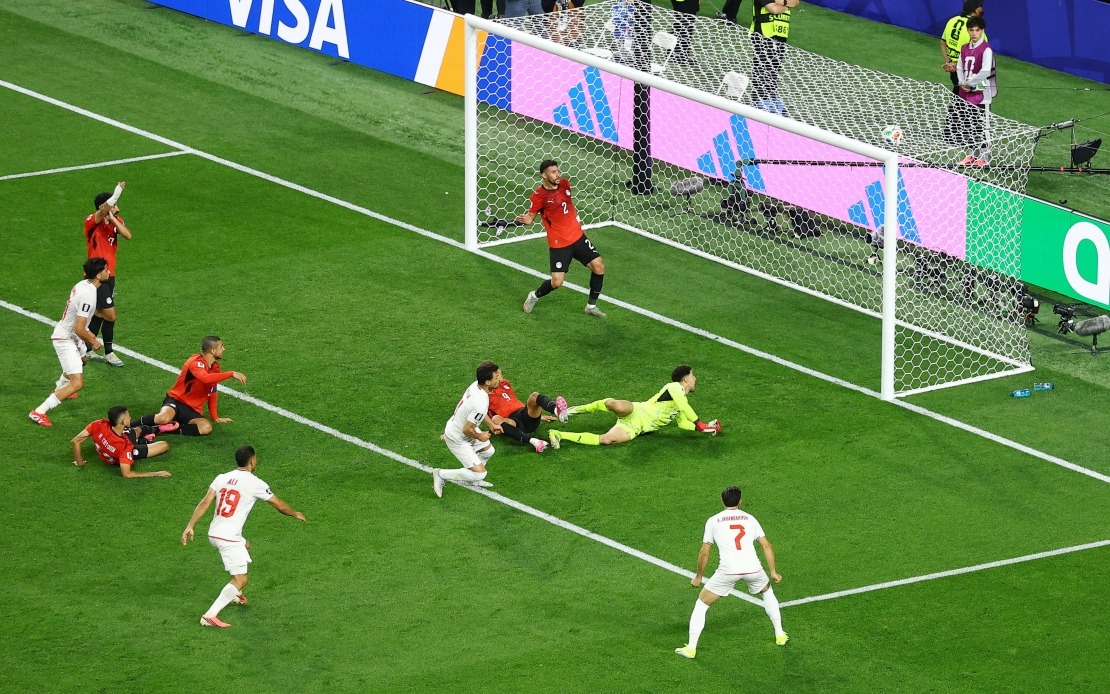
Iran's participation in the World Cup concluded on Saturday with a statement criticizing what their football federation described as unfair and unsportsmanlike conduct by tournament organizers. The Iranian national team drew 1-1 against Egypt in their final group match, a result insufficient to advance to the knockout stage and marking the end of a campaign marked by diplomatic tensions and logistical complications.
The disputed draw with Egypt encapsulated the frustrations Iran experienced throughout their tournament stay. A goal scored by the Iranian side was disallowed following an extended video assistant referee review, a decision that particularly rankled the team as they struggled to maintain their campaign momentum. This VAR incident became emblematic of a broader pattern of grievances the delegation aired during their time in the United States, transforming what might have been a purely sporting contest into a flashpoint for deeper controversies.
The Iranian football federation (FFIRI) released a formal statement as the team prepared to return home, expressing gratitude to international media outlets for documenting not only the on-field sporting events but also the various obstacles and complications their delegation encountered. The federation framed media coverage as a crucial counterbalance to what they characterized as the structural disadvantages imposed upon them, highlighting the role of journalism in bearing witness to what they viewed as inequitable treatment within an international sporting event.
Prior to the World Cup, Iran had initially expected to establish their operational base in Arizona, a location typical for teams participating in North American tournaments. However, this arrangement fell through, forcing the federation to pivot and relocate their entire delegation to Tijuana, Mexico, instead. This geographical shift reflected the complex political dynamics between Iran and the United States, with broader geopolitical tensions manifesting in practical impediments to the team's participation.
The relocation to Tijuana introduced significant logistical challenges for the Iranian contingent. With their base now situated in Mexico while their matches took place across various venues in the continental United States, the team faced pronounced travel restrictions and considerable complexity in organizing the movement of players, staff, and officials across international borders. These constraints transcended routine tournament inconveniences, potentially affecting the team's preparation, rest, and overall capacity to perform at optimal levels.
Beyond the specific VAR controversy against Egypt, Iran had voiced concerns throughout their tournament run about various aspects of their treatment and the conditions under which they competed. These grievances accumulated across multiple matches, with the team consistently expressing frustration about what they perceived as an uneven playing field extending beyond tactical considerations into administrative and logistical domains.
The FFIRI's parting message to international media demonstrated awareness of how sports narratives intersect with geopolitical circumstances. By thanking journalists for their coverage, the federation tacitly acknowledged that reporting on their World Cup experience had become inseparable from documenting the real-world consequences of diplomatic tensions on athletic competition. This approach repositioned their World Cup failure from a simple matter of sporting performance into a broader statement about how political divisions shape international sporting events.
In sharp contrast to their criticisms of tournament arrangements, the Iranian delegation extended warm appreciation to the people and authorities of Mexico, particularly the residents of Tijuana who hosted them during the competition. This gratitude emphasized the human dimension of their stay, highlighting how local Mexican communities provided genuine hospitality that contrasted sharply with the complications they experienced in the United States. The federation's comments about the difficulty of departing Tijuana suggested that their time in Mexico had provided psychological and emotional support amid organizational challenges elsewhere.
For regional observers in Southeast Asia, Iran's World Cup experience offers instructive lessons about how geopolitical tensions can penetrate and complicate even ostensibly apolitical international sporting events. Malaysia and other ASEAN nations with diverse international relationships may recognize parallels in how diplomatic friction can affect their own athletes' participation in global competitions. The situation underscores how even the most carefully organized tournaments cannot entirely insulate sporting competition from the broader context of international relations.
The VAR decision that disallowed Iran's goal raised broader questions about the consistency and fairness of technology-assisted referee decisions in World Cup competitions. While VAR has been implemented to reduce obvious errors, critics argue that its application sometimes introduces additional layers of controversy, particularly when decisions take extended periods to reach and when their logic appears opaque to observers. Iran's case adds to an ongoing international conversation about whether technological assistance in football truly enhances fairness or creates new categories of contestable decisions.
Iran's elimination from the World Cup concluded what had been a turbulent campaign characterized as much by off-field complications as by on-field performance. The federation's decision to articulate detailed grievances upon departure represented a deliberate choice to establish a historical record of their perspective on how they were treated. This approach differs from some other teams that prefer to focus exclusively on sporting matters, suggesting that the Iranian federation viewed their World Cup experience as having broader significance beyond tournament performance.
Moving forward, Iran's experience raises questions for international sporting bodies about how to manage participation by nations with strained diplomatic relations with host countries. The logistical challenges, VAR controversies, and travel restrictions encountered by Iran may inform discussions about ensuring more equitable conditions for all participating teams in future tournaments, regardless of their nations' broader geopolitical circumstances.

