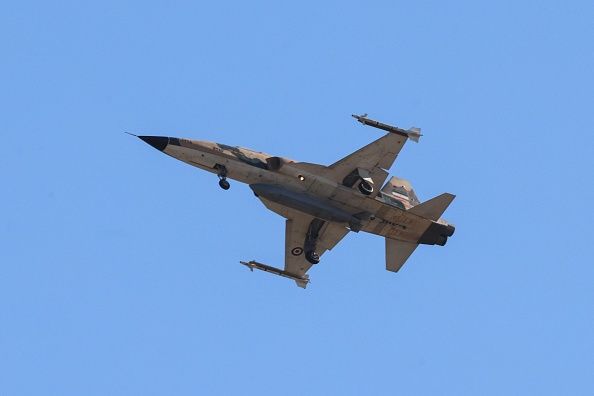
Tehran and Doha remain locked in a contentious standoff over the disappearance of Iranian military pilots, with Mohammad Baqerzadeh, commander of the Committee for the Search for Missing Persons of Iran's Armed Forces General Staff, publicly insisting that Qatari authorities have obstructed investigation efforts for months. Speaking through Iran's semi-official Tasnim news agency on Sunday, Baqerzadeh asserted that a dedicated Iranian Air Force expert team has been repeatedly prevented from entering Qatar to verify the circumstances surrounding the pilots and clarify their whereabouts. The dispute highlights deepening mistrust between Tehran and Gulf Arab states already strained by broader geopolitical tensions.
Qatar's official position directly contradicts the Iranian narrative. Doha stated on Saturday that its search and rescue teams recovered the remains of one pilot following an incident in March when Iranian aircraft penetrated Qatari airspace without responding to communications attempts. According to Qatar's account, the organization initiated contact with Iran to coordinate the transfer of remains and extended an invitation for Tehran to observe details of the search operations. However, Qatar claims it never received acknowledgment from Iranian authorities regarding this overture, creating a communication impasse that each side attributes to the other's intransigence.
The March incident itself remains a point of contention between the nations. While Iranian officials have not explicitly denied the airspace violation, they have cast doubt on Qatar's handling of the situation and the fate of personnel involved. The lack of transparency regarding pilot identities, circumstances of their capture or death, and the current status of remains has fuelled Iranian suspicions that Qatar may be withholding critical information. For Malaysian observers and Southeast Asian policymakers, this dispute underscores how territorial disputes and military incidents in the Gulf can quickly escalate into diplomatic crises with potential regional ramifications.
Baqerzadeh's intervention represents an official escalation in Tehran's public pressure campaign. By naming specific committees and individuals, Iran is attempting to document its good-faith efforts to investigate while portraying Qatar as the obstruction. The commander's accusation that Qatari officials are deliberately delaying investigations carries significant weight in Tehran's domestic political context, where military personnel welfare and accountability remain sensitive issues. The semi-official nature of Tasnim's reporting suggests the Iranian establishment is sanctioning this narrative, even if through channels that allow some official deniability.
The dispute extends beyond Qatar into the broader Gulf sphere, with Iran simultaneously accusing Kuwait of withholding information about four Iranian nationals detained within its borders. According to Tehran's May statement, these four individuals were affiliated with the Islamic Revolutionary Guards Corps and were conducting routine maritime patrols when their vessel entered Kuwaiti territorial waters due to navigational errors. Kuwait disputes this characterization, alleging instead that the four detainees are suspected of planning hostile military activities against the country. The parallel nature of these two disputes suggests a pattern of mistrust that shapes Iran's relations with multiple Gulf Cooperation Council members.
The invocation of the International Committee of the Red Cross represents Iran's attempt to invoke neutral third-party oversight. By calling for the organization to urgently investigate, Baqerzadeh is signalling that bilateral channels have failed and that external humanitarian mechanisms should intervene. The ICRC traditionally plays a crucial role in monitoring detainee welfare and facilitating information exchange during conflicts and disputes, though its effectiveness depends on the cooperation of all parties involved. Kuwait and Qatar would need to grant access for such investigations to proceed, which neither has indicated it will do regarding these specific cases.
For Malaysia and other Southeast Asian nations, this dispute carries implications regarding maritime security, airspace protocols, and detention practices in sensitive waters. The incident reveals how easily navigational errors or communication failures can trigger military incidents in the crowded and geopolitically charged Gulf region. Additionally, the fundamental disagreement over whether detainees are soldiers conducting routine operations or individuals planning hostile actions reflects broader disagreements about legitimate military activities in shared waters. These are issues that resonate in Southeast Asia, where multiple nations navigate crowded maritime spaces with overlapping territorial claims and diverse security interests.
The opacity surrounding the fate of captured or detained personnel raises human rights concerns that extend beyond bilateral relations. International humanitarian law provides frameworks for handling military personnel, prisoners of war, and detainees in international disputes. The apparent absence of third-party verification regarding the pilots' status and the circumstances of their capture creates a gap where accountability should exist. Both Iran and the Gulf states have obligations under international law to account for military personnel and to provide basic information to relevant international organizations.
Qatar's invitation for Iran to review search and rescue details may represent a genuine attempt at transparency, or it may constitute a diplomatic gesture intended to deflect international criticism while maintaining operational control over information flow. The fact that Iran has not accepted this invitation, according to Qatar, suggests either deep distrust or domestic political complications in Tehran. Without verification from independent observers, neither narrative can be definitively confirmed, leaving the international community with contradictory accounts and no clear mechanism for resolution.
The broader context of Iran-Gulf Arab relations fundamentally shapes this dispute. Decades of tensions, military rivalries, and proxy conflicts have created persistent suspicion on both sides. Iran's regional isolation following its nuclear programme restrictions and the rise of competing Gulf powers have amplified security concerns that feed into incidents like this one. For policymakers across Southeast Asia monitoring these developments, the dispute exemplifies how accumulated distrust in a region can prevent effective cooperation even on straightforward humanitarian and investigative matters.
Moving forward, resolution will likely require external mediation or a dramatic shift in bilateral relations between Tehran and its Gulf neighbours. The current trajectory suggests hardening positions and escalating rhetoric that may preclude direct dialogue. International organizations like the Red Cross, the United Nations, or regional bodies may need to intensify engagement, though their capacity to influence outcomes remains constrained by the fundamental political tensions underlying the dispute. Until one side substantively alters its approach or independent verification becomes possible, the fate of the Iranian pilots and detainees may remain obscured by the fog of geopolitical conflict.

