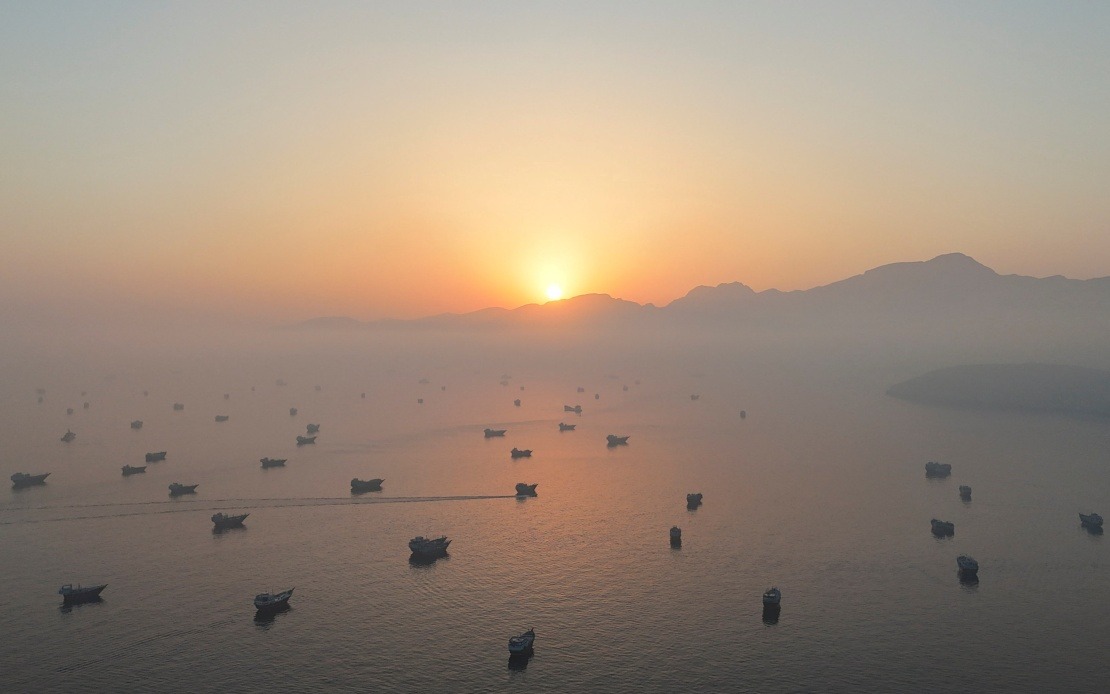
Iran's assertion of exclusive authority over the Strait of Hormuz marks a significant escalation in Middle Eastern tensions, with Foreign Minister Abbas Araghchi announcing that the vital shipping channel will be placed "entirely under Iranian administration" within the coming month. Speaking at a press conference in Baghdad on June 28, Araghchi made clear that Tehran views the strategic waterway as falling squarely within its domain, a position that carries substantial implications for global commerce and regional stability.
The declaration follows what observers describe as the rapid unravelling of a previously negotiated ceasefire between Iran and the United States. The tentative agreement, which had promised a temporary respite from military escalation, has been superseded by a fresh cycle of tit-for-tat attacks that threaten to plunge the region into deeper conflict. This deterioration underscores the fragility of diplomatic arrangements in an environment defined by mutual distrust and competing strategic interests.
The Strait of Hormuz occupies exceptional importance in the global economic system. As the world's premier chokepoint for crude oil transit, roughly one-fifth of all internationally traded petroleum passes through its narrow channels annually. Disruption to shipping through this waterway reverberates immediately through global energy markets and supply chains, making any Iranian action here a matter of acute concern for consuming nations far beyond the Middle East. For Malaysia and other Southeast Asian economies dependent on stable energy supplies, developments here carry immediate practical consequences.
Iran's willingness to leverage control of the strait demonstrates how thoroughly the country views this geographic feature as a bargaining tool. When Israeli and American forces first launched strikes against Iranian positions in February, Tehran responded by effectively throttling maritime traffic through the channel via a combination of military threats and direct attacks on vessels. This pressure campaign served as leverage in Tehran's broader negotiating position, illustrating how Iran intends to weaponize geographic advantage when diplomatic channels falter.
Crucially, the foreign minister stated that any attempt by external powers to establish "parallel structures" or interfere with Iranian administration would further destabilise the situation and obstruct the reopening of the strait. This language appears directed at international naval coalitions and Western maritime security arrangements that have periodically operated in the region. By framing international involvement as inherently destabilizing, Iran seeks to establish a monopoly on decisions affecting one of the world's most consequential shipping lanes.
The recent accord between Washington and Tehran had established a 60-day negotiating framework intended to de-escalate tensions and restore normal shipping operations. A central component of this arrangement explicitly prohibited Iran from levying tolls or fees on transiting vessels during the negotiation period. However, the agreement's collapse raises the thorny question of what Iran might demand once those 60 days expire. Analysts anticipate that fee structures could become a contentious issue, particularly when Iran seeks to justify charges under international maritime law to justify extracting economic benefit from the strait's traffic.
Iran has signalled its intention to hold discussions with Oman regarding future management of the strait in accordance with international legal frameworks and in coordination with neighbouring Gulf states. Oman occupies a unique position as a sultanate maintaining diplomatic relations across regional divides, lending it credibility as a potential intermediary. However, whether Oman can broker a solution acceptable to both Iran and Western powers remains deeply uncertain given the current trajectory of hostilities.
The implications for Malaysia and broader Southeast Asia merit careful consideration. As a nation dependent on stable energy supplies routed through Middle Eastern waters, Malaysia has every interest in maintaining the free flow of commerce through the Strait of Hormuz. Prolonged disruption would drive oil prices higher, increase shipping insurance premiums, and create economic headwinds for the entire region. Furthermore, any sustained closure would force Asian exporters to route cargo around Africa via the Cape of Good Hope, dramatically extending transit times and elevating logistics costs.
The collapse of the Iran-US ceasefire also reflects deeper structural challenges in Middle Eastern diplomacy. The cycle of military action and retaliation appears to have achieved its own momentum, with each side viewing the other's actions as justifying further escalation. This dynamic suggests that restoring stability requires more than temporary truces; it demands fundamental shifts in how both parties calculate their interests and perceive threats.
Looking ahead, the critical variable will be whether third parties—including regional powers like Oman, Saudi Arabia, and the United Arab Emirates, as well as international bodies—can exert sufficient pressure to prevent further deterioration. The 30-day timeline mentioned by Araghchi offers a narrow window for diplomatic intervention before Iran begins implementing whatever new policies it has contemplated for the strait. For Malaysia and other trading nations, close monitoring of developments is essential, as the outcome will shape energy costs and supply security for months or years to come.

