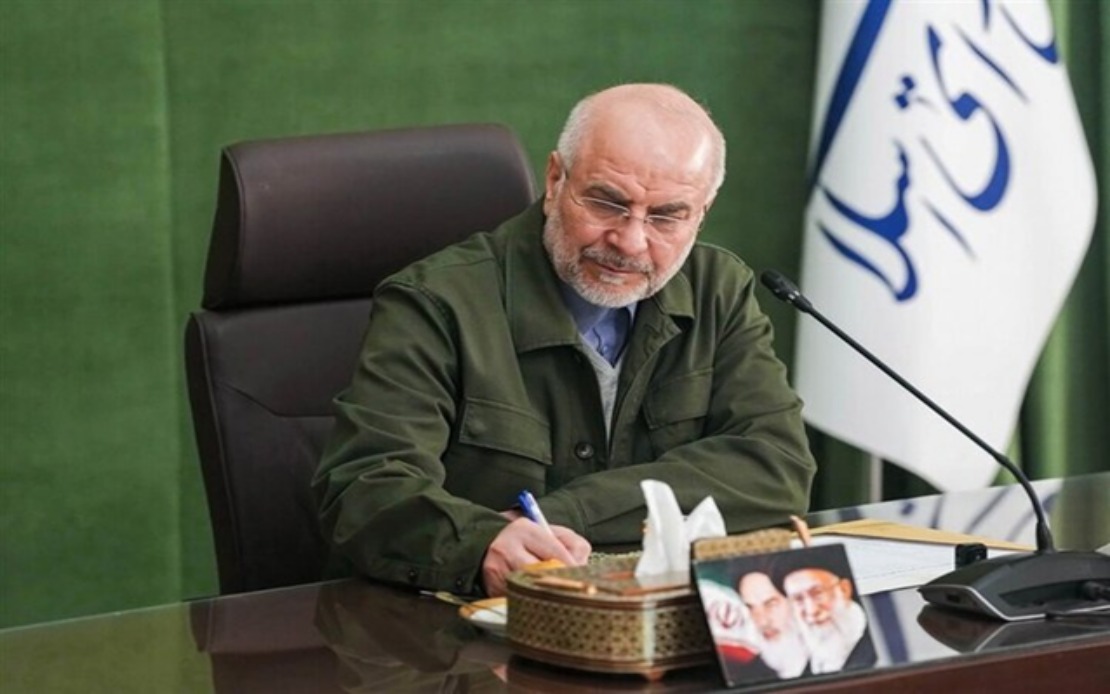
The dispute over how Iran will deploy its unfrozen assets has become the latest flashpoint in already fraught negotiations between Tehran and Washington. Iranian Parliament Speaker Mohammad Bagher Ghalibaf, who serves as a principal negotiator, flatly denied American contentions that the released funds would flow toward purchasing US agricultural products. In a statement posted on social media platform X on Thursday, Ghalibaf characterised the American claim as false, employing pointed rhetoric that underscored the persistence of bilateral distrust. "America falsely claims our unfrozen assets will buy their agriculture," he wrote. "Interesting. The only crop we're harvesting is what you planted: decades of mistrust." The remark reflects deeper frustrations within Tehran's establishment about the negotiation process and the conditions the United States has sought to impose on the use of released funds.
The clash over asset deployment forms part of a broader pattern of contradictory statements between the two nations on fundamental aspects of their ongoing discussions. US Vice President JD Vance had asserted on Monday that Iran's unfrozen assets could be channelled into purchasing American soybeans, corn, and wheat. President Donald Trump subsequently doubled down on this position, contending that the funds would be held in a US-controlled escrow account and deployed exclusively for acquiring US food and medical supplies, specifically naming corn, wheat, and soybeans among the permitted purchases. Such conditions would effectively constrain Iran's sovereign control over its own assets, a proposal that Iranian officials have found unacceptable.
Responses from multiple quarters within Iran's governmental apparatus have articulated a unified rejection of any restrictions on how the unfrozen assets may be utilised. On Tuesday, Iranian Foreign Ministry spokesperson Esmaeil Baghaei explicitly stated that Iran would deploy the released funds entirely in accordance with its national interests and without any external limitations. He further emphasised that purchasing decisions would be determined by conventional commercial criteria, namely price and quality considerations, rather than by political or diplomatic conditions. This position reflects Iran's determination to maintain economic independence in managing the recovered funds.
Iran's Central Bank Governor Abdolnaser Hemmati reinforced this stance whilst maintaining a degree of diplomatic flexibility. He asserted that Iran labours under no obligation to procure US agricultural products, effectively dismissing any presumption that the country would automatically become a purchaser of American goods. However, he did leave open the possibility that Iran might consider buying US products if such items proved competitively priced relative to alternatives available from other suppliers. This formulation allows for the theoretical possibility of US-Iran agricultural trade whilst firmly rejecting any binding commitment or preferential purchasing arrangement.
The current friction over asset usage occurs within the context of a broader negotiating framework that was formally established just weeks ago. On June 18, Iran and the United States signed a memorandum of understanding that committed both parties to 60 days of intensive negotiations aimed at reaching a comprehensive final agreement regarding Iran's nuclear programme and the removal of international sanctions. The relatively recent signing of this document underscores how fragile the negotiating process remains, with fundamental disagreements surfacing even as both sides ostensibly work toward resolution. The peace MoU represents a significant diplomatic development, yet the immediate emergence of disputes over asset deployment suggests that numerous contentious issues remain unresolved.
The latest round of bilateral discussions took place in Switzerland over the weekend and into Monday, providing the setting in which negotiators from both countries attempted to make progress on the nuclear accord. However, the parallel rhetoric emanating from both capitals indicates that negotiators may have failed to achieve consensus on several critical matters, or that positions staked out in public comments do not fully align with confidential discussions. The geographically neutral Swiss venue, whilst symbolically important for diplomatic engagements of this magnitude, has apparently not prevented the protagonists from advancing incompatible claims about the terms and conditions governing asset usage.
For Malaysia and other Southeast Asian nations monitoring these developments, the Iran-US dispute carries implications for regional stability and international commerce. The Middle East remains a crucial region for Southeast Asian trade, energy security, and diplomatic engagement. Any prolonged impasse in Iran-US negotiations could perpetuate existing sanctions regimes that constrain Iran's economic participation in global markets, potentially affecting prices and supply chains for goods and services that impact ASEAN economies. Conversely, a breakthrough might open new avenues for regional commerce and reduce geopolitical tensions that could otherwise destabilise Southeast Asian strategic interests.
The fundamental disagreement over asset control also reflects deeper philosophical and legal tensions between the parties. Iran's insistence on unrestricted use of unfrozen funds aligns with conventional international law principles regarding national sovereignty over recovered assets. The United States, conversely, appears to be attempting to condition the release and deployment of funds as a mechanism for influencing Iranian economic behaviour and purchasing patterns. This divergence highlights how even agreement in principle on major issues—in this case, the commitment to negotiate—can mask substantial disagreements on implementation and enforcement mechanisms.
The rhetoric employed by both sides suggests that negotiators may be preparing their respective domestic audiences for the possibility of negotiation breakdown or extended talks. Iranian officials' emphatic language about sovereignty and distrust reflects the need to demonstrate to domestic constituencies that national interests are being protected. Similarly, American public statements about ensuring funds are spent on US goods address political constituencies concerned with supporting American farmers and manufacturers. Such domestic political imperatives can complicate diplomatic problem-solving, even when negotiators recognise the mutual benefits of reaching agreement.
The sixty-day timeframe established by the June 18 memorandum provides a relatively compressed schedule for resolving the numerous technical, legal, and political issues that characterise Iran-US nuclear negotiations. The early emergence of disputes over asset deployment suggests that the negotiating agenda is crowded and that consensus on even seemingly procedural matters cannot be taken for granted. Whether negotiators can compartmentalise disagreements over asset usage whilst making progress on core nuclear issues remains uncertain, though the visibility of these disputes in public statements suggests that unresolved tensions may be affecting the overall negotiating momentum.

