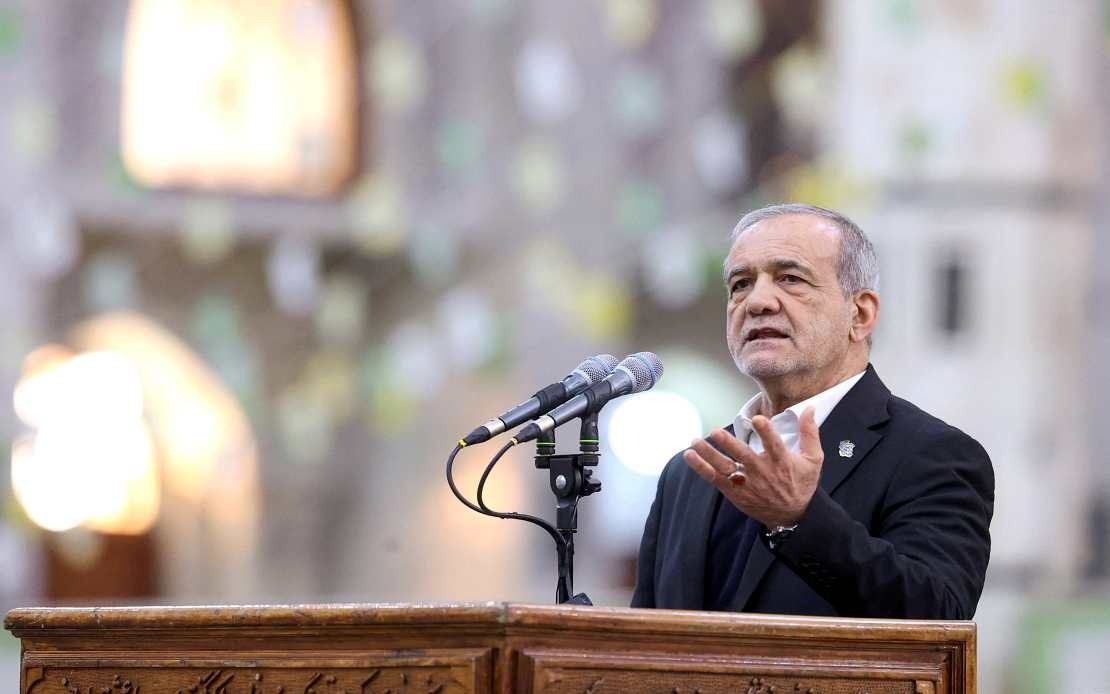
Iranian President Masoud Pezeshkian announced on Sunday that his country will recover US$6 billion in frozen assets currently held in Qatar as part of an initial agreement with the United States, according to state broadcaster IRIB. The declaration came amid preparations for substantive technical talks between Iranian and American delegations, signalling a shift toward diplomatic engagement after months of regional tensions that have complicated shipping and energy flows through one of the world's most critical maritime corridors.
The thawing of relations, formalized through a memorandum of understanding signed on Wednesday, represents a significant recalibration in US-Iran dynamics. Pezeshkian's confirmation that the Qatar-based funds will flow back to Iranian coffers once negotiations commence underscores the tangible benefits Tehran expects from dialogue. The release of these previously inaccessible assets would provide Iran with immediate liquidity to address economic pressures stemming from international sanctions and years of asset freezes across multiple jurisdictions.
Beyond the immediate financial relief, Pezeshkian emphasized Iran's unwillingness to compromise on its nuclear programme. "What is certain is that we will never give up our right to enrich uranium, and the other side will be forced to accept it," he stated through official channels. This declaration establishes a clear red line for Iranian negotiators, signalling that any agreement must accommodate Tehran's insistence on maintaining uranium enrichment capabilities—a long-standing point of contention in previous nuclear negotiations with Western powers.
The technical discussions will unfold in Burgenstock, Switzerland, where representatives from both nations gathered early this week following the preliminary accord. The American delegation will be led by Vice President JD Vance, reflecting the high-level political commitment the Biden administration has invested in these talks. On the Iranian side, Parliament Speaker Mohammad Bagher Qalibaf and Foreign Minister Abbas Araghchi will head the negotiating team, alongside supporting officials tasked with resolving technical complexities.
Pakistan's role as mediator in these discussions holds significance for the broader regional landscape. As a major player in South Asian geopolitics with its own complex relationship with both Washington and Tehran, Islamabad's participation adds credibility to the mediation process. For Malaysia and other Southeast Asian nations, Pakistan's involvement signals that resolution of the Iran-US impasse carries implications beyond the Middle East, potentially affecting energy prices, shipping insurance premiums, and the stability of global supply chains that many regional economies depend upon.
The preliminary accord specifically addresses the months-long Middle East conflict that has roiled global markets and security perceptions. The agreement's focus on reopening the Strait of Hormuz—through which approximately one-third of the world's seaborne crude oil passes—carries direct consequences for energy-importing nations throughout Asia. Normalization of transit through this strategic waterway would reduce geopolitical risk premiums embedded in oil prices and restore predictability to energy supplies for countries like Malaysia, Singapore, and other ASEAN members.
The freezing of Iran's assets in Qatar has been a mechanism through which international sanctions have constrained Tehran's economic capacity and negotiating flexibility. These funds, held across multiple Qatari financial institutions, accumulated during periods when Iran faced restrictions on accessing the global banking system. Their return would not only provide immediate capital for government operations but also potentially free resources that Iran might direct toward economic diversification and infrastructure projects, though much depends on the final terms of any comprehensive agreement.
The emphasis on uranium enrichment rights reflects Iran's determination to preserve technological capacity and strategic autonomy. Previous negotiations, particularly the 2015 Joint Comprehensive Plan of Action (JCPOA), had imposed stringent limits on enrichment levels and centrifuge operations. Tehran's insistence that Washington "accept" continued enrichment suggests Iranian negotiators will resist returning to previous restrictions, instead seeking recognition of a baseline enrichment programme as a permanent fixture of any agreement.
For Southeast Asia, the outcome of these talks carries implications for regional energy security and shipping stability. Malaysia, as a major oil importer and ASEAN chair, has vested interests in a stable Persian Gulf and predictable energy markets. Disruptions to Strait of Hormuz transit have historically driven energy price volatility affecting manufacturing costs and inflation across the region. Normalization of US-Iran relations, should these talks succeed, would provide Malaysian policymakers with greater predictability in energy planning and could modestly reduce input costs for energy-dependent industries.
The structure of these negotiations, with phased implementation beginning with the US$6 billion asset release, suggests both sides are adopting confidence-building measures designed to demonstrate good faith. By allowing immediate financial transfers while technical teams address more complex issues, the framework provides Iran with tangible early benefits while giving the United States assurance that Tehran is committed to sustained dialogue. This sequencing reduces the likelihood of either party walking away prematurely.
The coming weeks will prove critical in determining whether these preliminary discussions can evolve into a comprehensive settlement. The technical agenda likely encompasses not only the Strait of Hormuz and asset returns but also potential sanctions relief, military coordination to address regional proxies, and longer-term frameworks for coexistence. Malaysia and regional observers will be monitoring these developments closely, as their success or failure will significantly influence energy markets, shipping costs, and the broader regional security environment that shapes Southeast Asian prosperity.
%22%2F%3E%3C%2Fpattern%3E%3C%2Fdefs%3E%3Crect%20width%3D%22100%25%22%20height%3D%22100%25%22%20fill%3D%22url(%23ph3ozefg)%22%2F%3E%3Crect%20width%3D%22100%25%22%20height%3D%22100%25%22%20fill%3D%22url(%23ph3ozefp)%22%2F%3E%3Ctext%20x%3D%2250%25%22%20y%3D%2250%25%22%20text-anchor%3D%22middle%22%20dominant-baseline%3D%22central%22%20fill%3D%22rgba(255%2C255%2C255%2C0.95)%22%20font-family%3D%22Georgia%2C%20'Times%20New%20Roman'%2C%20serif%22%20font-weight%3D%22700%22%20font-size%3D%22320%22%20letter-spacing%3D%22-0.02em%22%3EIran%3C%2Ftext%3E%3C%2Fsvg%3E)
%22%2F%3E%3C%2Fpattern%3E%3C%2Fdefs%3E%3Crect%20width%3D%22100%25%22%20height%3D%22100%25%22%20fill%3D%22url(%23ph4hqahg)%22%2F%3E%3Crect%20width%3D%22100%25%22%20height%3D%22100%25%22%20fill%3D%22url(%23ph4hqahp)%22%2F%3E%3Ctext%20x%3D%2250%25%22%20y%3D%2250%25%22%20text-anchor%3D%22middle%22%20dominant-baseline%3D%22central%22%20fill%3D%22rgba(255%2C255%2C255%2C0.95)%22%20font-family%3D%22Georgia%2C%20'Times%20New%20Roman'%2C%20serif%22%20font-weight%3D%22700%22%20font-size%3D%22272%22%20letter-spacing%3D%22-0.02em%22%3ETrump%3C%2Ftext%3E%3C%2Fsvg%3E)
%22%2F%3E%3C%2Fpattern%3E%3C%2Fdefs%3E%3Crect%20width%3D%22100%25%22%20height%3D%22100%25%22%20fill%3D%22url(%23ph2adawg)%22%2F%3E%3Crect%20width%3D%22100%25%22%20height%3D%22100%25%22%20fill%3D%22url(%23ph2adawp)%22%2F%3E%3Ctext%20x%3D%2250%25%22%20y%3D%2250%25%22%20text-anchor%3D%22middle%22%20dominant-baseline%3D%22central%22%20fill%3D%22rgba(255%2C255%2C255%2C0.95)%22%20font-family%3D%22Georgia%2C%20'Times%20New%20Roman'%2C%20serif%22%20font-weight%3D%22700%22%20font-size%3D%22320%22%20letter-spacing%3D%22-0.02em%22%3EIran%3C%2Ftext%3E%3C%2Fsvg%3E)