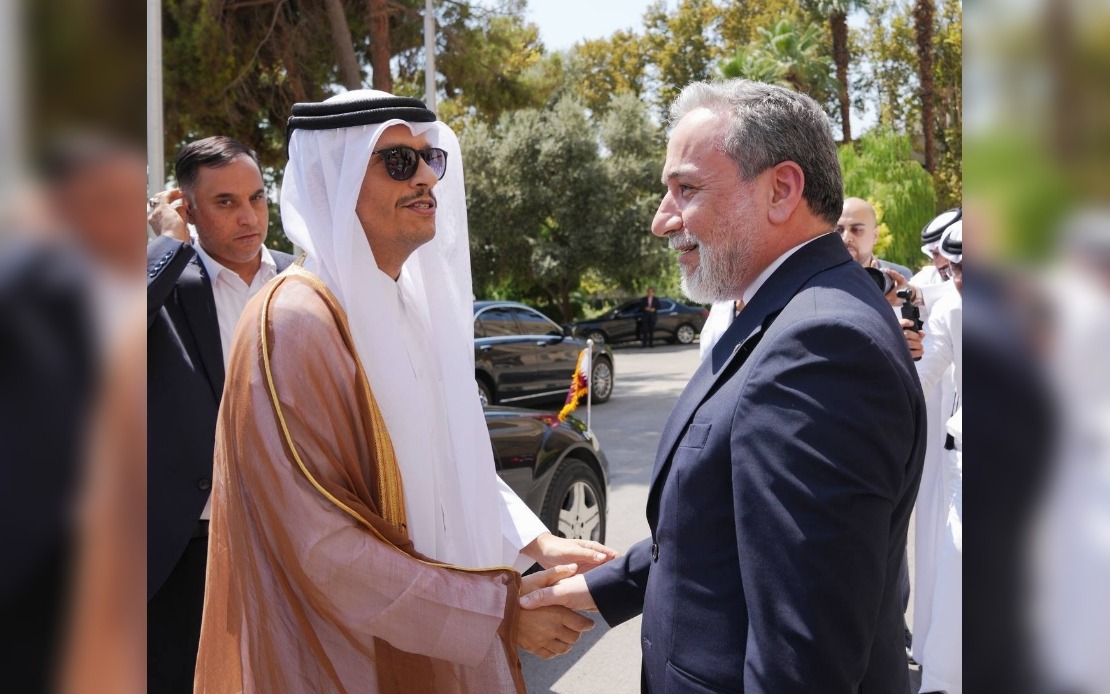
Iran has indicated receptiveness toward rekindling diplomatic channels with the United States, though with conditions that centre on a fundamental shift in American negotiating posture. Foreign Minister Abbas Araghchi made the statement following substantive conversations held in Tehran with Qatar's leadership, signalling a nuanced opening in what has been an adversarial relationship marked by escalating tensions and military confrontations.
Araghchi's comments, delivered via the social media platform X, framed the possibility of renewed dialogue as contingent upon Washington's willingness to abandon what Tehran views as coercive diplomacy. The Iranian official argued explicitly that pressure-based strategies have proven ineffective, essentially challenging the utility of the sanctions regime and military posturing that have characterised US-Iran relations over recent years. This messaging reflects Tehran's long-standing grievance that external pressure constrains rather than facilitates negotiation, and that meaningful progress requires mutual respect and recognition of Iranian interests.
Qatar's diplomatic engagement represents a calculated intervention in one of the Middle East's most intractable conflicts. Sheikh Mohammed bin Abdulrahman bin Jassim Al Thani travelled to Tehran on Thursday, where he conducted wide-ranging discussions with multiple Iranian power-brokers, including President Masoud Pezeshkian, Parliament Speaker Mohammad Bagher Qalibaf, and Security Council Secretary Mohsen Rezaei. This broad engagement suggests Doha is working simultaneously across Iran's civilian and military establishment, attempting to build consensus around de-escalation.
The Qatari initiative carries particular significance given Doha's historical role as an intermediary between Washington and Tehran. As a regional actor maintaining working relationships with both the United States and Iran, Qatar possesses unique positioning to facilitate backchannel communications and explore common ground. The visit also marks the first such diplomatic mission since February, when aerial strikes attributed to US and Israeli forces substantially heightened regional tensions and threatened direct military confrontation.
During the Tehran consultations, discussions reportedly focused on creating practical conditions for dialogue resumption. Two specific proposals emerged: establishing a temporary joint navigational corridor through the strategically critical Strait of Hormuz and coordinating mine-clearing operations in regional waters. These technical arrangements, if implemented, could serve as confidence-building measures that demonstrate mutual willingness to cooperate on shared security challenges. The Strait of Hormuz remains vital to global energy supplies, with approximately one-third of seaborne traded oil transiting through its waters, making any arrangement affecting its security highly consequential for international markets.
For Malaysia and the broader Southeast Asian region, the implications of US-Iran tensions are non-trivial. Disruptions to Middle Eastern stability ripple outward through energy markets and security architectures. Malaysia's economy, heavily dependent on stable oil supplies and maritime trade routes, faces exposure to any escalation affecting shipping lanes and crude prices. Additionally, regional security partnerships and defence arrangements frequently reflect great-power competition dynamics, meaning deteriorating US-Iran relations can influence alignment calculations across Asia.
Araghchi's emphasis on trust-building and respect for Iranian rights represents a departure from the more confrontational rhetoric that has dominated recent years. His framing suggests Tehran seeks recognition of its legitimate regional interests rather than capitulation to external demands. Whether American policymakers interpret this as genuine flexibility or tactical repositioning remains uncertain, but the softening of language itself constitutes noteworthy movement in a relationship that has been characterised by mutual recrimination and brinkmanship.
The feasibility of any diplomatic breakthrough depends substantially on whether the incoming American administration proves willing to engage differently with Iran than its immediate predecessor. The Trump administration's withdrawal from the Joint Comprehensive Plan of Action in 2018 and subsequent maximum pressure campaign fundamentally altered the diplomatic landscape, breeding deep mistrust on both sides. Rebuilding that trust requires not merely tactical adjustments but sustained commitment to new frameworks and mutual recognition of legitimate concerns.
Qatar's persistent engagement reflects both its geopolitical interests and its capacity as a neutral mediator. Doha maintains sophisticated relationships across the Middle Eastern spectrum, hosting major American military installations while simultaneously maintaining robust diplomatic and commercial ties with Iran. This balancing act positions Qatar uniquely, though it also constrains its leverage—any appearance of bias toward either party undermines its credibility as an honest broker.
The road toward substantive dialogue remains fraught with obstacles. Regional proxies, ideological divisions, and accumulated grievances over decades of antagonism will not dissolve through diplomatic pleasantries alone. Additionally, domestic political pressures within both Tehran and Washington complicate flexibility, as hardliners in each capital often view engagement with the rival as appeasement. Nevertheless, the very fact that dialogue about dialogue is occurring suggests neither side has entirely abandoned hope for alternatives to perpetual confrontation.
For regional observers, including Southeast Asian analysts, monitoring these diplomatic developments carries strategic importance. A sustained US-Iran conflict externalises instability, drawing in additional regional actors and creating vulnerabilities in global systems upon which Asian economies depend. Conversely, successful de-escalation could open space for more constructive engagement on climate, counterterrorism, and maritime security challenges that transcend bilateral animosity. Qatar's mediation efforts, whatever their ultimate success, represent the type of patient, multilateral diplomacy that Asian states themselves have long advocated for addressing complex international disputes.

