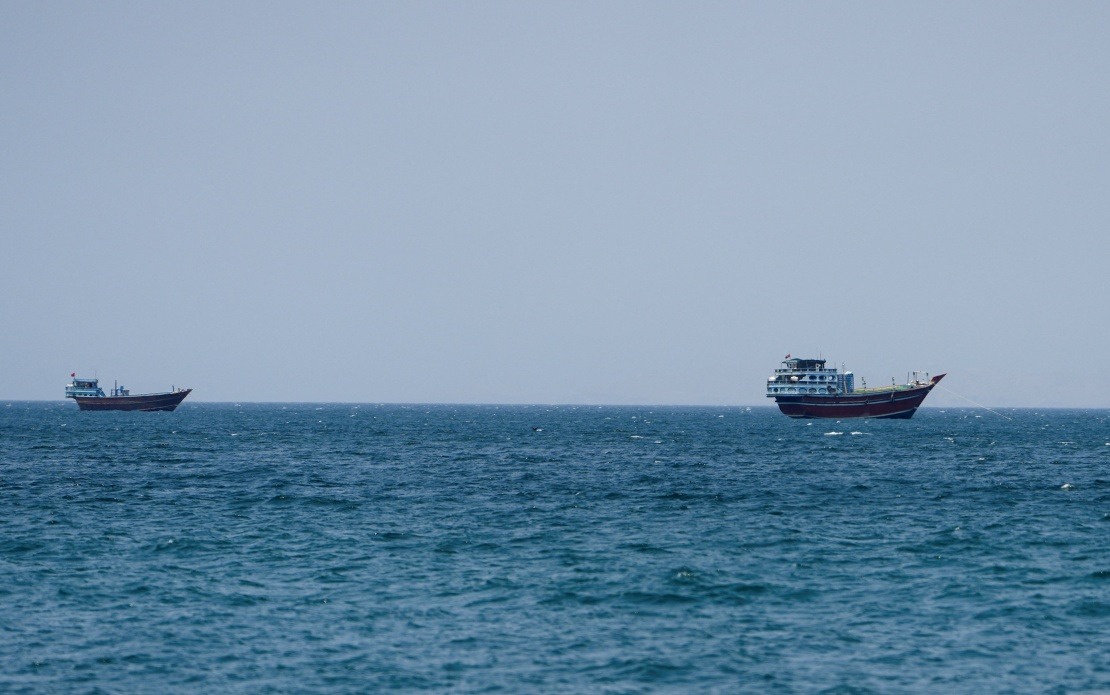
Iran's recently appointed head of the Supreme National Security Council, Mohsen Rezaei, has declared that the Strait of Hormuz will remain restricted until the United States fundamentally shifts its approach toward Tehran and complies with Iranian conditions. The statement, delivered during discussions with China's diplomatic representative in Tehran, signals Tehran's determination to leverage control over one of the world's most critical waterways as part of its broader confrontation with Washington and its regional allies.
Rezaei outlined three core prerequisites for the full restoration of transit through the strategic chokepoint in the Persian Gulf. The United States must cease military operations against Iran and its network of allied forces across the region, unfreeze Iranian financial assets that have been locked as part of international sanctions regimes, and fundamentally alter its hostile posture toward the Islamic Republic. Without these substantive policy changes, Rezaei emphasized, Iran will maintain the transit restrictions it initiated in early March in response to what Iranian officials characterise as joint American-Israeli military aggression.
The Strait of Hormuz carries roughly one-third of global seaborne petroleum trade, making it perhaps the world's most economically vital maritime passage. Any sustained closure or meaningful restriction of traffic through this waterway reverberates immediately across global energy markets and supply chains. For Southeast Asian nations heavily dependent on Middle Eastern oil imports—including Malaysia, which sources a significant portion of its crude requirements from the region—any prolonged disruption poses tangible risks to energy security and economic stability. The implications extend beyond mere price fluctuations to encompass potential supply shortages that could constrain industrial production and household consumption across the region.
Rezaei indicated during his meeting with Chinese Ambassador Zong Piyu that Iran has conveyed additional, unspecified conditions to the United States through intermediary channels that have facilitated indirect communications between the two adversaries in recent weeks. The existence of these back-channel discussions suggests that despite public rhetoric emphasizing intransigence, both capitals maintain communication networks focused on exploring potential off-ramps from escalation. However, the refusal to disclose these secondary conditions publicly maintains strategic ambiguity that could serve negotiating purposes or simply reflect the sensitive nature of such channels.
A particularly noteworthy dimension of Iran's stance involves its relationship with Oman, the other major littoral state bordering the Strait of Hormuz. Rezaei stressed that any bilateral agreement between Iran and Oman regarding maritime transit arrangements would remain entirely separate from Iran's unilateral decision-making authority over strait closure or reopening. This formulation preserves Iranian strategic autonomy while potentially allowing Oman to negotiate protective arrangements for its own commercial interests—a delicate diplomatic balance that reflects the complex triangular relationship among the three parties with interests in the waterway.
During the same diplomatic engagement, Rezaei commended China for opposing what Tehran characterises as an illegal and anti-Iranian draft resolution at the United Nations Security Council during the March military escalation. This acknowledgment underscores Iran's ongoing cultivation of Beijing as a strategic counterweight to American influence and sanctions pressure. The broader context involves deepening Iran-China ties anchored in their joint membership in organisations including the Shanghai Cooperation Organisation and BRICS, the latter grouping representing an increasingly assertive coalition of non-Western powers seeking to reshape global economic and geopolitical architectures.
The invocation of the Shanghai Cooperation Organisation and BRICS framework by Iran's security chief reflects a conscious effort to situate Iranian grievances within a larger narrative of resistance to perceived Western hegemony. For Malaysia and other Southeast Asian nations navigating complex relationships with both Western powers and rising Eastern actors, Iran's strategic positioning offers a case study in how smaller or regionally-prominent states attempt to leverage multiple great-power relationships. The tension between maintaining commercial ties with the West while avoiding antagonism from resurgent Eastern powers represents a persistent challenge throughout the region.
The timing of these statements by the newly installed SNSC chief may carry significance beyond the immediate diplomatic messaging. Rezaei's appointment itself signals potential shifts within Iran's security establishment, and his early emphasis on Hormuz restrictions suggests that hardliners within Tehran's decision-making structure maintain considerable influence over regional policy. This internal dynamic—the balance between pragmatists open to negotiated settlements and maximalists demanding comprehensive US policy reversals—will likely determine whether the Strait of Hormuz remains partially closed or fully reopens in coming months.
For maritime insurers, shipping companies, and energy traders operating in the region, Rezaei's statements confirm that transit restrictions will persist unless dramatic diplomatic breakthroughs occur. The economic calculus becomes increasingly complex as the duration of restrictions lengthens, forcing supply chain adjustments, routing alternatives through longer passages around Africa, and premium pricing that reflects heightened risk. Malaysian and Southeast Asian businesses dependent on affordable energy imports face mounting pressure to seek alternative suppliers or invest in renewable energy infrastructure that insulates them from Persian Gulf volatility.
The broader geopolitical dimension involves the question of whether Iran's demands represent fixed requirements or opening positions in a negotiating sequence. International relations analysts and government officials in capitals throughout Southeast Asia will scrutinise whether subsequent statements from Tehran soften these demands or whether they remain fundamentally constant. The distinction matters enormously for supply chain planning, energy policy formulation, and broader calculations about regional stability and the costs of the ongoing confrontation between Iran and the United States.

